

47
Top Review
Unfortunately Lost in No Man's Land
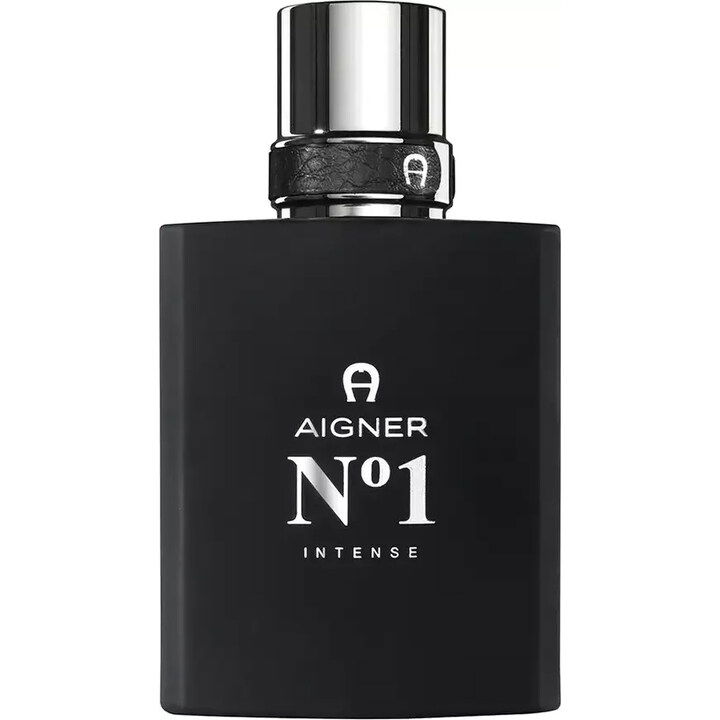
After I was able to test two Aigner fragrances in a short period of time (my first two) and both of them pleased me very much (Super Fragrance for Men and this one), and since there is no comment yet on this "Aigner No 1 Intense," I will elaborate a bit and go back to Adam and Isztván.
It seems to me that a brand like Aigner is flying massively under the radar here on Parfumo. I suspect this is because it is being pushed around like a poor stateless person in the no man's land between Guerlinists and Marlyists and is not being let in anywhere. For the Marlyists, the brand is far too opulent, because when you think of "Aigner," you somehow think of Munich as a "world city with heart," the 1972 Olympics, Uschi Glas, as well as Derrick and Der Alte. And the Guerlinists are suspicious of designer perfumes anyway, so "Aigner" doesn't differ much from "Prada" or "Gucci" in that regard.
Looking down on designer fragrances is unwise not only because pearls can certainly be hidden there, but also somewhat unfair, as perfumes from Dior and Chanel are essentially designer fragrances too: scents from fashion houses that also indulge in fragrance lines (unlike Guerlain; Guerlain doesn't do fashion).
I believe that most people feel like I do: they only have vague ideas about "Aigner." Therefore, first a bit about the brand (and then about the fragrance): In 1904, Isztván Aigner was born in the small town of Neuhäusel (Slovak: Nové Zamky) in Austria-Hungary (Hungarian half of the empire) as the son of a Jewish lawyer, who then went to Budapest and learned the craft of bookbinding. After the end of World War I, his birthplace became Czechoslovak (now Slovak). In the 1930s, Isztván (probably also due to the increasing anti-Semitism in Hungary) moved to France, where he became Catholic, got married, had children, and from then on was called Etienne (Isztván and Etienne are the Hungarian and French variants of Stephen, respectively). He switched from bookbinding to leather fashion (bags, etc.); during the German occupation, he went to southern France and joined the Résistance. Although he was very successful after the war and the big Parisian fashion houses bought his designs, he emigrated for the second time in the 1950s, this time to New York, where he founded his own (leather) fashion label for upscale clientele.
In 1965, Aigner sold the license for the brand for all continents except America to a German businessman; thus, the German Etienne Aigner AG was established with its headquarters in Munich (and a subsidiary in Milan), in which Etienne Aigner himself never held shares. His own company (responsible only for America) was also sold by Etienne Aigner two years later, in 1967, to investors: thus, the New York Etienne Aigner Inc. was created. Both companies have nothing to do with each other and (although both changed ownership almost infinitely often) have never held shares in each other. They operate happily alongside each other, although the logo is of course the same.
I haven't investigated whether the New York company also releases fragrances, but it seems to be the case. The Munich company started fragrance production in 1975, and from the very beginning through licensing. Here too, the licensee has changed quite frequently; currently, the "Aigner" fragrances seem to be produced and marketed by Puig. The first fragrance was, not surprisingly, "Aigner No. 1." I do not know this original Aigner, but the fragrance reviewed here is said to be a close relative, so to speak, a more powerful and carefully modernized version. That could be the case, because when I read the comments on "Aigner No. 1," I occasionally feel like I'm reading comments about this "Intense" here, as I have come to know it. For the name, I therefore give 7.5 points.
No. 1 Intense is a medium to (rather) dark brown, warm-balsamic fragrance that, in my opinion, is particularly suitable for autumn. It is very spicy, with this spiciness sometimes tipping into a slightly sweet note and sometimes almost into a prickly severity, which, despite all the warmth, evokes a very focused and very masculine overall impression. The fragrance notes indicated in the pyramid give a good impression of what the user can expect here, although I would like to make some reservations and remarks:
The citrus at the beginning is bitter from the first second and solidly integrated into the woody-spicy notes, so that no independent light top note emerges, more like a bitter-citrusy oiled slide into the main theme. I only smelled the cinnamon during the second testing, but not as rice pudding with cinnamon and sugar, but as highly dosed cinnamon without sugar (which indeed results in a rather bitter taste, almost reminiscent of clove, allspice, or nutmeg).
The patchouli, which many perceive as very dominant, I also do not perceive independently. This is not a "patchouli fragrance" (and I do like patchouli); for me, it is more that this note creates a total work of art in firm connection with the oud, the other woody notes, labdanum, and the spices, in which none of the individual notes is too specifically discernible. We are rather faced with a compact but changing dark fragrance experience with earthy, leathery-animalistic, woody, and spicy, at times even fruit-in-rum-sweet undertones.
The fragrance (which also pleases the nose next to me very much) has a remarkable development as well as an (tested with strong dosage) immense longevity, without being overwhelming with a monster projection. Contrary to the pyramid (oud and castoreum at the bottom), I perceive the animalistic, strict elements more in the middle part of the fragrance progression; here it squeaks and crashes at times like the valves in "Das Boot" during deep diving; but the boat is not crushed, meaning it remains in a pleasant range. Later, however, softer, spicier-balsamic impressions come to the fore.
A perhaps not incredibly original, but very beautiful base remains absolutely stable on the skin for up to 14 hours, and even after 24 hours, once again turned in the fragrance direction, almost airy fruity, skin-close remnants can be discerned.
For me, a surprisingly beautiful fragrance experience, and after "OudTouch" by Franck Olivier within a week, my second truly beautiful, special, distinctive dark men's fragrance in the budget range. No. 1 Intense cannot be found on the Aigner Munich website, but is listed on the pages of the large online and brick-and-mortar perfumeries. The price range is wide; when comparing, you can get it for 50 or 60 euros for 100 ml.
It seems to me that a brand like Aigner is flying massively under the radar here on Parfumo. I suspect this is because it is being pushed around like a poor stateless person in the no man's land between Guerlinists and Marlyists and is not being let in anywhere. For the Marlyists, the brand is far too opulent, because when you think of "Aigner," you somehow think of Munich as a "world city with heart," the 1972 Olympics, Uschi Glas, as well as Derrick and Der Alte. And the Guerlinists are suspicious of designer perfumes anyway, so "Aigner" doesn't differ much from "Prada" or "Gucci" in that regard.
Looking down on designer fragrances is unwise not only because pearls can certainly be hidden there, but also somewhat unfair, as perfumes from Dior and Chanel are essentially designer fragrances too: scents from fashion houses that also indulge in fragrance lines (unlike Guerlain; Guerlain doesn't do fashion).
I believe that most people feel like I do: they only have vague ideas about "Aigner." Therefore, first a bit about the brand (and then about the fragrance): In 1904, Isztván Aigner was born in the small town of Neuhäusel (Slovak: Nové Zamky) in Austria-Hungary (Hungarian half of the empire) as the son of a Jewish lawyer, who then went to Budapest and learned the craft of bookbinding. After the end of World War I, his birthplace became Czechoslovak (now Slovak). In the 1930s, Isztván (probably also due to the increasing anti-Semitism in Hungary) moved to France, where he became Catholic, got married, had children, and from then on was called Etienne (Isztván and Etienne are the Hungarian and French variants of Stephen, respectively). He switched from bookbinding to leather fashion (bags, etc.); during the German occupation, he went to southern France and joined the Résistance. Although he was very successful after the war and the big Parisian fashion houses bought his designs, he emigrated for the second time in the 1950s, this time to New York, where he founded his own (leather) fashion label for upscale clientele.
In 1965, Aigner sold the license for the brand for all continents except America to a German businessman; thus, the German Etienne Aigner AG was established with its headquarters in Munich (and a subsidiary in Milan), in which Etienne Aigner himself never held shares. His own company (responsible only for America) was also sold by Etienne Aigner two years later, in 1967, to investors: thus, the New York Etienne Aigner Inc. was created. Both companies have nothing to do with each other and (although both changed ownership almost infinitely often) have never held shares in each other. They operate happily alongside each other, although the logo is of course the same.
I haven't investigated whether the New York company also releases fragrances, but it seems to be the case. The Munich company started fragrance production in 1975, and from the very beginning through licensing. Here too, the licensee has changed quite frequently; currently, the "Aigner" fragrances seem to be produced and marketed by Puig. The first fragrance was, not surprisingly, "Aigner No. 1." I do not know this original Aigner, but the fragrance reviewed here is said to be a close relative, so to speak, a more powerful and carefully modernized version. That could be the case, because when I read the comments on "Aigner No. 1," I occasionally feel like I'm reading comments about this "Intense" here, as I have come to know it. For the name, I therefore give 7.5 points.
No. 1 Intense is a medium to (rather) dark brown, warm-balsamic fragrance that, in my opinion, is particularly suitable for autumn. It is very spicy, with this spiciness sometimes tipping into a slightly sweet note and sometimes almost into a prickly severity, which, despite all the warmth, evokes a very focused and very masculine overall impression. The fragrance notes indicated in the pyramid give a good impression of what the user can expect here, although I would like to make some reservations and remarks:
The citrus at the beginning is bitter from the first second and solidly integrated into the woody-spicy notes, so that no independent light top note emerges, more like a bitter-citrusy oiled slide into the main theme. I only smelled the cinnamon during the second testing, but not as rice pudding with cinnamon and sugar, but as highly dosed cinnamon without sugar (which indeed results in a rather bitter taste, almost reminiscent of clove, allspice, or nutmeg).
The patchouli, which many perceive as very dominant, I also do not perceive independently. This is not a "patchouli fragrance" (and I do like patchouli); for me, it is more that this note creates a total work of art in firm connection with the oud, the other woody notes, labdanum, and the spices, in which none of the individual notes is too specifically discernible. We are rather faced with a compact but changing dark fragrance experience with earthy, leathery-animalistic, woody, and spicy, at times even fruit-in-rum-sweet undertones.
The fragrance (which also pleases the nose next to me very much) has a remarkable development as well as an (tested with strong dosage) immense longevity, without being overwhelming with a monster projection. Contrary to the pyramid (oud and castoreum at the bottom), I perceive the animalistic, strict elements more in the middle part of the fragrance progression; here it squeaks and crashes at times like the valves in "Das Boot" during deep diving; but the boat is not crushed, meaning it remains in a pleasant range. Later, however, softer, spicier-balsamic impressions come to the fore.
A perhaps not incredibly original, but very beautiful base remains absolutely stable on the skin for up to 14 hours, and even after 24 hours, once again turned in the fragrance direction, almost airy fruity, skin-close remnants can be discerned.
For me, a surprisingly beautiful fragrance experience, and after "OudTouch" by Franck Olivier within a week, my second truly beautiful, special, distinctive dark men's fragrance in the budget range. No. 1 Intense cannot be found on the Aigner Munich website, but is listed on the pages of the large online and brick-and-mortar perfumeries. The price range is wide; when comparing, you can get it for 50 or 60 euros for 100 ml.
Translated · Show original
21 Comments
A small point from my side:
Etienne Aigner N°1 from 1975 has unfortunately been discontinued and has nothing in common with the current Aigner N°1 from 2012. They just dropped the first name to avoid confusion.
Thank you very much for sharing your experience with the fragrance!
🏆
What I still find hard to understand is the price.
For 100ml, the fragrance is offered from around €22 up to €72 -
always for the 100ml, of course -
So, according to some members, are the "cheap" ones all fakes and only the expensive ones real????
Definitely worth a try. I wasn't familiar with this one, so thanks for bringing it to my attention! And also for the interesting details about Aigner's company history.
Pardon for all the extra info... But we do love to learn here, right?!
The distinction of designer fragrances is, in my opinion, a bit more complicated: There are designers (like Lagerfeld) who clearly don't care about the licenses they grant to big fragrance companies for lackluster scents. Chanel & Dior create their fragrances in-house in their own perfume labs! Makes a difference.