



 Neroli
 Mandarin orange
 Rose
Rose Bergamot
 Mimosa
 Benzoin


Meggi
1018 Reviews
Translated · Show original

Meggi
Top Review
26
Under Pressure
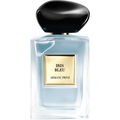
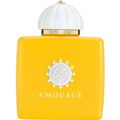
Rose Alexandrie. So we're clearly talking about rose. Aha. One might as well ask. But let's start from the beginning: It opens with mild citrus fruit. Mandarin might be an idea in terms of acidity, but not quite in aroma. Hot lemon with lots of sugar, now cooled down... Those were the first thoughts. Fruity-fresh and very pleasant, even on a grimy winter day. The pyramid mentions bergamot and neroli. Neroli can at least be checked off later on, but at the forefront, both remain far from tapping into their potential for penetration. After all, we are dealing with Armani.
Otherwise, the namesake rose has an exceptionally hard time against the jasmine-neroli dominance. A somewhat high-ranking individual working in the cosmetics segment of the Armani house once explained to me that all - at least all classic - rose fragrances contain jasmine, but in this case, the white flowers are really overshadowing the so-called queen of flowers. Additionally, the tuberose mentioned in the first comment is also quite plausible. Moreover (although I would never have thought of it without the mimosa announcement), I also recall Annick Goutal's "Mimosa." I can either believe in its presence now or not, because it has unfortunately been a long time since I smelled mimosa in nature.
After three or four hours, I find myself - finally, one could say in light of the name - further moved into the rosy Orient. The still reserved, yet now more noticeable rose has acquired a base that is probably due to benzoin, resembling amber. Now she has to be careful to survive that. At the same time, during the fourth hour, that note emerges from below, which is referred to elsewhere as white musk. Jasmine and musk form a creamy, softly floral, subtly resin-spiced base, which, despite its character's gentleness, makes life once again difficult for the anemic rose.
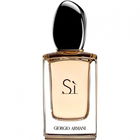
Around noon, Rose Alexandrie takes on a berry-like nuance. Suddenly, I am reminded of Si from the Armani standard line and, given the significant price difference, I am a bit disappointed. Over the course of the seventh and eighth hour, everything fades into a floral-soapy rose-jasmine residue. It certainly does not smell bad throughout. On the contrary, I feel clean and well-groomed with it - just perhaps a bit ladylike. The fragrance, despite the weak rose, is by no means bland, as the colleagues from the white flower corner have quite a bit of strength.
Conclusion: I would not have launched Rose Alexandrie as a rose fragrance; the rose is too forced. A robust jasmine-neroli scent fits it better, although it may always and foremost be described as fresh and will certainly be nice to have in the hopefully soon-to-arrive spring. I think it suits women a notch better, as they will never go wrong with it anywhere. It's not that overwhelming after all - again: we are with Armani, and hits like Myrrhe Imperiale or Pierre de Lune are a clear exception.
I would have wished for more profile, for example, through the use of a stronger rose. Who would have thought that Mr. Armani puts his declared favorite flower under such pressure?
Otherwise, the namesake rose has an exceptionally hard time against the jasmine-neroli dominance. A somewhat high-ranking individual working in the cosmetics segment of the Armani house once explained to me that all - at least all classic - rose fragrances contain jasmine, but in this case, the white flowers are really overshadowing the so-called queen of flowers. Additionally, the tuberose mentioned in the first comment is also quite plausible. Moreover (although I would never have thought of it without the mimosa announcement), I also recall Annick Goutal's "Mimosa." I can either believe in its presence now or not, because it has unfortunately been a long time since I smelled mimosa in nature.
After three or four hours, I find myself - finally, one could say in light of the name - further moved into the rosy Orient. The still reserved, yet now more noticeable rose has acquired a base that is probably due to benzoin, resembling amber. Now she has to be careful to survive that. At the same time, during the fourth hour, that note emerges from below, which is referred to elsewhere as white musk. Jasmine and musk form a creamy, softly floral, subtly resin-spiced base, which, despite its character's gentleness, makes life once again difficult for the anemic rose.
Around noon, Rose Alexandrie takes on a berry-like nuance. Suddenly, I am reminded of Si from the Armani standard line and, given the significant price difference, I am a bit disappointed. Over the course of the seventh and eighth hour, everything fades into a floral-soapy rose-jasmine residue. It certainly does not smell bad throughout. On the contrary, I feel clean and well-groomed with it - just perhaps a bit ladylike. The fragrance, despite the weak rose, is by no means bland, as the colleagues from the white flower corner have quite a bit of strength.
Conclusion: I would not have launched Rose Alexandrie as a rose fragrance; the rose is too forced. A robust jasmine-neroli scent fits it better, although it may always and foremost be described as fresh and will certainly be nice to have in the hopefully soon-to-arrive spring. I think it suits women a notch better, as they will never go wrong with it anywhere. It's not that overwhelming after all - again: we are with Armani, and hits like Myrrhe Imperiale or Pierre de Lune are a clear exception.
I would have wished for more profile, for example, through the use of a stronger rose. Who would have thought that Mr. Armani puts his declared favorite flower under such pressure?
19 Comments








 Hermesh
 1carian
 FrauMieze
 Turandot
 Nizza13
 DaveGahan101
 Paloma58
 MadameLegras
 Sweetsmell75
 Basti87