

40
Top Review
2010 vs. 2018
Itasca is, for me, a perfume that captures nature and makes it exciting through additional nuances. Classic, clean, masculine, yet timeless, modern, and with enough edge. A scent that maintains the balance between fresh and dark, between aromatic-spicy and calm-transparent. Images of the lake and national park of the same name in Minnesota seem absolutely fitting, due to the dense forests surrounding the tranquil-looking waters.
The top note initially surprises with a slightly fruity mandarin, less the sharp-citrusy grapefruit, before it quickly becomes spicier with juniper berry and its special aromatic quality, dry, bitter nutmeg, clove thankfully only in the smallest dose, while at the same time a hint of floral freshness wafts through the woods. As we move towards the base, it becomes more difficult to clearly name the individual notes. In any case, rather dry woods mix with slightly balsamic and earthy nuances. Even though the original name referred to vetiver, I perceive the sweet grass as one of several important components, rather than the main actor. I cannot make out typical incense, but I can sense myrrh.
Since I have a bottle of both the original and the new 2018 version, I can directly compare the two. Through the reformulation, Itasca remains, let’s say, 90-95% the same, but shifts more in a brighter direction. The dark-woody and slightly earthy element is now missing, making room for the initially almost grapefruit-like and rather green vetiver note. One might think that Itasca was originally composed for autumn and has now been adapted to spring through the changes. Java vetiver is supposed to lean more towards the subtly smoky, earthier direction, and therefore I suspect this is related to the reformulation. In the top note, I also miss a bit of the simultaneously fruity and resinous juniper berry in the new version. It is still present, just somewhat reduced, so I perceive a bit more hesperidic freshness. To what extent maceration can still have an influence, I cannot assess. Generally, one assumes a finished product, but sometimes scents change over a few months/years without becoming worse.
Unfortunately, the reformulated Itasca is not only a bit brighter but also somewhat slimmer. Nevertheless, Lubin's creation remains an excellent scent, which the wearer does not perceive as strongly after a while, while others can still smell it for several hours. The performance is nearly the same.
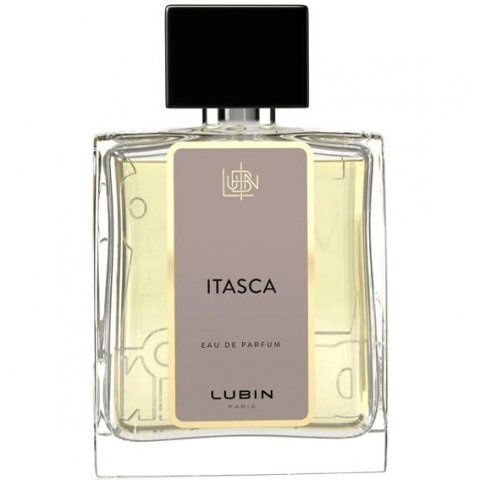
Regarding the bottle, I would like to add: I find the first version extremely ugly - what a dreadful font was used here and on top of that this color combination! But now the bottle has simply been turned around, so the relief is unprinted on the back and the side that was previously completely covered in copper-brown is now the front, formed by a sticker. Not beautiful either, but more stylish, I think. The spray head works excellently as always!
For nature lovers and those looking for a multi-layered, calm scent, Itasca is a good choice. When it comes to the theme of the forest, Itasca definitely ranks among the most successful perfumes. I can imagine it less on women and teenagers, but otherwise, I perceive it as intergenerational and versatile.
The top note initially surprises with a slightly fruity mandarin, less the sharp-citrusy grapefruit, before it quickly becomes spicier with juniper berry and its special aromatic quality, dry, bitter nutmeg, clove thankfully only in the smallest dose, while at the same time a hint of floral freshness wafts through the woods. As we move towards the base, it becomes more difficult to clearly name the individual notes. In any case, rather dry woods mix with slightly balsamic and earthy nuances. Even though the original name referred to vetiver, I perceive the sweet grass as one of several important components, rather than the main actor. I cannot make out typical incense, but I can sense myrrh.
Since I have a bottle of both the original and the new 2018 version, I can directly compare the two. Through the reformulation, Itasca remains, let’s say, 90-95% the same, but shifts more in a brighter direction. The dark-woody and slightly earthy element is now missing, making room for the initially almost grapefruit-like and rather green vetiver note. One might think that Itasca was originally composed for autumn and has now been adapted to spring through the changes. Java vetiver is supposed to lean more towards the subtly smoky, earthier direction, and therefore I suspect this is related to the reformulation. In the top note, I also miss a bit of the simultaneously fruity and resinous juniper berry in the new version. It is still present, just somewhat reduced, so I perceive a bit more hesperidic freshness. To what extent maceration can still have an influence, I cannot assess. Generally, one assumes a finished product, but sometimes scents change over a few months/years without becoming worse.
Unfortunately, the reformulated Itasca is not only a bit brighter but also somewhat slimmer. Nevertheless, Lubin's creation remains an excellent scent, which the wearer does not perceive as strongly after a while, while others can still smell it for several hours. The performance is nearly the same.
Regarding the bottle, I would like to add: I find the first version extremely ugly - what a dreadful font was used here and on top of that this color combination! But now the bottle has simply been turned around, so the relief is unprinted on the back and the side that was previously completely covered in copper-brown is now the front, formed by a sticker. Not beautiful either, but more stylish, I think. The spray head works excellently as always!
For nature lovers and those looking for a multi-layered, calm scent, Itasca is a good choice. When it comes to the theme of the forest, Itasca definitely ranks among the most successful perfumes. I can imagine it less on women and teenagers, but otherwise, I perceive it as intergenerational and versatile.
Translated · Show original
12 Comments
Great comment!