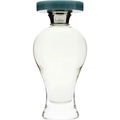
You have to like these fresh, citrusy Chypres; you need to have a penchant for classic, sometimes old-fashioned scents, as they almost exclusively originate from the period between 1950 and 1970.
Lubin's “L’Eau Neuve” was one of the later ones.
Once again, it was the great Edmond Roudnitska who, picking up an older idea from François Coty, began to formulate the concept of a fresh Chypre in the late 1940s. However, he initially approached this concept indirectly: while “Moustache” from 1949 was still more of a fresh-aromatic Fougère, it already contained a core idea, namely to enhance a classic Cologne framework, particularly its somewhat insubstantial base with oakmoss and patchouli. The result was not meant to be a true fresh Chypre, but the path leading to “Eau Sauvage” and ultimately “Diorella” had been set. With “Eau d’Hermès,” Roudnitska took a step further, initially in a leathery-animalic direction, but just two years later, in 1953, he created the fragrance that would define the genre: “Eau Fraîche” by Dior.
All that followed him, whether it was Chanel's “Pour Monsieur,” Givenchy's “Monsieur,” the already mentioned “Eau Sauvage” and “Diorella,” but also “Ô de Lancôme,” Chanel's “Cristalle,” Sisley's “Eau de Campagne,” and indeed “L’Eau Neuve” by Lubin, were heavily influenced by this early Dior scent.
When Lubin now names its work, the 1968 launched “L’Eau Neuve,” particularly the in-house 1798 created “Eau de Lubin” as a foundation and starting point, this is true in the sense that the ancient scent was a classic Eau-de-Cologne, and this reappears as a backbone in the new “Eau,” but the actual characteristic of the fragrance is inconceivable without “Eau Fraîche” and its direct descendants.
However, ultimately it was not the early Dior scent that “L’Eau Neuve” had to measure up to, nor the two “Monsieurs,” but the immensely successful and influential “Eau Sauvage,” the Roudnitska classic par excellence. Yet, unlike today, where successful fragrances are cloned to death, half a century ago, one still felt called to want to surpass a success. This did not always go well, but the results were usually visible: well-crafted fragrances that aimed to maintain, if not elevate, a certain level - “Ô de Lancôme” is an excellent example of such an endeavor.
But Roger Broudoux, the “nose” behind Lubin's new “Eau,” achieves this brilliantly. With this, he created a particularly aromatic, herb-spicy, fresh Chypre that stands out not only through the classic Eau-de-Cologne ingredients (citrusy-floral-woody) and the reinforcement of the base with Chypre notes like oakmoss and patchouli but especially through a strong herbal bouquet of thyme, marjoram, and coriander. This clearly structured spiciness is neither contrasted by slightly indolic jasmine nor ventilated with a hint of Hedione (“Eau Sauvage”), nor softened by powdery and floral nuances (“Ô de Lancôme”). On the contrary: it remains clearly recognizable and forms - as mentioned - the actual characteristic of this fragrance. Here, in my opinion, marjoram stands out, followed by a clearly recognizable pinch of thyme, a few coriander leaves, and a faint hint of aromatic chamomile. This herbal tea impression (which the heart of the fragrance truly reminds me of!) is embedded in an exceptionally fresh hesperidic opening with lemon, orange, and bergamot on one hand, and a woody-dry Chypre finish with cedarwood, patchouli, and oakmoss on the other.
The bitter-sweet, balsamic labdanum so typical of many Chypres seems to be completely absent here, as the fragrance develops, apart from the fruity opening, almost no sweetness. While there is still some citrusy, slightly bitter residual sweetness lingering in the spicy heart, by the time we reach the base, “L’Eau Neuve” becomes increasingly dry and herbaceous. The rose petals and jasmine mentioned by the manufacturer, which are supposedly acting in the background, I cannot detect. At most, there is a slight animalic nuance that could indeed stem from the indolic facets of jasmine, but just as well from the addition of a bit of civet - who knows. In any case, the strongly spicy heart is permeated by a faint animalic touch that never becomes prominent like in “Eau d’Hermès” and does not particularly characterize the fragrance, but perhaps makes it a bit more interesting.
Towards the end of the fragrance development, a surprisingly enduring mossy-woody patchouli accord remains, which the house of Lubin today celebrates as a reminiscence of the Flower Power generation.
This seems a bit far-fetched and somewhat forced to me, but so be it. After all, the fragrance was launched in the now legendary year of 1968 - the starting point and longing point of alternative utopias and life concepts. And if one were to look for an olfactory accompaniment to this hopeful and discourse-rich time, it would indeed only be the patchouli that was then so popular as a natural oil.
So while the 68er rebellion and Flower Power connection may have some justification, it still feels quite constructed, as the generation of those who rebelled back then - I know this from my own experience - had other things to do than to perfume themselves. On the contrary: wearing perfume was generally seen as an expression of hated bourgeois lifestyle. Only the use of crackling patchouli oils was tolerated, or perhaps the occasional wax chunk that intensely smelled of musk and came from Morocco.
Today, however, in the age of retro fashions, it may be acceptable to market this fragrance as typical for its time and as an expression of it - but it is not entirely correct.
After all, this fragrance initiated the revival of a small but all the more exquisite series of classic Lubin scents in 2008, which continued with the relaunch of “Le Vetiver,” “Gin Fizz,” and “Nuit de Longchamps.”
It was reorchestrated by Lucien Ferrero, who also worked on the reformulation of “Le Vetiver” (reportedly very close to the original, just like “L’Eau Neuve”) and furthermore composed the new, equally fabulous “Le Vetiver - Itasca.” Three fragrances that I consider to be extremely successful, conveying a sense of classic proportions and grandeur, but also speaking of stylish taste.
It's wonderful that “L’Eau Neuve,” this masterpiece of a dry-spicy Chypre, is back!
And if a fragrance of this genre is said to be “unisex” in a modern way, then certainly this one.


 Top Notes
 Bergamot
 Lemon
 Orange
 Lavender
 Heart Notes
 Marjoram
 Coriander
 Thyme
 Sage
 Base Notes
 Sandalwood
 Cedarwood
 Oakmoss
 Patchouli









 Yatagan
 Pluto
 Jumi
 TomThumb
 Schule

 Apicius