

51
Top Review
The Dispute Over the Emperor's Beard
Uncommented Scents No. 42
I still believe that the two most beautiful vetiver fragrances are the classics from Carven (1957) and Guerlain (1959), which are actually the first two well-known and successful vetiver scents on the market in this order. The current formulation from Carven is less successful, while Guerlain's is overall better, although it has had a very scratchy top note for several years now. The two original compositions were significantly rounder; indeed, the pinnacle of all vetiver compositions.
Of course, I am right in this assumption, as I would never allow other opinions to hold sway, just like all the other vetiver enthusiasts in the world who have surely found their own favorite scent in the realm of vetiver.
When I expand the range of vetiver-containing fragrances, my favorite scent Timbuktu from L'Artisan naturally also belongs to the vetiver scents, but it has such a distorted tone, such a unique note, that one could argue whether it can still be considered a vetiver scent in the narrower sense.
In general: Disputing. The debate over the emperor's beard, which vetiver scent is truly the best, most beautiful, most distinctive, most masculine, most feminine (there are also those) or the one with the best price-performance ratio, is fought anew here and elsewhere every year. Guerlain's Vetiver is exalted to the heavens or condemned; Timbuktu is alternately criticized as boring or praised as a stroke of genius.
I personally don't care at all. Because I know best which vetiver scent is the most beautiful. This is of little interest to you out there, but if you want to know which (besides Timbuktu, of course) is currently ONE of the most beautiful vetiver scents on the market for me, then listen closely now:
It is a vetiver scent from this incredible, truly fabulous line of affordable Monotheme fragrances, which was kindly provided to me in the form of a sample by the friendly DuftDoktor without a prescription in exchange. Thank you very much for that!
I would hardly have thought to test this scent myself, as whenever I read Bourbon, I suspect a vanilla-laden monstrosity in the base or heart note that I really dislike. Vanilla is nice and all, but scents and perfumers that overdo it can keep it. I don’t want to smell like grandma's crumble or apple pie (which I have always loved: for eating, mind you). All this does not exclude a pinch of vanilla at all (what would Shalimar be without this substance) and moreover, vanilla does not appear in this specific case at all, - but more on that later.
Back to Monotheme's Vetiver Bourbon. What immediately stands out: Vetiver Bourbon smells clear and distinctly of vetiver (even if other fresh components are also recognizable: lemon, which pleases me, bergamot oil, which I appreciate in scents and in tea), but so gentle and subtle that really no one (not even ladies who usually recoil at vetiver like the princess at the pea) could object to it. The balance between earthy-bitter-sour and gentle is so successful here that Monotheme even leaves the niche fragrance competitor Diptyque with its Vetyverio behind, which I previously considered the most successful soft vetiver on the market.
According to my research, the designation Vetiver Bourbon is not a combination of vetiver and bourbon vanilla, but rather a special variety of vetiver grass or oil that contains this round bourbon note, thus being finer and less earthy in scent.
Specifically, it can be described that the best quality of vetiver oil is produced in Réunion, followed by Haiti and Java. However, the oil from Réunion is referred to as Vetiver Bourbon due to its high quality. This could well have been used in Monotheme's Vetiver, even if it is not mentioned in the fragrance notes, but simply referred to as vetiver.
Since the scent fades incredibly round and soft, I am inclined to believe the manufacturer that the highly controversial, but for me extremely beloved oak moss is indeed found in the base and not a synthetic substitute. Sandalwood can also be discernibly sensed; however, one must know it through the manufacturer's information, as it is hardly recognizable, remaining subtle in the background. Sandalwood-heavy scents are usually too soft and creamy for my taste. This is not the case here at all. Everything remains light and bright, subtle and soft, with an underlying masculine-bitter note centered around vetiver; ultimately, however, it is also a unisex scent.
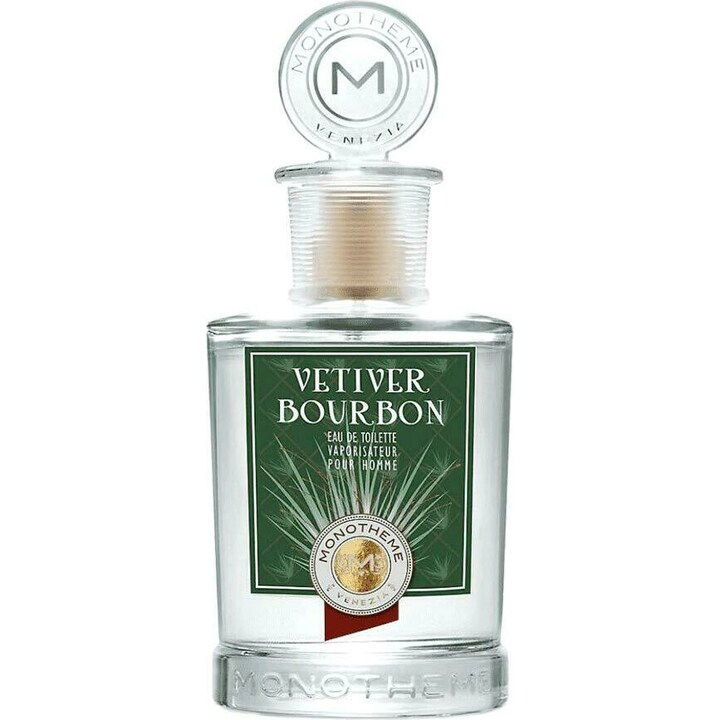
The longevity is good; I probably don’t need to say a word more about the wonderful shape of the bottle. It is classic and beautiful.
For me, the dispute over the emperor's beard is settled: if not Timbuktu (or Guerlain and Carven in the old formula), then Monotheme Vetiver Bourbon.
But as it is with the emperor's beard and one of the possible origins of this saying: As the German historian Johannes Fried explains in his latest work on Charlemagne, it is really not possible to say with certainty which beard the emperor actually wore before or after the year 800. It was probably not a full beard. What is certain is that he died in 814 and we may celebrate his 1200th death anniversary this year. And that Monotheme Vetiver Bourbon is the most beautiful of all vetiver scents. Really!
I still believe that the two most beautiful vetiver fragrances are the classics from Carven (1957) and Guerlain (1959), which are actually the first two well-known and successful vetiver scents on the market in this order. The current formulation from Carven is less successful, while Guerlain's is overall better, although it has had a very scratchy top note for several years now. The two original compositions were significantly rounder; indeed, the pinnacle of all vetiver compositions.
Of course, I am right in this assumption, as I would never allow other opinions to hold sway, just like all the other vetiver enthusiasts in the world who have surely found their own favorite scent in the realm of vetiver.
When I expand the range of vetiver-containing fragrances, my favorite scent Timbuktu from L'Artisan naturally also belongs to the vetiver scents, but it has such a distorted tone, such a unique note, that one could argue whether it can still be considered a vetiver scent in the narrower sense.
In general: Disputing. The debate over the emperor's beard, which vetiver scent is truly the best, most beautiful, most distinctive, most masculine, most feminine (there are also those) or the one with the best price-performance ratio, is fought anew here and elsewhere every year. Guerlain's Vetiver is exalted to the heavens or condemned; Timbuktu is alternately criticized as boring or praised as a stroke of genius.
I personally don't care at all. Because I know best which vetiver scent is the most beautiful. This is of little interest to you out there, but if you want to know which (besides Timbuktu, of course) is currently ONE of the most beautiful vetiver scents on the market for me, then listen closely now:
It is a vetiver scent from this incredible, truly fabulous line of affordable Monotheme fragrances, which was kindly provided to me in the form of a sample by the friendly DuftDoktor without a prescription in exchange. Thank you very much for that!
I would hardly have thought to test this scent myself, as whenever I read Bourbon, I suspect a vanilla-laden monstrosity in the base or heart note that I really dislike. Vanilla is nice and all, but scents and perfumers that overdo it can keep it. I don’t want to smell like grandma's crumble or apple pie (which I have always loved: for eating, mind you). All this does not exclude a pinch of vanilla at all (what would Shalimar be without this substance) and moreover, vanilla does not appear in this specific case at all, - but more on that later.
Back to Monotheme's Vetiver Bourbon. What immediately stands out: Vetiver Bourbon smells clear and distinctly of vetiver (even if other fresh components are also recognizable: lemon, which pleases me, bergamot oil, which I appreciate in scents and in tea), but so gentle and subtle that really no one (not even ladies who usually recoil at vetiver like the princess at the pea) could object to it. The balance between earthy-bitter-sour and gentle is so successful here that Monotheme even leaves the niche fragrance competitor Diptyque with its Vetyverio behind, which I previously considered the most successful soft vetiver on the market.
According to my research, the designation Vetiver Bourbon is not a combination of vetiver and bourbon vanilla, but rather a special variety of vetiver grass or oil that contains this round bourbon note, thus being finer and less earthy in scent.
Specifically, it can be described that the best quality of vetiver oil is produced in Réunion, followed by Haiti and Java. However, the oil from Réunion is referred to as Vetiver Bourbon due to its high quality. This could well have been used in Monotheme's Vetiver, even if it is not mentioned in the fragrance notes, but simply referred to as vetiver.
Since the scent fades incredibly round and soft, I am inclined to believe the manufacturer that the highly controversial, but for me extremely beloved oak moss is indeed found in the base and not a synthetic substitute. Sandalwood can also be discernibly sensed; however, one must know it through the manufacturer's information, as it is hardly recognizable, remaining subtle in the background. Sandalwood-heavy scents are usually too soft and creamy for my taste. This is not the case here at all. Everything remains light and bright, subtle and soft, with an underlying masculine-bitter note centered around vetiver; ultimately, however, it is also a unisex scent.
The longevity is good; I probably don’t need to say a word more about the wonderful shape of the bottle. It is classic and beautiful.
For me, the dispute over the emperor's beard is settled: if not Timbuktu (or Guerlain and Carven in the old formula), then Monotheme Vetiver Bourbon.
But as it is with the emperor's beard and one of the possible origins of this saying: As the German historian Johannes Fried explains in his latest work on Charlemagne, it is really not possible to say with certainty which beard the emperor actually wore before or after the year 800. It was probably not a full beard. What is certain is that he died in 814 and we may celebrate his 1200th death anniversary this year. And that Monotheme Vetiver Bourbon is the most beautiful of all vetiver scents. Really!
Translated · Show original
32 Comments
At that price, it’s probably going to be a blind buy...
I'll add it to my watchlist.
I don't know either of them, but I'm more into the robust, dry vetivers (Carven and Encre Noir).
Kudos for the research!