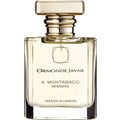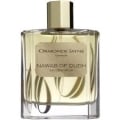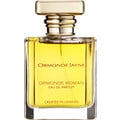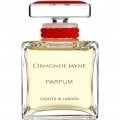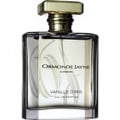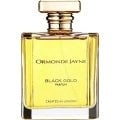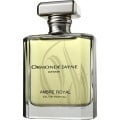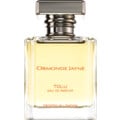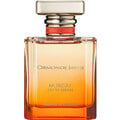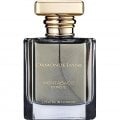


“The Four Corners of the World” is a series of four fragrances from the house of Ormonde Jayne from the year 2012, which is meant to take us on a journey around the world. “Montabaco” represents Latin America, with its sensory joy and temperament. Linda Pilkington, the founder and creator of Ormonde Jayne, chose tobacco as the central note, specifically tobacco leaves, along with wood, leather, and suede. This information about “Montabaco” can be found in Linda Pilkington's blog. I must confess that I have never been to Latin America, and the images in my head are therefore shaped by stories, books, films, and personal encounters with friends from that region. The chosen notes fit quite well with my vague, clichéd images of rum, cigars, the pampas with cattle, and lots of joy of life. Does the perfume also correspond to my images? Could Linda Pilkington have come up with such images without a journey as a source of inspiration? And if so - would that have had a positive effect on the price? Well, I don’t want to get ahead of myself.
As a perfumer, Linda Pilkington chose Geza Schön - not for the first time. He said in an interview that he enjoys designing perfumes for Pilkington because it is more of an inspiring collaboration than a commissioned work. What emerges from such a collaboration? On one side, Geza Schön, interested in abstract, elusive notes, which he allows to unfold in tidy pyramids, with little head-to-base development. On the other side, Linda Pilkington, who, despite all modernity, cannot and does not want to hide her connection to the English fragrance tradition. She likes floral notes, which is not really Geza Schön's specialty.
With these thoughts in mind, I tested “Montabaco.” From the very first wear, I was very taken with this fragrance and its play around a central tobacco leaf note. Yes, there is a lot of Geza Schön in it, but not only. To grasp this “not only,” I had to wear the perfume several times, and looking back at the scent progression, I recognize a fougère structure. Other perfume noses, who do not immediately think of Dad and his generation when it comes to fougère, would surely have recognized it faster. Fougère, this abstract representation of fern, which captures the green, herbaceous aspect with a top note of lavender and then slowly runs down the fern stem to the mossy, bittersweet forest floor around coumarin and oak moss.
The role of the fern is taken here by the tobacco leaf, which runs throughout the entire fragrance. This tobacco note starts green, herbaceous, and fresh with a Geza Schön-typical context of cardamom - including its green shell - and a juniper note with a citrus touch, which strongly reminds of a sparkling, cheerful gin cocktail. The role of lavender is taken here by clary sage, which has a significant olfactory overlap with lavender (and the chemical composition, by the way, as well). Clary sage is softer and does not stand out as much in compositions as lavender. Moreover, it has facets that remind one of tobacco - thus a fitting start for a perfume centered around a tobacco note. As the gin cocktail and cardamom recede a bit, “Montabaco” becomes rounder, and a floral heart emerges. In classic fougères, fresh, slightly sharp geranium is often used to soften the overly herbaceous aspect. The floral note here I cannot explicitly assign to a plant; for me, it is more of an abstract note: fresh and radiant like geranium, yet very, very soft like lush, fleshy flowers and dry, which is described in the pyramid with tea. This combination of radiant and soft I recently smelled in Kurkdjian's “Aqua Vitae,” a perfume centered around Hedione. Thus, I also suspect a large dose of this substance in “Montabaco,” albeit presented in a distinctly more floral manner and corresponding with the dominating tobacco note. The floral phase is rather short, and the fragrance becomes increasingly softer and gains sweetness from the classic fougère components coumarin (tonka) and oak moss. However, it maintains a cheerful, invigorating freshness that brings a smile to my face and corresponds very much with my cliché of joyful Latin America. I think I perceive something leathery, and I have various images in my mind: once a distinct leather and tobacco note side by side, another time an image of fermented, still moist, and therefore leathery tobacco leaves, which are about to be rolled as cover leaves around a cigar blank. And thus the circle closes: while in the scent progression of a classic fougère the facets of the fern are depicted from the leaf tip to the root, in “Montabaco” it is the tobacco leaf from fresh and green to fermented and brown.
The longevity is good but not outstanding (around 10 hours), the sillage is permeable, yet quite far-reaching. With a noticeable skin distance, Iso E Super joins the olfactory impression. There are many perfumes with a prominent tobacco note, especially for men, but I have never encountered a tobacco scent as carefree and cheerful as this one. It is olfactorily evident that “Montabaco” was created in teamwork, with clear influences from Geza Schön and Linda Pilkington.
However, there is a significant downside to this exceptionally beautiful tobacco perfume: it is only offered as a 120 ml bottle, and since British perfume houses do not tend to practice understatement in their pricing, 300 euros must be paid for it.