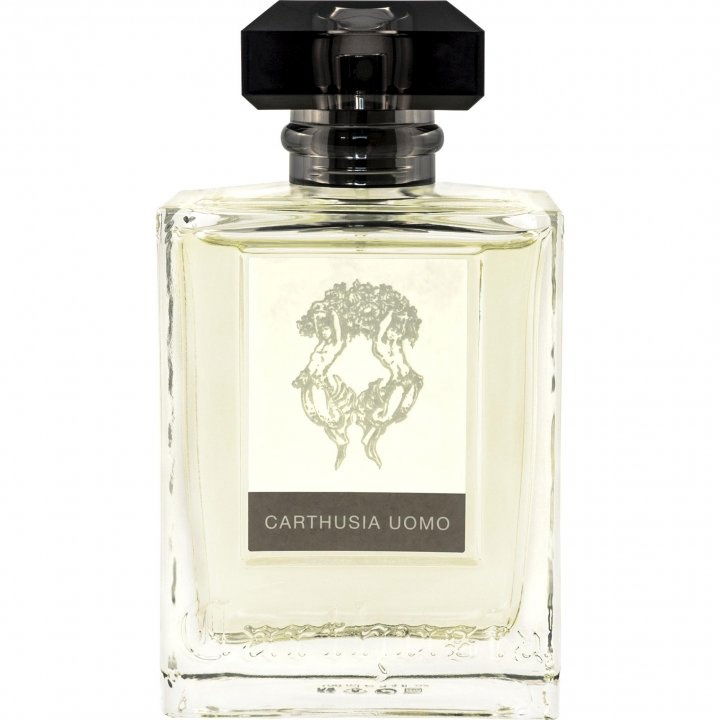
Did monks really smell like this? "Ora et labora": Perhaps during strenuous work, perhaps during devout prayer?
For the story of "Carthusia" begins in the monastery "St. Ciacomo" on the Italian rocky island of Capri: In the 14th century - to be precise: In the year 1380 - a bouquet of flowers, picked in honor of a visit from Queen Joanna of Anjou, is said to have left such a delicately scented flower water that many years later (1681) the first fragrance made from herbs and spices from the surroundings of the now rebuilt monastery was created: The “Garofilium Silvestre Caprese”. And these monks wisely made records of this, which, however, fell into oblivion for a long time. A few decades ago (1948), the old formulas of these pious monks were rediscovered in the library of the Carthusian monastery, and it was decided to combine them into new fragrance combinations in a small laboratory.
Since 2002, the perfume house has presented itself in a modern and elegant light: Since then, the small but fine fragrance manufactory "Carthusia" has been striving to honor the monastic place of production. They enlisted perfumer Laura Tonatto and revised the discovered formulas of the monks to create timeless fragrances that are made from quality raw materials in small quantities and filled by hand.
But how does "Capri" smell? We have already experienced an interpretation of this theme from Acqua di Parma with their "Arancia di Capri". However, this was a "theme fragrance" centered around the orange. But Capri has much more to offer. And especially the monks...
The fragrance starts citrusy. Somewhat citrusy-green. But the green does not come from a sharp lemon. No, there is something herbal-green in it. It gives this citrus fruit opening something interesting, something spicy. Something new. Very nice and refreshing. Well done, my brothers!
Then it immediately becomes floral. Really floral. But by no means sweet. The masculine base character remains intact. I catch a whiff of jasmine and lily of the valley. This may sound like a fragrance for the fairer sex. But that is not the case. First, the spicy citrus fruits give it a masculine tone. And then it immediately gets darker: a few woods join in. This in the form of soft and noble cedar wood. But only lightly. Additionally, something smoky spreads in the background. Just very, very lightly. And only to give the fragrance depth.
In this (middle) phase of the fragrance development, the spicy-fruity flowers clearly dominate the picture. The fragrance thus remains floral, only the (now merely accompanying) initial citrus notes become riper. The noble woods and the patchouli responsible for the smoky notes are only very faintly perceptible.
In the base, it then becomes truly masculine: oak moss and sandalwood now join in. The (ripe) fruits are now almost no longer perceptible.
But fear not: The oak moss is not of the kind that would let the fragrance development slide into an "old man scent," as sometimes unfortunately happens. No, it feels masculine, it feels spicy, it feels rather woody-mysterious. The sandalwood supports it. Now just a hint of musk, and the base is also an extremely interesting "flower-masculinity mix." As a man, I can only say: "Thank you for the flowers..."
Conclusion:
The fragrance lives after a fruity opening from the very interesting tension between the (in itself) feminine flowers and the (though in the background, but clearly perceptible) masculine notes. It is these that clearly give the flowers a refreshingly masculine stamp. Everything is very skillfully done. The so-promoted natural ingredients are noticeable in every phase of the fragrance development. Really beautifully done!
An absolute recommendation for summer; not least as a very interesting alternative to conventional colonias. And an interesting representative of the diversity of the island of Capri, mixed with components that the pious monks - let’s say - imported. Great praise: These monks know what they are doing.


 FvSpee 8 years ago
  Meggi 12 years ago