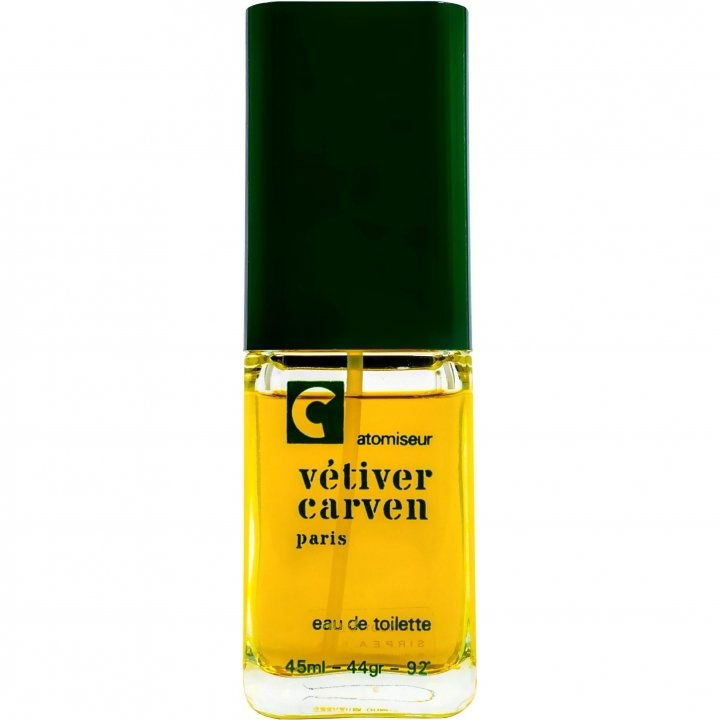
Vetiver was my mentor during my apprenticeship as a perfumer. My relationship with it began with a bottle of Guerlain's Vetiver (Eau de Toilette) that I received as a gift. I can still remember our first encounter, the moment of collision. With a certain reverence, I pressed the atomizer; after all, Guerlain is not just any name, so good things were to be expected....but instead of sensual associations, thoughts of damp earth and mustiness rushed through my mind. Pure disappointment, and this could have been where my story with Vetiver ended, but fortunately, it did not. Somehow, I didn't want to settle for my spontaneous and negative impression, read comments about Guerlain's Vetiver, tried it again and again, also tried other vetivers, Vétivers, Vetyvers (and whatever they are all called) - and a completely new world opened up to me. I discovered that Vetiver can smell damp, dry, medicinal, musty, crystalline, and so much more.
When I used to read origin designations like Bergamotto di Sicilia or Java Vetiver in fragrance pyramids, I always thought they were marketing platitudes to make the product more interesting. My exploration of Vetiver has taught me otherwise. I now know that Java Vetiver has a particularly pronounced medicinal note, and origin designations can indeed provide insight into the character of a fragrance. Thus, I have given most of the vetivers I appreciate "nicknames," as if they were friends. There is the "Aristovetyver"
(Givenchy), the "Mustard Vetiver" (Lubin), the "Medicine Vetiver" (Goutal), the "Rubber Vetiver" (Heeley). To make it short, I appreciate them all.
And since this week, I have a bottle of the original Vétiver by Carven in my hands. It is not an original bottle from 1957, but a later one with a wooden rather than a metal cap. Even though the Guerlain version is often cited as the reference vetiver, connoisseurs give the Carven Vétiver an honorary place in the Hall of Fame. So a certain reverence was also appropriate here.
Given the many notes in the fragrance pyramid, I was prepared for a citrusy opening sequence through which the vetiver would have to fight its way slowly. However, it is present from the very beginning and reminds me somewhat of the (unfortunately discontinued) Vetiver by Annick Goutal. While Goutal lets the strongly medicinal note of Java Vetiver run free in the top note of her fragrance, Carven keeps it under control. A veil of citrus notes softens this medicinal note. At the same time, clove and sage are presented as equal competitors to the vetiver.
Over time, the veil of citrus notes begins to slightly discolor, the yellow of the citrus fruits fades, turning slightly brownish and becoming more intense, while woody notes spread and push aside the citrus notes, but not the clove and sage. At this stage, it seems to me
almost as if the fragrance gains an ethereal freshness that reminds me a bit of mint.
I particularly like that many fragrance notes are recognizable individually: Vétiver, clove, sage, sandalwood. Is this a sign that the fragrance is well-balanced or not? In this context, I would rather speak of a well-arranged coexistence of various "prominent" fragrance notes.
I often associate vetiver fragrances with being wet and damp. Carven's Vétiver is not that at all. It is very dry and herbal, which also sets it apart from other vetiver fragrances. Oh, I still need a nickname. Clove Vetiver doesn't sound too bad, does it?
I can totally relate to that! Guerlain's Vetiver kept me away from vetiver for *decades* - but that's behind me now, as I've also ventured into the world of perfumery ^^


 Ronin 6 years ago
  MarkusH 10 years ago
  Zora 10 years ago
  Ormeli 10 years ago
  Gaukeleya 10 years ago
  DOCBE 10 years ago
  TIA1971 10 years ago
  Yatagan 10 years ago
  Seerose 10 years ago