

19
Top Review
Noble Wood for the Leather Handbag!
Hermès scents are hard to come by; one must make an effort to visit a boutique of this brand to purchase something from the collection, or order directly from Hermès. Alongside the mass-market business, where Hermès is successful with Terre d'Hermès and many other fragrances, a small, high-priced exclusive line is presented here. Can we expect particularly fine scents?
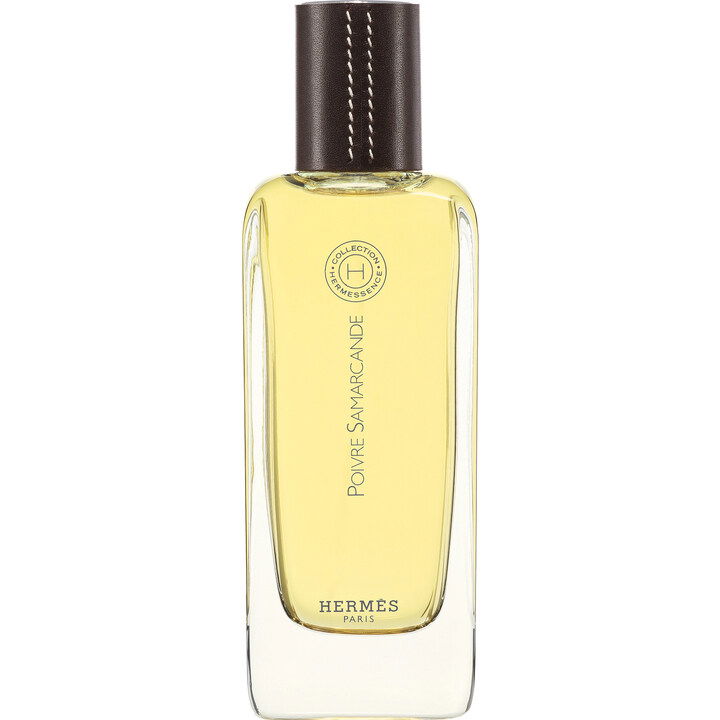
Hermès, as a fashion label, deals with leather, especially women's handbags made from this material, which can be purchased for four-figure sums. Naturally, fragrances that underline the idea of fine leather fit into the concept. I’m not sure if I should go so far as to call Poivre Samarcande a leather scent - no leathery notes are listed! And yet, Poivre Samarcande comes close to the character of the idea of fine leather. One could say that Poivre Samarcande can comment on and accompany fine leather goods.
Pepper is one of those fragrance notes that I find not very catchy. Many other spices are unmistakable: cloves, cinnamon, caraway, etc. But pepper? We generally use pepper for its spiciness, yet a plain pepper-and-salt cuisine is considered boring. I feel the same way about perfumes with the note of pepper - I perceive the sharpness and the piquant nature of pepper, but usually, its spiciness is overshadowed by other fragrance components.
With Poivre Samarcande, it may be a bit different. The sharpness plays a role primarily in the top notes, where I can also clearly detect a hint of paprika. But once that fades, there is indeed something that comes quite close to the smell or taste of black pepper. The name is well chosen! Otherwise, the main component in Poivre Samarcande seems to be a finely tuned cedarwood note. The spiciness of caraway gives it a slightly dirty character. One can sense patchouli and green notes, but vetiver - as in Terre d'Hermès - is definitely omitted, even though a kinship can be recognized through the wood notes. Overall, Poivre Samarcande does not come across as overly complex - here, a single accord has been worked out and placed in the spotlight.
Oh yes, this is a fine scent, but one that you have to get used to a bit. There is this leather character, this slightly animalistic quality, but also something like distinction. In front of my nose, there is a play of closeness and distance, very confusing. Does this perfume invite you to embrace the wearer, or does it, on the contrary, repel? "Come to me, but don’t come too close," seems to be the confusing message. I think one should carefully consider whether and on what occasions to wear Poivre Samarcande. This scent can evoke interest and perhaps even fascination, but what about sympathy, openness, friendliness?
Without a doubt, Poivre Samarcande is a noteworthy perfume. It appears closed and minimalist, and the high price of €170 for 100 ml is justified by the fact that Jean Claude Ellena has created a masterfully balanced and elegantly appealing composition here. Poivre Samarcande certainly ranks among the best woody scents currently available. It can definitely be seen as a finer, more puristic variant of the well-known Terre d'Hermès and can be recommended to its fans.
A thank you to Coriolon for the sample!
Hermès, as a fashion label, deals with leather, especially women's handbags made from this material, which can be purchased for four-figure sums. Naturally, fragrances that underline the idea of fine leather fit into the concept. I’m not sure if I should go so far as to call Poivre Samarcande a leather scent - no leathery notes are listed! And yet, Poivre Samarcande comes close to the character of the idea of fine leather. One could say that Poivre Samarcande can comment on and accompany fine leather goods.
Pepper is one of those fragrance notes that I find not very catchy. Many other spices are unmistakable: cloves, cinnamon, caraway, etc. But pepper? We generally use pepper for its spiciness, yet a plain pepper-and-salt cuisine is considered boring. I feel the same way about perfumes with the note of pepper - I perceive the sharpness and the piquant nature of pepper, but usually, its spiciness is overshadowed by other fragrance components.
With Poivre Samarcande, it may be a bit different. The sharpness plays a role primarily in the top notes, where I can also clearly detect a hint of paprika. But once that fades, there is indeed something that comes quite close to the smell or taste of black pepper. The name is well chosen! Otherwise, the main component in Poivre Samarcande seems to be a finely tuned cedarwood note. The spiciness of caraway gives it a slightly dirty character. One can sense patchouli and green notes, but vetiver - as in Terre d'Hermès - is definitely omitted, even though a kinship can be recognized through the wood notes. Overall, Poivre Samarcande does not come across as overly complex - here, a single accord has been worked out and placed in the spotlight.
Oh yes, this is a fine scent, but one that you have to get used to a bit. There is this leather character, this slightly animalistic quality, but also something like distinction. In front of my nose, there is a play of closeness and distance, very confusing. Does this perfume invite you to embrace the wearer, or does it, on the contrary, repel? "Come to me, but don’t come too close," seems to be the confusing message. I think one should carefully consider whether and on what occasions to wear Poivre Samarcande. This scent can evoke interest and perhaps even fascination, but what about sympathy, openness, friendliness?
Without a doubt, Poivre Samarcande is a noteworthy perfume. It appears closed and minimalist, and the high price of €170 for 100 ml is justified by the fact that Jean Claude Ellena has created a masterfully balanced and elegantly appealing composition here. Poivre Samarcande certainly ranks among the best woody scents currently available. It can definitely be seen as a finer, more puristic variant of the well-known Terre d'Hermès and can be recommended to its fans.
A thank you to Coriolon for the sample!
Translated · Show original
5 Comments
I think you can wear it pretty often.
(Have I slowly ruined my nose with those strong scents?! ;-) )