

19
Earth, Sweat, and Cow Manure...
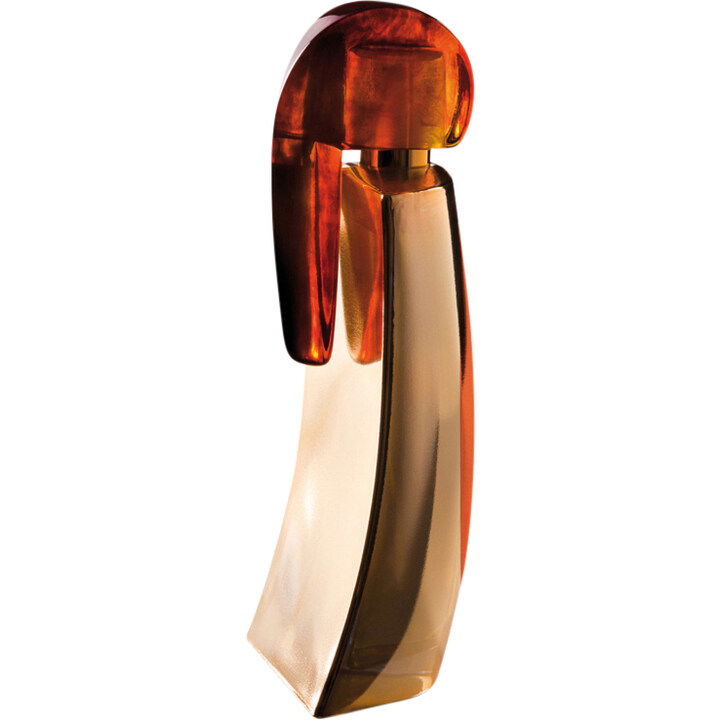
...this is how I imagine the "scent" of an average person in the Fertile Crescent during the early Bronze Age. Perhaps there’s also a brackish water accord from the swamps of the water-rich rivers Euphrates and Tigris. Akkad carries none of this mixture, which represents more of a stench than a fragrance, but perhaps describes rather the opposite of the life reality of the farmers and herders in the land between the rivers. The fragrance, created by Delphine Thierry together with Lubin's Gilles Thévenin, is dedicated to the legendary King Sargon of Akkad. Many myths surround him: son of a gardener, cupbearer of the king of Kiš, and later loved by the goddess Ištar, who made him the ruler of Akkad. A fragrance creation by Lubin seems fitting for such a divine ruler.
En-hedu-Ana, Sargon's daughter, became a priestess and called upon the goddess Ištar as follows: "My lady, beloved by An, I want to proclaim all your wrath! // I have piled up the coals, prepared the purification rites." Incense and other noble resins were slowly burned in the temple as part of the purification ceremony, and their scent must have spread far beyond the temple boundaries. Just like his daughter, Sargon must have smelled of incense. However, his scent of incense, elemi, styrax, and patchouli is, unlike his daughter's, not sacred: instead, the cold, resinous scent hangs in the cooling stone walls of his palace, which he had built in his newly chosen royal city of Akkad. The smoke is very present, yet always remains mild and never sharp, as befits a king. Sargon likely mixed a bit of spices into his sweet wine - a technique he learned as a cupbearer - thus overlaying the incense aroma with a sweet note.
The amber (and the vanilla and tonka notes that he probably did not know apart from amber at that time) that envelops the fragrance towards the end could have been easily procured by him, who had created an empire that stretched between both seas - the Mediterranean and the Persian Gulf - at the northern and southern borders of his realm.
For me, one of the most refined and interesting fragrances I own. That’s why it served for my second comment. A ruler can certainly wear it and present himself in monumental architecture. Today, I see it more on the type of "intellectual," who wears a lot of black or a blazer with a turtleneck underneath, if I may allow such cliché simplifications. Truly an inspiring fragrance that does not convey a brutal masculinity, as one might expect from an early Bronze Age king. It brings a subtle, intelligent kind of masculinity for its wearer, and due to its sweetness, it is just as unisex to wear as it is marketed and obviously (if one believes the statistics here) also worn. My entry into niche fragrances, and I have not regretted my purchase to this day!
En-hedu-Ana, Sargon's daughter, became a priestess and called upon the goddess Ištar as follows: "My lady, beloved by An, I want to proclaim all your wrath! // I have piled up the coals, prepared the purification rites." Incense and other noble resins were slowly burned in the temple as part of the purification ceremony, and their scent must have spread far beyond the temple boundaries. Just like his daughter, Sargon must have smelled of incense. However, his scent of incense, elemi, styrax, and patchouli is, unlike his daughter's, not sacred: instead, the cold, resinous scent hangs in the cooling stone walls of his palace, which he had built in his newly chosen royal city of Akkad. The smoke is very present, yet always remains mild and never sharp, as befits a king. Sargon likely mixed a bit of spices into his sweet wine - a technique he learned as a cupbearer - thus overlaying the incense aroma with a sweet note.
The amber (and the vanilla and tonka notes that he probably did not know apart from amber at that time) that envelops the fragrance towards the end could have been easily procured by him, who had created an empire that stretched between both seas - the Mediterranean and the Persian Gulf - at the northern and southern borders of his realm.
For me, one of the most refined and interesting fragrances I own. That’s why it served for my second comment. A ruler can certainly wear it and present himself in monumental architecture. Today, I see it more on the type of "intellectual," who wears a lot of black or a blazer with a turtleneck underneath, if I may allow such cliché simplifications. Truly an inspiring fragrance that does not convey a brutal masculinity, as one might expect from an early Bronze Age king. It brings a subtle, intelligent kind of masculinity for its wearer, and due to its sweetness, it is just as unisex to wear as it is marketed and obviously (if one believes the statistics here) also worn. My entry into niche fragrances, and I have not regretted my purchase to this day!
Translated · Show original
6 Comments
 Camey5000 5 years ago
Incredible scent, beautifully commented on.
Translated · Show originalShow translation
 Can777 5 years ago
1
Very nice and flattering incense scent that I really enjoy wearing. And a very well-written comment!
Translated · Show originalShow translation
 Monaco20 5 years ago
1
Very nice comment! The description immediately brings to mind images of a past culture. I'm looking forward to getting to know this scent soon.
Translated · Show originalShow translation
 Renata 5 years ago
1
Great comment, I really enjoyed reading it. Akkad was one of my first niche fragrances, and since then it has been my "evening scent," and it will stay that way.
Translated · Show originalShow translation
 Einfachich 5 years ago
2
Well described. It goes great with jeans and a T-shirt too ;-)
Translated · Show originalShow translation
 Pollita 5 years ago
1
I don't know that one yet. It could be to my liking.
Translated · Show originalShow translation