... titled the New York Times in 2006 [1]. However, the initially philosophical question arose not in an artistic but in a legal context. The highest French court, the Cour de Cassation, ruled in the summer of that year that the perfume creation of "Dune" by Dior primarily represents a craft and not an artistic achievement, as "The scent of a perfume, which results from the simple implementation of expertise [... does not] represent 'the creation of a form of expression that can benefit from the protection of intellectual works'" [2]. Consequently, the creator and plaintiff could not demand royalties after leaving the company for the sale of the fragrance.
What does this have to do with the scent?
The plaintiff in this case is named Nejla Bsiri-Barbir, who is also referred to as the perfumer of this fragrance [3]. This is not yet verifiable; the brand Reyane Tradition does not even have a website, and there is little information available about Ms. Bsiri-Barbir.
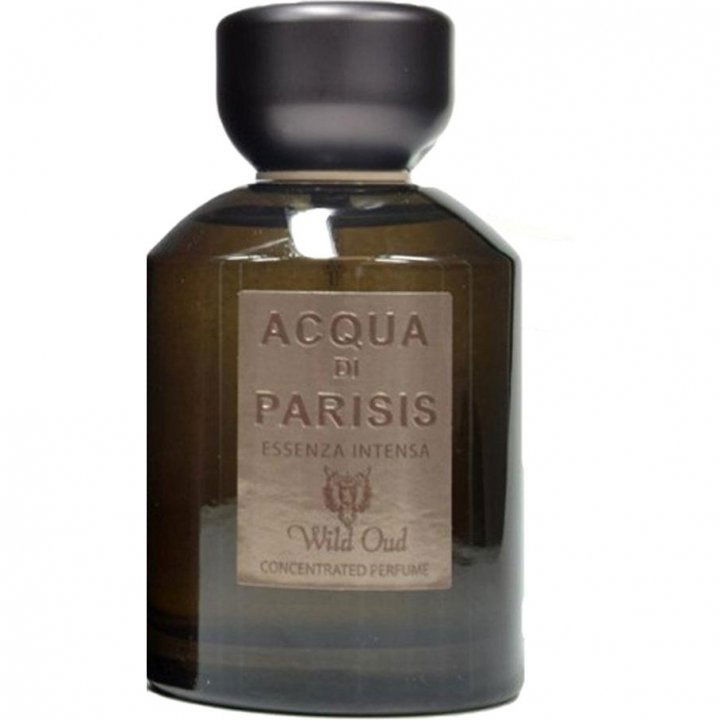
In any case, the scent is very unusual. It is sweet, a bit leathery, vanillic, oudy, and woody; I also perceive it as slightly rosy. I can't quite figure out the scent. It is very sweet and lasts forever; nevertheless, it is subtle and never kitschy or too heavy, not even at the beginning. Tending towards it, I would recommend it more for younger gentlemen. I can imagine wearing it in cold seasons (in autumn and winter) in all situations.
If the creation of perfume were merely simple "mixing" that follows strict rules, why is there no other scent like this? Of course, a scent is a collection of molecules. A painting is that too. And naturally, one can learn the craft of perfumery, just like painting. However, this scent is so unusual that it cannot have arisen from the mere "dumping of substances," based on experiential knowledge. There is a creative process behind it. The will to create a sweet scent that is wearable at any time. That is a difficult balancing act. This scent is something entirely new. One could say: art.
Whether the creation of this unusual scent at the price of €25 is intended as a planned critique, a declaration of war against large fragrance companies, I do not know. Given the price, quality, and uniqueness of this fragrance, I can well imagine it, in connection with the story of the alleged perfumer. The anonymity of the brand behind the perfume is also unusual, a contrast to the all-encompassing marketing of designer fragrances, and even most niche fragrances.
Ultimately, it doesn't matter whether the perfumer is indeed Nejla Bsiri-Barbir and whether she, turned away from large corporations and their business practices, stands behind the brand Reyane Tradition. The perfume is anyway a declaration of war in their direction.
[1] Is a Scent like a Song? Oui and Non, Elaine Sciolino, New York Times, July 13, 2006
[2] Cass. civ. 1. ch., June 13, 2006, Propr. Intell. pp. 442-443; reprinted in Claire Guillemin, Law & Odeur: Fragrance Protection in the Fields of Perfumery and Cosmetics, p. 167.
[3] e.g. at Pillashop, easily found in an internet search for Reyane fragrances, left column of the website


 Melisse2 6 years ago