

Ropanski2020
36 Reviews
Translated · Show original

Ropanski2020
Top Review
18
Antique Wood
There are countless celestial bodies in the Oud sky, and just as faith can move mountains, the blessed sources are subject to a deceptive appearance, which even with a lot of trust is not always easy to overcome. For more than elsewhere, here the charlatanism is almost on par with expertise.
Founded in 2018, Al Hashimi is one of the central places to acquire Oud distillates of the highest possible quality. The founders undoubtedly belong to the best connoisseurs of Oud in the industry. At the same time, Al Hashimi marks something like the great "unknown acquaintance," being well-connected in a mercantile game that takes place more in the slipstream than in the fast lane.
Al Hashimi sometimes distills itself (England), but mostly sources the oils from various suppliers and small distilleries worldwide (e.g., Borneo, Malaysia, and preferably Saudi Arabia), maintains its own research laboratory in Europe, and is actively involved as a co-founder (Nadeem Khan) at Agarwood Eco Capital, a Hong Kong-based manager for agarwood plantations in Southeast Asia.
The selection of oils is exquisite and truthfully curated, the profiles are spot on, so much can be said as a compliment in advance. Emphasizing this is not a casual cliché; Al Hashimi is a company that, as small as it is selective, holds stock for its customer base.
While the competition likes to adorn itself with ostentatious garments off the rack, here they forgo scene-known strategies that are often imposed on the topic (Oud) to promise quality without having to fundamentally deliver on it. Following the confessing motto: "First the packaging, then the content!" customers are dazzled with whatever they can muster, where some merchants find any resonant stories or certain royal insignia ("SQ") just right, as a flamboyant promise without a chain of evidence.
Oud from Sylhet - that is a story in itself. Getting wild Oud from this region is practically impossible; the market is virtually barren. Al Hashimi published a very readable blog on their homepage about this, highlighting not only the special significance of the region (for the Oud industry) but also the historical references and the political dimension - the arbitrary border drawing. It is worth referring to it here, accessible via the following link: https://alhashimi.com/blogs/posts/the-hidden-treasure-of-sylhet.
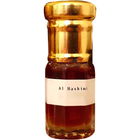
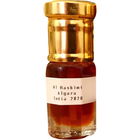
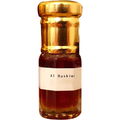
Sylhet Sultani 80 opens with a dense, strictly balsamic paste, unmistakably clear in its resolution: a decayed piece of wood, slightly peaty, viscous and dark (stained), interwoven with fermented bycatch, yet also quite warm, unrestrainedly spicy, far from caramelized sweet top notes (molasses) or dried fruit nuances, presenting a rather redwood profile. A minimal acidity, sharp-edged (black pepper, hint of Sichuan pepper) to sublimely sweaty lingers, scratching at the patina. This unfolds a lightly tanned to strongly spicy wood profile, underpinned by sun-dried tobacco and earthy coffee grounds nuances, along with a hint of bitter raw cocoa, suspiciously close to an aged antique wood finish that is rich in years and shows quality raised under little fresh air supply. Over time, it becomes a bit smoother, but what remains constant is the piperine-like wood spice, which truly stands out and clearly differentiates itself from other balsamic oils of this kind.
Sylhet Sultani 80 has little in common with the ordinary, sometimes inferior Copper Can Farm oils (hydrodistillation) from the specific belt region (from India through Bangladesh to Myanmar), which flood the market with their heavily fermented hay selections; it is far more complex, elevated, and also spicier. However, Sylhet Sultani 80 is not a classic, even if the name and scent character suggest an older vintage. According to the operators, the oil is still quite young (distilled in 2021), and the "80" refers to the average age of the natural, wild wood harvest (most likely: Agallocha). What can be said with considerable certainty is that this oil is neither aimed at Oud beginners nor at fans of classic (low-fermentation) New Gen distillates; the barn component is still too distinctly worked out for that.
Everyday usability is virtually excluded in our latitudes; the strictness of the profile disregards the masses, remaining a private affair, which again draws a casuistic arc to the original purpose of such oils: enjoyment in personal union, as a genuine individual and boundary experience. Wearability defines the smallest possible circle; it grounds its wearer and excludes the environment, whose antiseptic habitus is anyway denied to such profiles.
Sylhet Sultani 80 is aimed at die-hard Oud fans who have no qualms about characterful profiles. By no means a standard oil, and it is absolutely understandable that it has made its way into Al Hashimi's private collection. In conclusion: a significant relic of nature.
Founded in 2018, Al Hashimi is one of the central places to acquire Oud distillates of the highest possible quality. The founders undoubtedly belong to the best connoisseurs of Oud in the industry. At the same time, Al Hashimi marks something like the great "unknown acquaintance," being well-connected in a mercantile game that takes place more in the slipstream than in the fast lane.
Al Hashimi sometimes distills itself (England), but mostly sources the oils from various suppliers and small distilleries worldwide (e.g., Borneo, Malaysia, and preferably Saudi Arabia), maintains its own research laboratory in Europe, and is actively involved as a co-founder (Nadeem Khan) at Agarwood Eco Capital, a Hong Kong-based manager for agarwood plantations in Southeast Asia.
The selection of oils is exquisite and truthfully curated, the profiles are spot on, so much can be said as a compliment in advance. Emphasizing this is not a casual cliché; Al Hashimi is a company that, as small as it is selective, holds stock for its customer base.
While the competition likes to adorn itself with ostentatious garments off the rack, here they forgo scene-known strategies that are often imposed on the topic (Oud) to promise quality without having to fundamentally deliver on it. Following the confessing motto: "First the packaging, then the content!" customers are dazzled with whatever they can muster, where some merchants find any resonant stories or certain royal insignia ("SQ") just right, as a flamboyant promise without a chain of evidence.
Oud from Sylhet - that is a story in itself. Getting wild Oud from this region is practically impossible; the market is virtually barren. Al Hashimi published a very readable blog on their homepage about this, highlighting not only the special significance of the region (for the Oud industry) but also the historical references and the political dimension - the arbitrary border drawing. It is worth referring to it here, accessible via the following link: https://alhashimi.com/blogs/posts/the-hidden-treasure-of-sylhet.
Sylhet Sultani 80 opens with a dense, strictly balsamic paste, unmistakably clear in its resolution: a decayed piece of wood, slightly peaty, viscous and dark (stained), interwoven with fermented bycatch, yet also quite warm, unrestrainedly spicy, far from caramelized sweet top notes (molasses) or dried fruit nuances, presenting a rather redwood profile. A minimal acidity, sharp-edged (black pepper, hint of Sichuan pepper) to sublimely sweaty lingers, scratching at the patina. This unfolds a lightly tanned to strongly spicy wood profile, underpinned by sun-dried tobacco and earthy coffee grounds nuances, along with a hint of bitter raw cocoa, suspiciously close to an aged antique wood finish that is rich in years and shows quality raised under little fresh air supply. Over time, it becomes a bit smoother, but what remains constant is the piperine-like wood spice, which truly stands out and clearly differentiates itself from other balsamic oils of this kind.
Sylhet Sultani 80 has little in common with the ordinary, sometimes inferior Copper Can Farm oils (hydrodistillation) from the specific belt region (from India through Bangladesh to Myanmar), which flood the market with their heavily fermented hay selections; it is far more complex, elevated, and also spicier. However, Sylhet Sultani 80 is not a classic, even if the name and scent character suggest an older vintage. According to the operators, the oil is still quite young (distilled in 2021), and the "80" refers to the average age of the natural, wild wood harvest (most likely: Agallocha). What can be said with considerable certainty is that this oil is neither aimed at Oud beginners nor at fans of classic (low-fermentation) New Gen distillates; the barn component is still too distinctly worked out for that.
Everyday usability is virtually excluded in our latitudes; the strictness of the profile disregards the masses, remaining a private affair, which again draws a casuistic arc to the original purpose of such oils: enjoyment in personal union, as a genuine individual and boundary experience. Wearability defines the smallest possible circle; it grounds its wearer and excludes the environment, whose antiseptic habitus is anyway denied to such profiles.
Sylhet Sultani 80 is aimed at die-hard Oud fans who have no qualms about characterful profiles. By no means a standard oil, and it is absolutely understandable that it has made its way into Al Hashimi's private collection. In conclusion: a significant relic of nature.
Updated on 04/06/2026
14 Comments


Bangladeshi oud