Wear festive clothing and settle down on mats between walls of white paper. Observe the master of ceremonies, then slowly close your eyelids. Sharpen your senses, there are anise herbs, at first they waft gently alongside flowers, they carry mushroom lamella leaves, gradually becoming greener and bitter. Soon you notice mild summer images of curry yellow and Greek hay, honeydew drips onto spicy fields, sharp cool mists pass by, like clove flags on the trees of the forests. There, the soils breathe peppermint leaves, through every moldy soft fiber of the falling bark of ancient woods, which shimmer in the ethereal resinous veil, the contemplative sound of nature.
***
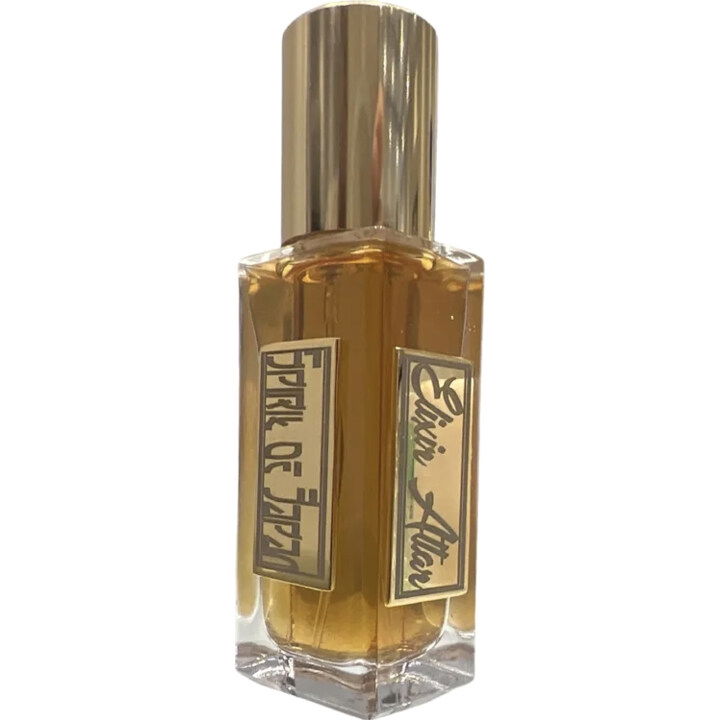
"Spirit of Japan" thematizes the Japanese Kōdō ceremony, which originated in the 14th century, where participants listen to the "sound of fragrance" with a master of ceremonies, compare its qualities, and link them with poetic associations or listen to traditional literature. Because the brain perceives scents in the limbic system, the "primitive" part of the brain associated with instinct and memory, and poetry activates a different part of the brain, the combination of these two activities in Kōdō opens up new ways of thinking and levels of consciousness. Precious ouds (Jinkō) and sandalwoods (Byakudan) play a central role during the incense burning on charcoal, cinnamon bark, clove, anise, patchouli, flowers, and herbs are also included.
Ahmed Mostafa's interpretation initially reminds one of dried chamomile leaves, green and soft, delicately smoky, before it unfolds a subtle, spicy-bitter sharpness of anise, clove, cumin, and cinnamon leaf aromas support the character and carry it into the base. After a brief hint of curry-like turmeric dust, spicy hay notes of fenugreek, the so-called Greek hay, become evident, on which honey-sweet labdanum resins float like tiny pearls, I also believe I perceive marzipan-like notes of heliotrope within it. While the hay in the base continues in soft, mulchy bark notes of eagle wood, the spicy-bitter sharpness merges into minty-earthy patchouli as well as into ethereal, glue-like aromas of sandalwood. Styrax and benzoin soften the ethereal towards tree resins, amber and deer musk remain rather reserved, adding more depth.
"Spirit of Japan" remains, true to the ceremony, rather restrained in projection, fine-green-smoky and woody-spicy contemplative, and of course, it is determined by the quality of its noble raw materials.
This ceremony certainly sounds great - no doubt about it. However, I have to emphasize how mixed my experiences with this brand have been so far. No one has fully convinced me yet. What I can give Mostafa credit for are the ideas he reinterprets for fragrances/collections - with interesting focuses. I’ll give the brand another chance.
You take me straight to the heart of Kyoto, to ponder over smoke rings in an old tea house and "listen to the scent." Thank you for the poetry and the interesting information. It seems to be a fragrance one could meditate on. :)
Thank you for taking me/us on this journey. How wonderful that we get to experience the connection of scents with poetic associations and literature (and music) here on Parfumo, thanks to you.
I enjoyed walking this path of traditional, artistic, and classic fragrance perception with you. I'll keep the imaginations of the Kōdō ceremony well in my memory and on my memo list. ✨
Fascinating and wonderfully described. I've never heard of Kōdō before and I'm delightfully thrilled by the beauty of the full circle: here, learning about it through your associative poetry.
It was a special pleasure for me to be taken by you to a Kōdō ceremony. On my own, I probably would have only caught half of it, and the magic would have remained hidden from me.
Sounds exciting to me. Japan smelled mainly of camphor and special incense for me. I hope I can make it back there. The country left a deep and lasting impression on me.
Without having much contact with Japanese culture, your description of the Kodo ceremony (no idea how you managed to type that "O" ;) is really interesting - what a deep and multifaceted way to approach a fragrance! I really enjoyed reading your review.
I’d love to participate in this ceremony, disguised as a little mouse. I feel the vibrations and let this olfactory experience resonate in my limbic system. What images!
Beautifully described. Yes, the Japanese ceremonies are always cleverly combined, and every little detail carries a deeper meaning. As a lover of good Japanese agarwood sticks, I really enjoyed reading this. Jinkōpokal.
A ceremony I would love to attend. The connection of perceptions and different senses and associations is remarkable and goes far beyond just consuming a fragrance. Can we please skip the clove when it comes to incense? ;)
The scent sounds great from your description, and just because of the hay, fenugreek, and turmeric, it's excellent - not to mention how Kodo is increasingly establishing itself in a Western context...
"Listening to the scent, comparing its qualities, and linking them with poetic associations..." A ceremony made just for you! And then a 9!
I'm happy for you!
I'm always intrigued by the Japanese fragrances from this brand, especially when the Japanese mentality shines through. I'm curious to see how that plays out. I definitely need to check out Elxir this year since it's been getting a lot of buzz.


As a musical backdrop to your lovely description...
Thank you for the poetry and the interesting information. It seems to be a fragrance one could meditate on. :)
Such a fragrance experience is incredibly sensual when you open yourself up mentally.
You mentioned the first scent since it was re-released later.
Enjoyed reading this!
🏆
I'm happy for you!