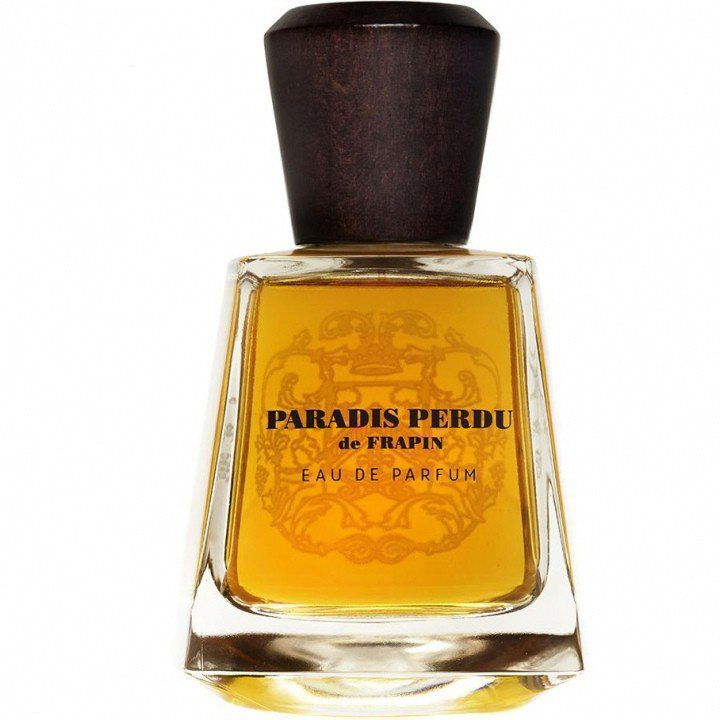
The name of this perfume is very subtle and ambiguous; I had to let hours pass to reflect on what this scent with this name could mean.
I immediately smell sour citrus as well as something very bitter and green upon application.
First, the story from the Bible comes to mind about the expulsion from Paradise.
Of course, I know that this story originates from much older tales and myths. And presumably, Paradise was the land around the Euphrates and Tigris, the land where milk and honey flowed. Today's Iraq. - When one imagines the area there currently, it is sad and horrifying what people have made of it. An old cause is climate change from long ago, which has caused the formerly fertile land to erode. I don't want to elaborate on that here and now. In the last few decades, Paradise has finally been completely destroyed.
According to this biblical myth, we humans have been expelled from the warm, fertile, and secure state, especially from unconsciousness. Because we wanted to know. We have spiritually lost Paradise. We have developed a sense of self-awareness, can and must see ourselves as separate from the world. This embryonic security cannot be regained, no matter how much we want it, at least sometimes: the total and everlasting feeling of unity with nature and the cosmos is "perdu." Although there are many people who struggle hard to achieve exactly this state. To do so, we would have to lose our minds in a way.
After this spiritual expulsion from Paradise, life became consciously hard, bitter, laborious, cruel, and unjust. Us against everything else.
However, we also long for Paradise, for the carefree, for the ever-warm, for the pleasant scents, and above all for a carefree life without toil, hunger, and unfulfilled desires. However, that would also mean lacking any past and future; living in the moment.
"Paradis Perdu" shows in a fragrant way that and how we have been expelled from Paradise through its everlasting bitter green herbaceousness. "Paradis Perdu" is a cold scent, which is further intensified by the camphor-like smell of Ravensara.
There is also the crucial scene of the myth with the apple. This most likely refers to the pomegranate. I have never tasted a pomegranate that didn't taste sour to me.
I also smell the bitter citrus scents almost throughout the entire duration. I also smell something smoky, the fire that humanity has made serviceable to itself, up to deadly weapons.
Since I find "Paradis Perdu" so bitter, without any creaminess, without flowers, and further intensified by harsh aromatic wood scents, vetiver, and moss, I keep thinking of: "Het bittere kruid" (The bitter herb), the title of a book by Marga Minko, which we read as our first reading in Dutch during our studies.
It deals with the Shoah of the Jews in the Netherlands and allegorically, again the Bible, with the Seder evening, the eve of the Jewish Passover, during which certain foods and sequences of dishes, rituals are prescribed.
The Passover festival commemorates the exodus of the Israelites from Egypt to the "promised" land. This is by no means felt as a happy event in collective memory, but rather as an expulsion. It is bitter when one must leave the familiar, in this case from bondage and before the cruelty of the rulers, but still from the flesh pots of the Egyptians, from all that is comfortable, familiar, and for many, homely.
As the religious scholars here know, this is also somewhat of a myth; it was still different. And therein lies the tragedy, the sorrow, and bitterness.
One followed a religious leader who, with his new monotheistic faith, was unwelcome in Egypt with his followers, the later Israelites. He had told them that they were the chosen people of a God whom they had to follow and obey. I am writing this now in a shortened form.
Because I am concerned with the Seder meal on the eve of Passover. It is prescribed that bitter herbs are served twice, as a reminder of the last evening before the exodus from Egypt, which was felt and still is felt by the Israelites as a bitter fate.
And this bitterness, this harsh unhomeliness, this homelessness I find in "Paradis Perdu."
This nonetheless clear and pure chypre almost loses the harsh acidity of the top note at the end, becoming ever more herbaceous, bitter, and woody with a smoky note.
Galbanum burns on my lips.
There are no balsamic scents during the course that soothe "Paradis Perdu." No flowers, no sweet aromas and resins, no pleasantly aromatic spices, and also no such herbs, no walambra or their synthetic substitutes make "Paradis Perdu" sweet or even balsamic.
Meanwhile, after several tests, the longevity is good for me. The initial scent blindness for a short time is also lifted with "Paradis Perdu." In my assessment, "Paradis Perdu" is a fragrance with the most exquisite and purest ingredients. A scent for men and women without restriction. Men and women had to leave Paradise; men, women, and children had to flee from Egypt. And in the darkest time of the 20th century, it was extremely bitter for many men, women, and children. They had to go into exile, into banishment, into captivity under the most horrific conditions up to annihilation, many in fire and smoke. A very touching scent for me.
How nice that you're writing comments again. And thank you for reminding me of this scent. I used to have it and I'm considering adding it back to my collection.
Given your story, which I read with great interest again, thank you, I would like to test the fragrance once more. Some time ago, I didn't like it; it was very harsh.


 Palonera 8 years ago
 Cravache 8 years ago
 Ladyg 8 years ago
 Yatagan 8 years ago
 Turandot 8 years ago
 Nochoi 8 years ago
 Goldie 8 years ago
 Friedaherz 8 years ago
 Pluto 8 years ago