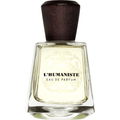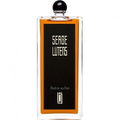


 Top Notes
  Citron
 Grapefruit
 Bergamot
 Mandarin orange
 Heart Notes
  Galbanum
 Paradisamide®
 Elemi resin
 Ravansara
 Basil
Basil Spinach
 Vine
Vine Base Notes
  Precious woods
 Vetiver
 Virginia cedar
 Musk
Musk Hay
Hay Labdanum
 Moss
Moss Rosewood

Meggi
1018 Reviews
Translated · Show original

Meggi
Top Review
21
I Choose a Partial Perdu
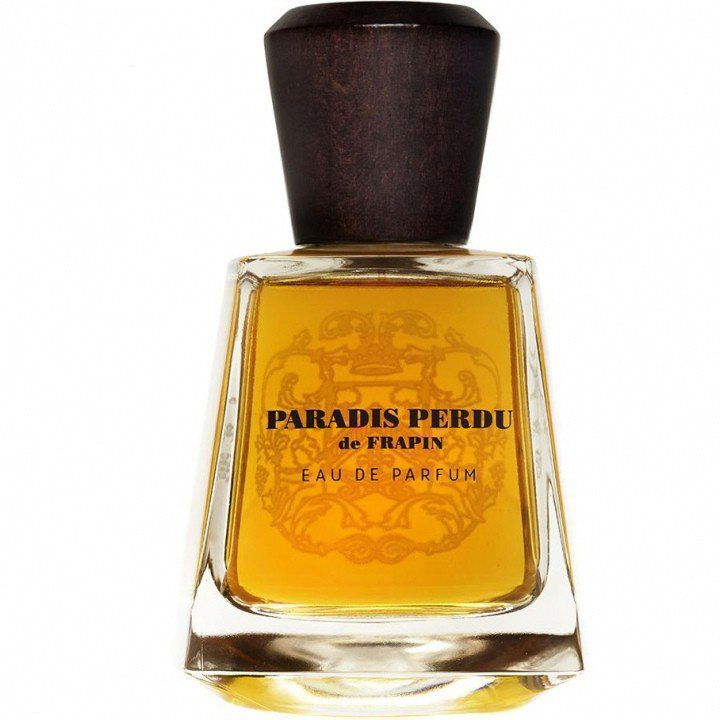
Opinions on what a paradise should be like are famously divided. It’s hardly surprising, then, that the previous statements here do not provide a unified picture of what is actually perdu. And I feel like I’m ready with the next smoke bomb…
The opening features something herb-citrusy, then I speculate for a while about elemi and galbanum. But before I can organize everything, an unsolicited thought about waxy tuberose slips in. Huh? I quickly realize that a significant portion of Paradis Perdu surprisingly reminds me of Voyance by Baruti - there, tuberose and vetiver are blended.
A parallel test reveals that the association is stylistically by no means absurd, but regarding its cause, I am at a loss, after all, the Frapin does not smell like tuberose, and an early vetiver wouldn’t fit either. So, there can be no talk of fragrance twins; in any case, I am comparing a snippet with a whole. Strange.
Let’s move on quickly. Because the Frapin has already continued its journey, and that leads into the green; flanked… oh, what: dominated by a citrus-lemon peel sting. Candied lemon is plausible. Soon, a tension field arises between green-resinous-waxy and a still quite biting fruity something. Regarding the latter, I experience an Aha effect when I read that the scent of “Paradisamide” is described as “guava and passion fruit with nuances of grapefruit, rhubarb, and black currant.” Checked off. Considering the enormous stability and longevity of this aroma, the question arises whether there is really much else from the fruit corner besides the artificial fragrance compound.
Occasionally, I stubbornly reach out towards a Voyance cross-comparison and puzzle over it, as I find my idea sometimes more, sometimes less comprehensible. However, I never want to put the matter to rest.
As the morning progresses, the presumably lab-fruit horn begins to annoy me with its character's unchangeability, and I would slowly welcome a “partial perdu” of this note. It seems that its aromatic colleagues feel similarly. They let the (supposed) chemistry just waft along while they themselves take on new activities in the background as noon approaches. Under the horn, it becomes darker and rounder. A rich selection of wood is clearly felt, along with light-creamy resin. And finally, the aforementioned honking is gradually losing its air. The resinous notes come to the forefront, and - there it is again, the partial Voyance similarity, and it now accompanies me through the afternoon.
The two are certainly by no means fragrance twins, did I mention that already? The differences in the overall picture remain evident. Above all, Paradis Perdu strikes again with the next jab. What is that now? Perhaps a rubbery sour vetiver has secretly been lurking somewhere and seizes its chance to intrude directly into the reluctantly fading fruity remnants. If that is meant to reflect the penetrance with which we are tirelessly reminded of our eternal sinfulness and lost paradise: Oh no, I’m not in the mood for that.
I should set Paradis Perdu aside. It seems to me that Mr. Drosopoulos has equally captured the most beautiful aspect of Paradis Perdu and elevated it to a separate fragrance with his Voyance as a “spin-off.” For my rating, I’ll even add half a point. It’s a pity that I ultimately cannot clarify how the similarity came about materially.
Conclusion: NO FRAGRANCE TWINS! One cannot say that often enough.
I thank Puck1 for the sample.
The opening features something herb-citrusy, then I speculate for a while about elemi and galbanum. But before I can organize everything, an unsolicited thought about waxy tuberose slips in. Huh? I quickly realize that a significant portion of Paradis Perdu surprisingly reminds me of Voyance by Baruti - there, tuberose and vetiver are blended.
A parallel test reveals that the association is stylistically by no means absurd, but regarding its cause, I am at a loss, after all, the Frapin does not smell like tuberose, and an early vetiver wouldn’t fit either. So, there can be no talk of fragrance twins; in any case, I am comparing a snippet with a whole. Strange.
Let’s move on quickly. Because the Frapin has already continued its journey, and that leads into the green; flanked… oh, what: dominated by a citrus-lemon peel sting. Candied lemon is plausible. Soon, a tension field arises between green-resinous-waxy and a still quite biting fruity something. Regarding the latter, I experience an Aha effect when I read that the scent of “Paradisamide” is described as “guava and passion fruit with nuances of grapefruit, rhubarb, and black currant.” Checked off. Considering the enormous stability and longevity of this aroma, the question arises whether there is really much else from the fruit corner besides the artificial fragrance compound.
Occasionally, I stubbornly reach out towards a Voyance cross-comparison and puzzle over it, as I find my idea sometimes more, sometimes less comprehensible. However, I never want to put the matter to rest.
As the morning progresses, the presumably lab-fruit horn begins to annoy me with its character's unchangeability, and I would slowly welcome a “partial perdu” of this note. It seems that its aromatic colleagues feel similarly. They let the (supposed) chemistry just waft along while they themselves take on new activities in the background as noon approaches. Under the horn, it becomes darker and rounder. A rich selection of wood is clearly felt, along with light-creamy resin. And finally, the aforementioned honking is gradually losing its air. The resinous notes come to the forefront, and - there it is again, the partial Voyance similarity, and it now accompanies me through the afternoon.
The two are certainly by no means fragrance twins, did I mention that already? The differences in the overall picture remain evident. Above all, Paradis Perdu strikes again with the next jab. What is that now? Perhaps a rubbery sour vetiver has secretly been lurking somewhere and seizes its chance to intrude directly into the reluctantly fading fruity remnants. If that is meant to reflect the penetrance with which we are tirelessly reminded of our eternal sinfulness and lost paradise: Oh no, I’m not in the mood for that.
I should set Paradis Perdu aside. It seems to me that Mr. Drosopoulos has equally captured the most beautiful aspect of Paradis Perdu and elevated it to a separate fragrance with his Voyance as a “spin-off.” For my rating, I’ll even add half a point. It’s a pity that I ultimately cannot clarify how the similarity came about materially.
Conclusion: NO FRAGRANCE TWINS! One cannot say that often enough.
I thank Puck1 for the sample.
16 Comments






 Kurai
Kurai Verbena
 Chizza
 Torfdoen
 Augusto
 Mefunx
 Zauber600
 Jacko
Jacko Seerose
 Ergoproxy