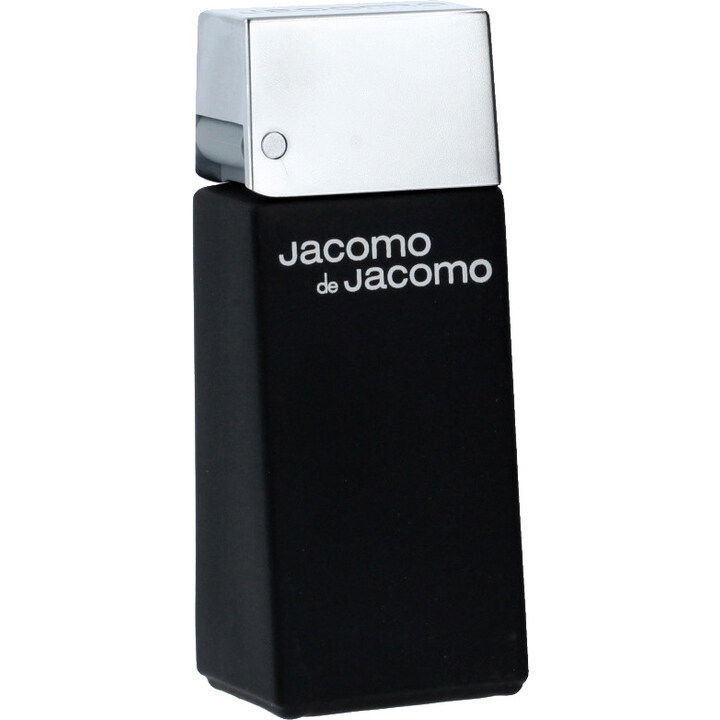
Jacomo de Jacomo.
After all the tempting comments about this fragrance, a blind buy was a must.
In hindsight, however, I would advise everyone against a blind buy of this scent, as it is somewhat unusual for today's times.
In some way, this fragrance reminds me of the advertisement for another fragrance called Sauvage.
Jacomo de Jacomo is Sauvage.
Here, cloves are chewed instead of teeth being brushed.
The smell of the campfire from the night before still clings to the clothes.
And just as piercing and room-filling as this cold smoke is the opening.
The often-mentioned ham note is definitely noticeable.
A vegetarian does not seem to be Jacomo.
Although it is strongly smoky, Jacomo never feels cool, because beneath the rough exterior lies a soft core of cinnamon.
The cinnamon in Jacomo is cinnamon-like to my nose but not necessarily sweet.
Jacomo sleeps on oak moss.
In its pockets are dried patchouli leaves, because even though Jacomo is at home in the wilderness, it still wants to smell good.
Jacomo lives in nature, for in the synthetic world, Jacomo could never really find its way.
At first, the fragrance was a disappointment and smelled only of the much-mentioned ham note, which later, especially on clothing, transformed into an ashtray.
The smoke does not dissipate over time, but the individual notes of the fragrance become increasingly distinguishable.
It is positively noticeable that the scent feels very natural.
The longer you know it, the better you learn to understand and perhaps appreciate its uniqueness(?).
Today, I enjoy occasionally sniffing the bottle. Sometimes I wear it at home when I don’t have to be around people.
In fact, I particularly like to smell it during walks in nature.
Who knows, maybe I’ll take it with me to civilization soon?
I feel the same way about it; on clothes, it later has a scent reminiscent of Aachen cups, and outdoors in nature, the fragrance really unfolds nicely.


 MonsieurTest 3 years ago
 Mischa99 3 years ago