

16
Top Review
Sympathy for the violet
Violets are among my favorite flowers, alongside roses and edelweiss, and I love violet perfume very much. Therefore, I feel somewhat obligated to redeem the violet, which still suffers unjustly today, in the 21st century, from the reputation of being old-fashioned, stuffy, and square, a similarly yellowed relic of the 19th century like corsets, crinolines, lace fans, powder boxes, opera glasses, dance cards, chaperones, court counselors, mutton chops, or duel pistols.
To trace the reason for this stuffy reputation, one must go back quite far: Those of you who were around in the sixties, seventies, or eighties probably encountered grandmothers or older ladies in the streets or within your own family who were born in the 19th century or at least during the imperial era and experienced their childhood, youth, and socialization before the First World War. They wore the accessories of the turn of the century, the fashions and habits of their girlhood well into the 20th century. The last buns, often adorned with hairnets, powder boxes, lace handkerchiefs, and white lace blouses, the last hats decorated with artificial flowers, long black skirts, and lace-up ankle boots still occasionally graced the streets as the final fashionable display of the imperial era, extending its wistful stylistic farewell deep into the 20th century. This was the grandmother generation that smelled of mothballs and rose soap. And violets, as the quintessential fashionable flower of the 19th century, were also part of their stylistic ensemble due to their socialization in the waning imperial era. One smelled of violets, one sucked on violet pastilles, and wore violet brooches on their lapels as a fashionable reminiscence of the posy of pinned flowers. So, anyone who experienced this grandmother generation raised in the imperial era might indeed associate violets with "old boxes" that opened powder boxes and dabbed with lace handkerchiefs, considering them a yellowed relic of the 19th century.
Today, grandmothers no longer look like that. I myself unfortunately did not experience this grandmother generation. Unfortunately, because I believe that generation produced many fascinating characters who would have had incredible stories to tell and who saw and experienced things that we only know from documentaries and history books, both good and bad. Today's grandmother generation was often active during the sixties, listens to Jimi Hendrix and Janis Joplin, the Beatles, Stones, or Elvis Presley, often has more drug experience than their pubescent and/or studying grandchildren, and finds their moral views stuffy. Yes, of course, exaggeration and cliché, but still: poodle hats, hairnets, rose soaps, and mothballs? Not a chance. My grandmother is technically more advanced than I am (for me, everything after the invention of the toaster is a technical challenge... oh, let’s be honest, after the advent of the steam locomotive!). She either wears a bob or a fashionable short hairstyle, while I am the one who has a bun, Victorian-style lace-up boots, a parasol, powder boxes, and fans in her fashion repertoire. Nevertheless, although imperial grandmothers have long since passed, the notion of the stuffy, imperial, old-fashioned accompanying flower of old boxes still shapes the image of the violet today. Probably many have simply inherited the prejudices of their parents and grandparents. If grandma constantly talks about her ancient geography teacher from the 1960s, Miss M., who wore calf-length frilly underpants and filled the entire classroom with a cloud of violet perfume, it might also be difficult to view violet scents as anything other than old-fashioned, stuffy, and yellowed. Today, however, the empire with its fashionable appearances has been gone for so long that contemporary individuals no longer associate it with a grandfather endlessly recounting the battle of the Somme or complaining, "that wouldn't have happened under the Kaiser!" nor with a grandmother who sucks on violet pastilles, only loosens her bun for sleeping, and finds "that dreadful beat music" outrageous and shocking (of course, that wouldn't have happened under the Kaiser either!). Therefore, I also do not associate violets with old boxes, at most with nostalgia. And retro is, after all, back in trend and the hottest thing around.
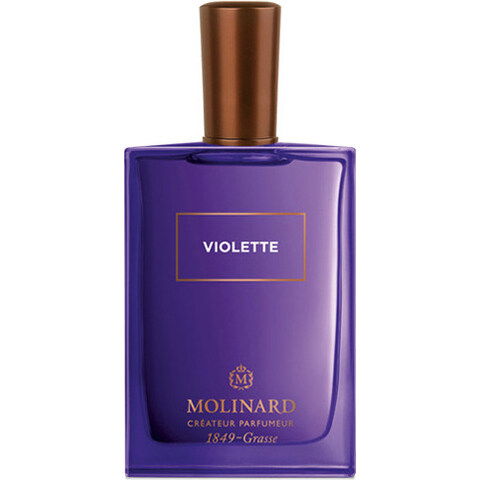
I have always liked violets, with their delicate, fragile, elegant, and nostalgic charm, and I enjoy sucking on violet pastilles. This perfume also reminds me of the scent of violet pastilles. The nostalgic, powdery, graceful violet scent like from the dressing table of a fine lady from the late Biedermeier is not what I had originally hoped for. But I have found such a scent in "Eau de Cologne 1920: Fidèle Violette," so that’s not a big deal. "Violette" has nothing powdery about it and nothing old-fashioned or nostalgic, in my opinion. It is louder and fruitier than "Fidèle Violette" and offers exactly what the name and the color of the bottle promise: violets, nothing more and nothing less. More specifically, violet pastille. The other notes that only appear in the base of the fragrance are mere embellishments and can only be perceived very subtly: a hint of clean musk grounds the scent and tempers the sweetness; it and the violet leaf provide a slightly more robust, unisex note. Nevertheless, for me, it remains a purely feminine fragrance. Iris subtly underlines the scent and adds a bit of additional adult elegance. I recommend this violet scent to anyone who still clings to the cliché of the stuffy, old-fashioned violet, because here the flower comes across clean, pure, modern, slightly fruity, and neither powdery, dusty, nor wistfully nostalgic. I recommend the perfume to all fans of violet pastilles anyway! The sillage and longevity are not earth-shattering, but quite solid; with two sprays, I can definitely get through the day. For me, it was (scent) love at second sight, not my powdery, Victorian fine-lady violet, but just right for autumn and late summer, a clean, green-tinged, slightly spicy, and fruity violet pastille scent that elegantly and qualitatively accompanies you through the day and unfolds wonderfully, especially on forest walks and in nature.
"Give seh Veilchen a chance!"
To trace the reason for this stuffy reputation, one must go back quite far: Those of you who were around in the sixties, seventies, or eighties probably encountered grandmothers or older ladies in the streets or within your own family who were born in the 19th century or at least during the imperial era and experienced their childhood, youth, and socialization before the First World War. They wore the accessories of the turn of the century, the fashions and habits of their girlhood well into the 20th century. The last buns, often adorned with hairnets, powder boxes, lace handkerchiefs, and white lace blouses, the last hats decorated with artificial flowers, long black skirts, and lace-up ankle boots still occasionally graced the streets as the final fashionable display of the imperial era, extending its wistful stylistic farewell deep into the 20th century. This was the grandmother generation that smelled of mothballs and rose soap. And violets, as the quintessential fashionable flower of the 19th century, were also part of their stylistic ensemble due to their socialization in the waning imperial era. One smelled of violets, one sucked on violet pastilles, and wore violet brooches on their lapels as a fashionable reminiscence of the posy of pinned flowers. So, anyone who experienced this grandmother generation raised in the imperial era might indeed associate violets with "old boxes" that opened powder boxes and dabbed with lace handkerchiefs, considering them a yellowed relic of the 19th century.
Today, grandmothers no longer look like that. I myself unfortunately did not experience this grandmother generation. Unfortunately, because I believe that generation produced many fascinating characters who would have had incredible stories to tell and who saw and experienced things that we only know from documentaries and history books, both good and bad. Today's grandmother generation was often active during the sixties, listens to Jimi Hendrix and Janis Joplin, the Beatles, Stones, or Elvis Presley, often has more drug experience than their pubescent and/or studying grandchildren, and finds their moral views stuffy. Yes, of course, exaggeration and cliché, but still: poodle hats, hairnets, rose soaps, and mothballs? Not a chance. My grandmother is technically more advanced than I am (for me, everything after the invention of the toaster is a technical challenge... oh, let’s be honest, after the advent of the steam locomotive!). She either wears a bob or a fashionable short hairstyle, while I am the one who has a bun, Victorian-style lace-up boots, a parasol, powder boxes, and fans in her fashion repertoire. Nevertheless, although imperial grandmothers have long since passed, the notion of the stuffy, imperial, old-fashioned accompanying flower of old boxes still shapes the image of the violet today. Probably many have simply inherited the prejudices of their parents and grandparents. If grandma constantly talks about her ancient geography teacher from the 1960s, Miss M., who wore calf-length frilly underpants and filled the entire classroom with a cloud of violet perfume, it might also be difficult to view violet scents as anything other than old-fashioned, stuffy, and yellowed. Today, however, the empire with its fashionable appearances has been gone for so long that contemporary individuals no longer associate it with a grandfather endlessly recounting the battle of the Somme or complaining, "that wouldn't have happened under the Kaiser!" nor with a grandmother who sucks on violet pastilles, only loosens her bun for sleeping, and finds "that dreadful beat music" outrageous and shocking (of course, that wouldn't have happened under the Kaiser either!). Therefore, I also do not associate violets with old boxes, at most with nostalgia. And retro is, after all, back in trend and the hottest thing around.
I have always liked violets, with their delicate, fragile, elegant, and nostalgic charm, and I enjoy sucking on violet pastilles. This perfume also reminds me of the scent of violet pastilles. The nostalgic, powdery, graceful violet scent like from the dressing table of a fine lady from the late Biedermeier is not what I had originally hoped for. But I have found such a scent in "Eau de Cologne 1920: Fidèle Violette," so that’s not a big deal. "Violette" has nothing powdery about it and nothing old-fashioned or nostalgic, in my opinion. It is louder and fruitier than "Fidèle Violette" and offers exactly what the name and the color of the bottle promise: violets, nothing more and nothing less. More specifically, violet pastille. The other notes that only appear in the base of the fragrance are mere embellishments and can only be perceived very subtly: a hint of clean musk grounds the scent and tempers the sweetness; it and the violet leaf provide a slightly more robust, unisex note. Nevertheless, for me, it remains a purely feminine fragrance. Iris subtly underlines the scent and adds a bit of additional adult elegance. I recommend this violet scent to anyone who still clings to the cliché of the stuffy, old-fashioned violet, because here the flower comes across clean, pure, modern, slightly fruity, and neither powdery, dusty, nor wistfully nostalgic. I recommend the perfume to all fans of violet pastilles anyway! The sillage and longevity are not earth-shattering, but quite solid; with two sprays, I can definitely get through the day. For me, it was (scent) love at second sight, not my powdery, Victorian fine-lady violet, but just right for autumn and late summer, a clean, green-tinged, slightly spicy, and fruity violet pastille scent that elegantly and qualitatively accompanies you through the day and unfolds wonderfully, especially on forest walks and in nature.
"Give seh Veilchen a chance!"
Translated · Show original
5 Comments
Ansonsten wie immer, ein fantastischer Kommentar!