
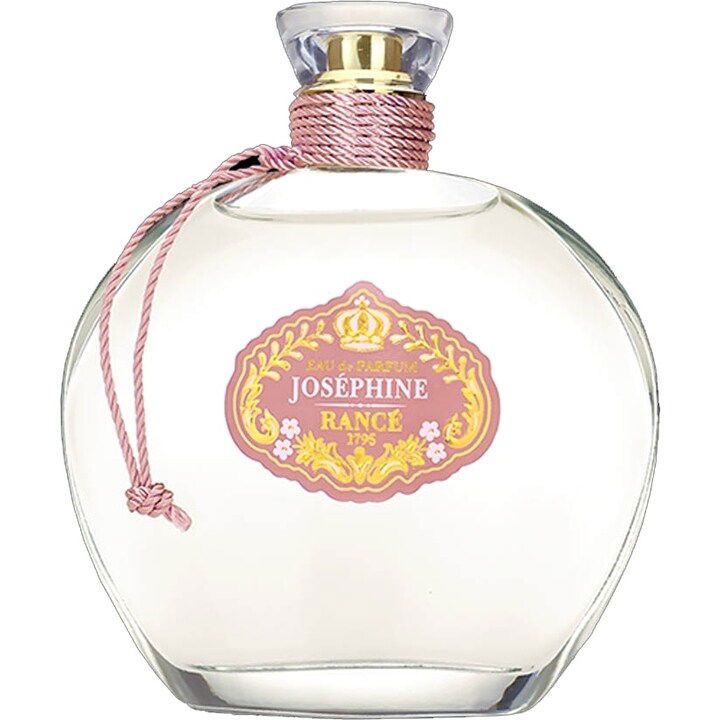
Joséphine Rancé 1795

18
Top Review
the sensual empress
Thus the house Rancé, famously founded in 1795, titles its brief fragrance description of the Eau de Parfum "Joséphine".
She must have been an outstanding woman in her time, this Joséphine, born in Martinique under the resounding name Marie Josephe Rose de Tascher de Pagerie.
Her first marriage to Alexandre Vicomte de Beauharnais, from which her two children emerged, was actually doomed from the start: Joséphine was only "second choice"; de Beauharnais actually wanted/was supposed to marry Joséphine's sister; however, she died before the wedding.
Always free to the motto: "It stays in the family," the next sister was next in line.
The couple separated after several rather turbulent years of marriage, and although de Beauharnais generously supported Joséphine, she repeatedly found herself in debt.
From the French Revolution, this refined woman, although narrowly escaping the guillotine, was able to benefit: a narrow red ribbon adorned her neck; where it was not severed by the blade.
She became the attraction of the Parisian salons and, after the death of her husband, was fortunate to be taken "under the wing" of the wealthy Paul de Barras; she could spend his money generously!
It was also this Paul de Barras who advised her to marry General Napoleon Buonaparte.
Much to the dismay of his childhood sweetheart Desirée Clary, the daughter of a silk merchant from Marseille. The "Citizen General" Buonaparte and his brother frequented her parents' house; even if only at first for a warm meal and a few glasses of wine.
This love of Desirée's is described by Annemarie Selinko in the eponymous novel, which was adapted into a film in 1954 starring Marlon Brando and Jean Simmons. (By the way, a truly delightful story.)
But against this dashing Creole, who had turned the young Corsican's head, a mere silk merchant's daughter could not compete.
Whether she accepted the proposal of Marshal Jean Babtiste Bernadotte out of pure spite will never be clarified. In any case, the Bernadotte couple later moved to Sweden to establish the still-existing ruling dynasty there.
This shows that for Desirée, the "second choice" in this case was the first: as Queen of Sweden, she outlasted her rival for the affections of the "little Corsican".
Joséphine, on the other hand, enjoyed being an empress; she basked in her husband's adoration and in the general attention.
Only his wish for her to bear him an heir she could not fulfill. Thus, although still loved, she was "shunted off" to Malmaison and laid out her legendary rose garden there.
Her successor as empress, the Austrian archduchess Marie-Louise ("She looked like a sausage - like a pink sausage," we can read in Annemarie Selinko), bore Napoleon the longed-for heir to the throne and returned to her parental home after the emperor's fall; from where she, remarried, accompanied her husband to Italy.
The imperial heir Napoleon Franz Karl (Napoleon II./Duke of Reichstadt) lived a torn life and caused much unrest at the Viennese court before he died at only 21 years old.
Thus, Rancé's fragrance "Joséphine" holds for me a slightly sprawling story; yet it does not diminish this enchanting fragrance experience; it is delightful!
This noble essence opens with a rich accord of May rose, hawthorn, and jasmine, a beautiful peony, and is enveloped by hyacinth and radiant ylang-ylang - pure femininity!
This bright delicacy is complemented by a spicy-fruity heart note. Galbanum and clove are unmistakably present, geranium opens the way to the robust aromatic black currant and a ripe, very juicy peach - what a wonderful gift of fragrance!
Black ebony and white musk: if we imagine the red ribbon around Joséphine's slender neck, then the question arises here: "Snow White, where is your bed?"
A heavy, creamy vanilla trail leads to the always somewhat scratchy sandalwood; these two aromas like each other! That is why they adapt so well to many fragrance compositions.
Crowning this imperial fragrance pyramid is ambra gold in its finest form.
An elegant fragrance gown with a matching train now envelops the wearer.
All senses are addressed here, not just one's own.
With "Joséphine," the company Rancé pays homage not only to the former French empress; it pays homage to every woman.
For every woman deserves to feel like an empress and to be flattered and loved accordingly.
In the company of "Joséphine," she can enjoy this feeling for a few hours; this fragrance beauty is not necessarily long-lasting, as it is too capricious!
But what prevents us from renewing this entertaining acquaintance again and again with a quick spray?
This is the second fragrance from Rancé's "Collection Imperiale" that I had the pleasure of testing.
Even "Pauline," named after one of Joséphine's sisters-in-law, brought me much joy.
Both ladies feel exceptionally good and are excellent companions for a beautiful day.
For a "girls' night," which does not take place at the grill with beer, both are perfect; at a "first little acquaintance," it may even be that the "Rancé ladies" present a competition: they enchant their entire surroundings.
I have encountered a woman of stature, who still attracts attention today, and have fallen for her charm.
I will surely adorn myself with her charm for some time: "the empress's new clothes."
I would like to express my heartfelt thanks for the generous sample.
She must have been an outstanding woman in her time, this Joséphine, born in Martinique under the resounding name Marie Josephe Rose de Tascher de Pagerie.
Her first marriage to Alexandre Vicomte de Beauharnais, from which her two children emerged, was actually doomed from the start: Joséphine was only "second choice"; de Beauharnais actually wanted/was supposed to marry Joséphine's sister; however, she died before the wedding.
Always free to the motto: "It stays in the family," the next sister was next in line.
The couple separated after several rather turbulent years of marriage, and although de Beauharnais generously supported Joséphine, she repeatedly found herself in debt.
From the French Revolution, this refined woman, although narrowly escaping the guillotine, was able to benefit: a narrow red ribbon adorned her neck; where it was not severed by the blade.
She became the attraction of the Parisian salons and, after the death of her husband, was fortunate to be taken "under the wing" of the wealthy Paul de Barras; she could spend his money generously!
It was also this Paul de Barras who advised her to marry General Napoleon Buonaparte.
Much to the dismay of his childhood sweetheart Desirée Clary, the daughter of a silk merchant from Marseille. The "Citizen General" Buonaparte and his brother frequented her parents' house; even if only at first for a warm meal and a few glasses of wine.
This love of Desirée's is described by Annemarie Selinko in the eponymous novel, which was adapted into a film in 1954 starring Marlon Brando and Jean Simmons. (By the way, a truly delightful story.)
But against this dashing Creole, who had turned the young Corsican's head, a mere silk merchant's daughter could not compete.
Whether she accepted the proposal of Marshal Jean Babtiste Bernadotte out of pure spite will never be clarified. In any case, the Bernadotte couple later moved to Sweden to establish the still-existing ruling dynasty there.
This shows that for Desirée, the "second choice" in this case was the first: as Queen of Sweden, she outlasted her rival for the affections of the "little Corsican".
Joséphine, on the other hand, enjoyed being an empress; she basked in her husband's adoration and in the general attention.
Only his wish for her to bear him an heir she could not fulfill. Thus, although still loved, she was "shunted off" to Malmaison and laid out her legendary rose garden there.
Her successor as empress, the Austrian archduchess Marie-Louise ("She looked like a sausage - like a pink sausage," we can read in Annemarie Selinko), bore Napoleon the longed-for heir to the throne and returned to her parental home after the emperor's fall; from where she, remarried, accompanied her husband to Italy.
The imperial heir Napoleon Franz Karl (Napoleon II./Duke of Reichstadt) lived a torn life and caused much unrest at the Viennese court before he died at only 21 years old.
Thus, Rancé's fragrance "Joséphine" holds for me a slightly sprawling story; yet it does not diminish this enchanting fragrance experience; it is delightful!
This noble essence opens with a rich accord of May rose, hawthorn, and jasmine, a beautiful peony, and is enveloped by hyacinth and radiant ylang-ylang - pure femininity!
This bright delicacy is complemented by a spicy-fruity heart note. Galbanum and clove are unmistakably present, geranium opens the way to the robust aromatic black currant and a ripe, very juicy peach - what a wonderful gift of fragrance!
Black ebony and white musk: if we imagine the red ribbon around Joséphine's slender neck, then the question arises here: "Snow White, where is your bed?"
A heavy, creamy vanilla trail leads to the always somewhat scratchy sandalwood; these two aromas like each other! That is why they adapt so well to many fragrance compositions.
Crowning this imperial fragrance pyramid is ambra gold in its finest form.
An elegant fragrance gown with a matching train now envelops the wearer.
All senses are addressed here, not just one's own.
With "Joséphine," the company Rancé pays homage not only to the former French empress; it pays homage to every woman.
For every woman deserves to feel like an empress and to be flattered and loved accordingly.
In the company of "Joséphine," she can enjoy this feeling for a few hours; this fragrance beauty is not necessarily long-lasting, as it is too capricious!
But what prevents us from renewing this entertaining acquaintance again and again with a quick spray?
This is the second fragrance from Rancé's "Collection Imperiale" that I had the pleasure of testing.
Even "Pauline," named after one of Joséphine's sisters-in-law, brought me much joy.
Both ladies feel exceptionally good and are excellent companions for a beautiful day.
For a "girls' night," which does not take place at the grill with beer, both are perfect; at a "first little acquaintance," it may even be that the "Rancé ladies" present a competition: they enchant their entire surroundings.
I have encountered a woman of stature, who still attracts attention today, and have fallen for her charm.
I will surely adorn myself with her charm for some time: "the empress's new clothes."
I would like to express my heartfelt thanks for the generous sample.
Translated · Show original
6 Comments
A lovely comment, one that truly does justice to the wonderful scent! I'm glad you like the fragrance so much; the decant was definitely worth it!
A trophy for the Empress (and every woman)!