

7
Very helpful Review
Floral Eau without Surprises
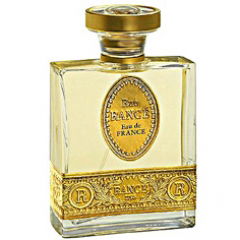
Statement by Jacques Polge, perfumer (from a television feature about "Perfume," produced by the Neue Zürcher Zeitung in 2006): «When I started in this profession a long time ago, the distance between men's and women's perfumes was quite large. They have since come closer together, to the point where certain brands already have unisex perfumes. For us, creating a perfume for men or women is not the same, but it has masculine elements in the feminine and vice versa; it's all a matter of dosage and today one of the important sources of inspiration. I believe one could write a history of our culture based on the history of perfume.» Can Rancé 1795 play a leading role in conveying the history and culture of France? The house was founded in 1795 and even supplied Napoleon Bonaparte. "Eau de France" is marketed as a scent for all "patriots," and it is said that the Eau was first produced in 1807. Why does it remind me of "Par Amour toujours" by Clarins? It certainly isn't due to my love for the "grande nation," although "Eau de France - par amour toujours" would sound really good. The concept of "Eau de France" does not seem very convincing. Unisex from 1805? Polge at least does not seem to believe that. One could at most see "Eau de France" as an Eau de Cologne - and those have indeed always been unisex. However, "Eau de France" is not one of those countless Eaux de Colognes that are almost overwhelming in their variety. It is not a light and fresh scent that presents itself as a summer travel companion, but a more perfumistic complex interpretation. The company's website describes "Eau de France" as "floral musky amber," which is completely correct. Only the top notes are light and green, then follows a heart of ylang-ylang, gardenia, and violet leaves on a base of vetiver, musk, sandalwood, and patchouli. "Eau de France" has nothing to do with a unisex Eau de Cologne. The legendary men's fragrance "Eau sauvage," created by Edmond Roudnitska in 1966 for Dior, could be categorized as "unisex." Supposed women's fragrances like "Eau de Rochas" and "Ô de Lancôme," which are each supported by an oakmoss note as chypres, are also perfect unisex variants. "Escale à Portofino" by Dior would be a more recent example. "Eau de France," on the other hand, is floral and, due to the amber note in the base, not as "light" as one would expect from an "Eau." Of course, this slightly sweet scent can also be worn by men - after all, it is always just a matter of personal taste! I perceive "Eau de France" as rather "feminine"; the old formula has obviously been modernized and adapted to our contemporary taste. The result is a pleasantly floral, gentle "Eau" that lasts a good four hours and is made from high-quality ingredients. I cannot perceive any new synthetic "aroma chemicals," nor can I find a composition that truly excites me. "Eau de France" is solidly made, but for me, it is not a great discovery.
Translated · Show original
1 Comment
 Seerose 10 years ago
1
Your explanations about colognes, and this one in particular, are very informative.
Translated · Show originalShow translation