As a reminder: Deconstructionism is a philosophical movement that goes back to Jacques Derrida and - unlike classical methods of interpretation - does not understand meaning as a play between interpreter and object (i.e. as a reader I interpret a text as I read it and ideally understand it better and better over time), but rather in the distanced consideration from the margins, in the search for paradoxes that contribute to the illumination of the object itself by revealing contradictions.
If this is too complicated (and you have every right to think so; it IS indeed hard to understand): Deconstructionists deny the meaning that can be recognized through analytical effort and instead emphasize the pointing beyond the simplistic connection of a signifier. Sometimes quite a considerable, but consciously subversive jumble.
I have always liked this almost cabalistic yet so sober way of looking at texts and objects, because it counters the constant search for THE transcendent meaning: Your search for the ultimate significance could be in vain or constantly change: the "restlessness of language" (according to Derrida) and culture (I would like to add).
Why do I elaborate on this? It seems to me that this is not a bad approach for scents at all. This constant emphasis on a final meaning ('this and that is definitely contained in the scent, this and that is what the perfumer meant') gets on my nerves. In contrast, I have long emphasized a composite sensory impression through the multitude of comments written about a scent. Only from the sum of the changing impressions does a temporary meaning emerge for me: at the time of reading and self-testing; which can then change again. I only enjoy writing comments on uncommented scents because someone has to start.
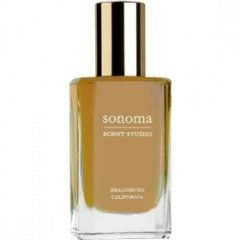
Let’s assume we all describe this scent here (Equestrian) as more or less animalistic. Let’s further assume we all have the association of "horse" (which is obvious for a scent named Equestrian). Then the question ultimately arises whether all of this is not completely misleading - and if not, what this association could even trigger. Deconstruction: Subverting the search for the higher scent meaning.
That this scent smells like horse (or is supposed to smell like horse) is already (seemingly) obvious, because the perfumer must have noticed something like that - or conversely wanted to develop a scent that smells like horse. All of these are, in the sense of deconstructionism, (almost) impermissible assumptions, but they may help us to subsequently distance ourselves from it even better.
Some other manufacturers (such as with the horse scent Arabian Horse from Parfumerie Générale) help us by not only naming the scent horse-like (Arabian Horse), but also incorporating something like a (certainly) synthetic "horse mane accord" in it. Well, thanks!
At Sonoma Scent, these conviction-driven advocates of authentic perfumery and representatives of natural substances (not ironic), this should be irrelevant. So what could trigger associations here that make us think of horse (when aware of the name) or animalistic (in a blind test)? Here, "something" smells a bit more like a greater amount of nature than we often like: something sweet, something hairy, something skin-like. First thesis: Perhaps this is simply the aforementioned hay absolute. Hay has for me (!) that sweet (meadow flower), somewhat pungent-herbaceous smell, which could quite well imitate the aforementioned animalistic. In other words: Floral elements can occasionally grow close to fauna. Just think of the carrion-like component of some white flowers (which, to my chagrin, are not perceived by everyone and are often overdosed), especially jasmine. Even rotten bouquets can quickly lead to spontaneous nausea when you find them wafting in your own home after a few days of absence. To top it all off, there is indeed jasmine sambac absolute in the recipe. This would certainly, without being clearly recognizable, support the aforementioned impression. Some also perceive the warm-green scent of oak moss in a similar way (I do not) - and that can be acknowledged and respected in the sense of deconstructionism, which I hereby do. Labdanum could further contribute with its amber-like tone to steer the scent in the warm-green direction.
What happens when green becomes warm? It composts and develops an animalistic rot, which is contained here just a little bit.
All in all, I actually quite like this scent that combines green and sweet (short formula), even though I wouldn't need to buy it. A sample is enough. How I ultimately decide when the sample is empty is another matter.
So much for my very first incomplete, in the sense of open to interpretation, paradox-seeking deconstructivism, supplementary initial analysis of Equestrian. Thanks to Jacques Derrida!
"Wow! What is this guy talking about??" But seriously: I love texts like this that really stir up my sluggish brain and get my own thought carousel moving, even if it's a bit clumsy. It's necessary, it's good! Thank you! And I think the scent is great!
Translating your intellect and knowledge into the subjective emotional realm and shining in it, that's truly your forte, which I always enjoy to the fullest while reading.
I used to love scents with an animalistic note back in the 80s. Nowadays, that's changed, and I'm more cautious now. For example, I don't enjoy wearing Yatagan anymore.
I'm as far from a deconstructivist view of fragrances as I am from dissecting an authentic horse scent :) Still, this fragrance fascinated me from the very first whiff. It completely falls outside my usual preferences and is all the more interesting for it. I really enjoyed reading your comment!
Very nice how you turn a simple comment (even though your comments are never simple) into a kind of scientific treatise. Let someone say that fragrances aren't educational.
Even though I didn't use deconstruction as a reading method for your comment (or maybe that's exactly why-I still need to explore that philosophically), I'm really impressed by your fragrance analysis and will definitely turn to a (probably hermeneutic) fragrance analysis when I get the chance :)
A deconstructivist falls off the horse into warm hay? My topics. Very exciting. I'm quite hooked... a very MEANINGFUL and substantial take on a fragrance! ;-) ... now I'm going to read it again.
All clear: It does NOT smell like a horse, but rather indifferently-maybe or maybe not-something animalistic, like a cow barn with cows munching on hay-or something like that. And then there's oak moss, yuck. Winner's ribbon or cowbell, that's the question here! :-D


Nice excursion into the world of perfume and philosophy :-)