There is some confusion on Parfumo regarding the perfume "Of Bronze and Blaze" by Alkemia. There are actually two entries in the database, "Bronze and Blaze | Alkemia," registered in October 2023, and "Of Bronze and Blaze | Alkemia," registered in September 2024. Both are obviously the same perfume, but with slightly different fragrance notes, and neither fully aligns with the manufacturer's descriptions. I will focus here on the "newer" perfume, "Of Bronze and Blaze | Alkemia," at least with the correct name. Below is the original description from the manufacturer to avoid another "lost in translation": Autumnal bronze amber aged with cognac barrel staves, red oak leaves, Perique pipe tobacco, raw wool, ripe pumpkin, opoponax (sweet myrrh), and soft suede gloves warmed by a creamy steamy cup of Bourbon vanilla coffee.
Here, the actual fragrance notes are clearly packaged in a seasonal (autumnal) marketing English that is likely meant to evoke the famous "Indian Summer" autumns in Massachusetts.
In contrast to oak moss and oak wood, the fragrance note of oak leaf is rarely recorded in the Parfumo database. Oak leaves are said to contribute to the typical forest floor scent, especially when they are damp and moldy, and help define the spring scent in the forest when the snow melts and the ground warms up again.
Even rarer, however, is the tobacco note Perique tobacco. So, a few words on that: Perique tobacco is a heavily fermented tobacco originating from Louisiana, originally from Native American sources, which, due to its strong flavor and high nicotine content, is only mixed in small amounts into pipe tobacco. It is fermented under pressure in oak or cypress barrels over a process lasting more than a year. According to an old recipe, rum and vinegar are used in the fermentation, along with spices such as valerian mixture, anise oil, black coffee extract, cloves, cinnamon, and licorice extract. An aroma bomb in itself, it is said to smell like a mix of dried fruits (figs, dates), sourdough bread, a slight spiciness, and a hint of vinegar.
Now to my personal scent impression: Indeed, "Of Bronze and Blaze" is one of those scents that smells good to me, but what does it actually smell like? A first impression is bitter almond and apricot kernel (marzipan and persipan). Dried fruits follow, when they have lost all their juiciness and are hard to chew. But then they develop a proper aroma in the mouth. Probably fueled by the supposed fragrance note "Bronze," I also perceive hints of a polished copper kettle, like one might see (and smell) in an open-air museum when it is hung above a sooty fireplace. Perhaps the vinegar from the tobacco fermentation? And of course cognac and/or rum in the oak barrel. Wool, pumpkin, and opoponax emerge in the scent, or rather do they fade? The milk coffee with vanilla scent does not stand out much for me, but it contributes to the later rounding off. A bit of creamy glove leather, but only if one wishes to conjure it up.
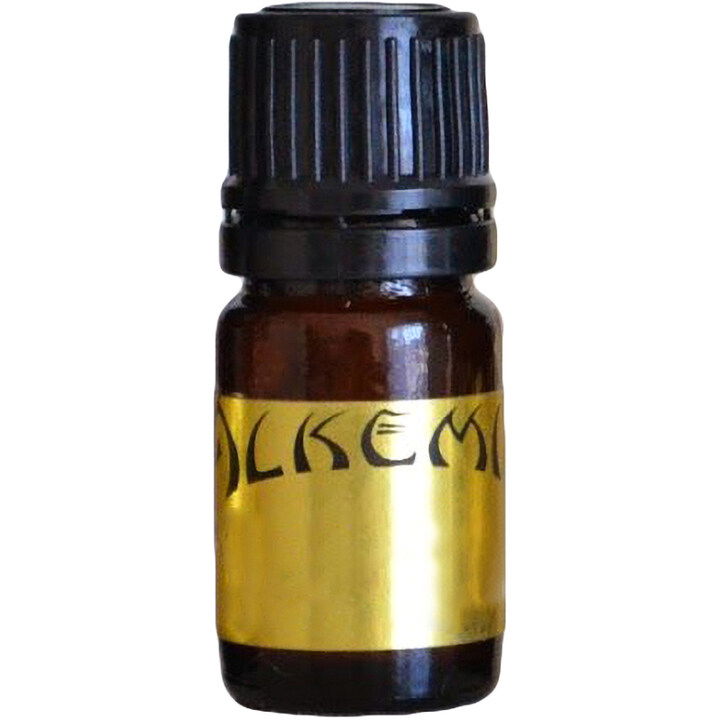
I am reporting again from the concentrated oil-based 5 ml extract, which is sold by Alkemia in a small brown apothecary bottle with a fragrance-specific label. A dab or two behind the ear or even applied as beard oil is a good application. I also recommend here alternatively/additionally diluting it in cosmetic alcohol, e.g., in a 1:2 dilution for use in a sprayer.
At Alkemia, each fragrance has an artistic, pictorial, and poetic representation. In fact, in connection with "Of Bronze and Blaze," the lyrical, poetic representation is more important due to the eponymous poem by Emily Dickinson. The work, numbered #319 according to the collected edition by Franklin, begins with the line "Of Bronze - and Blaze," thus of bronze and flames, and draws its inspiration from the author's experience with the Northern Lights (Aurora Borealis), which she observed from her home in Amherst, MA. This has a local connection, as Alkemia is based in Amherst. The poem is well described and interpreted in an article by the Guardian, where it was the poem of the week in May 2020. See the link below for more.
The pictorial representation of the perfume, at least in a small excerpt also visible on the label of the apothecary bottle, is the beautiful painting "The Girl With The Golden Eyes" by the French artist Alix Aymé (1894-1989). Aymé was a boundary-crosser between European art (Modernism) and Asian craftsmanship (lacquer, Chinese lacquer). The given image is a good example of the combination of Chinese lacquer with gold (in Japan: Urushi).
Conclusion: Of Bronze and Blaze is a spicy, sweet, and alcoholic fragrance that, in my opinion, derives its character from the Perique tobacco. As if one were opening a can of Rum & Maple tobacco to pack one's pipe. It indeed leaves a warm "Indian Summer" impression. So, the marketing is not entirely off. Longevity and sillage are unremarkable, neither in one direction nor the other. For those seeking a reference from the Parfumo Top 100:
Baraonda Extrait de Parfum goes in the same direction.
Links:
https://alkemiaperfumes.com/products/bronze-and-blaze-perfume-bronze-amber-cognac-barrels-red-oak-leaf-perique-tobacco-opoponax-soft-suede-creamy-steamy-vanilla-coffee
https://www.etsy.com/de/listing/1520718474/bronze-und-blaze-parfum-bronze-bernstein
https://de.wikipedia.org/wiki/Perique-Tabak
https://www.theguardian.com/books/booksblog/2020/may/11/poem-of-the-week-of-bronze-and-blaze-319-by-emily-dickinson
https://www.artnet.com/artists/alix-aym%C3%A9/3
*Post-Its: Fragrance notes with low longevity but hopefully some sillage



 Amber
Amber Bourbon vanilla
 Bronze
 Coffee
 Cognac barrel
 Oak leaf
 Opoponax
 Pipe tobacco
 Pumpkin
 Suede
Suede Wool
Wool



 Fumed247
 Coffinjumper
 Yatagan