

27
Top Review
The One Who Always Depended on the Kindness of Strangers
This is how Tennessee Williams' Blanche DuBois can be briefly summarized with her own quote, that tragic main character in his arguably most famous play 'A Streetcar Named Desire', alongside 'Cat on a Hot Tin Roof' and 'The Glass Menagerie', known in German as 'Endstation Sehnsucht'. Blanche, a former teacher from Mississippi, desperately and vainly clings to the sinking Southern aristocracy and its societal norms (and her youth, which slips through her fingers like sand), says this famous and often-quoted line at the very end to an unnamed man, in whose arm she links herself as he comes to take her away to a mental institution: 'I have always depended on the kindness of strangers.'
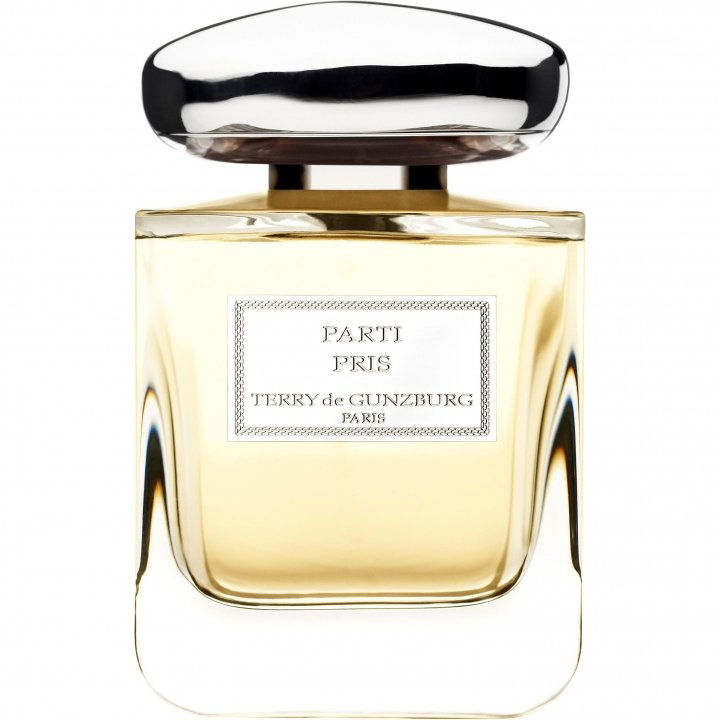
For the self-assured and self-determined woman of today, dependence on the favor of strangers seems hardly comprehensible, let alone appealing. And yet I find a strangely faded poetry in it - something of a staggering butterfly, both alluring and helpless - glowing in pale pastel tones and doomed to decline without the sun. I find the same paradoxical dualism - the flirtatious allure and the fall - in Terry de Gunzburg's Parti Pris, which connects blooming femininity with a protective, almost nostalgically innocent girlhood. And precisely for this reason, it can also be worn by a bearer who does not need the kindness of strangers.
The characteristic notes - tuberose and orange blossom - are considered perhaps the most feminine (in the sense of least unisex-appropriate) and polarizing among those commonly found in contemporary perfumes. There is the capriciousness, the difficulty, the occasionally affected gracefulness, which makes it not always easy to empathize with Williams' Blanche. In contrast, there is something defenseless and vulnerable, represented by a bitterly flickering sweetness - bright woods and something faintly burnt - and a fleetingness and shyness that is at least unusual for a tuberose-orange blossom scent. All of this - the alluring, the delicate, and the vulnerable - makes Parti Pris appealing and very special in its pale girlhood.
Conclusion: a fragrance like the distant echo of a lost femininity. Yet to be worn even today - perhaps with a light yellow silk dress, adorned with a bouquet of artificial violets on the lapel - like Blanche DuBois from Laurel, Mississippi, when she last depended on the kindness of a stranger.
For the self-assured and self-determined woman of today, dependence on the favor of strangers seems hardly comprehensible, let alone appealing. And yet I find a strangely faded poetry in it - something of a staggering butterfly, both alluring and helpless - glowing in pale pastel tones and doomed to decline without the sun. I find the same paradoxical dualism - the flirtatious allure and the fall - in Terry de Gunzburg's Parti Pris, which connects blooming femininity with a protective, almost nostalgically innocent girlhood. And precisely for this reason, it can also be worn by a bearer who does not need the kindness of strangers.
The characteristic notes - tuberose and orange blossom - are considered perhaps the most feminine (in the sense of least unisex-appropriate) and polarizing among those commonly found in contemporary perfumes. There is the capriciousness, the difficulty, the occasionally affected gracefulness, which makes it not always easy to empathize with Williams' Blanche. In contrast, there is something defenseless and vulnerable, represented by a bitterly flickering sweetness - bright woods and something faintly burnt - and a fleetingness and shyness that is at least unusual for a tuberose-orange blossom scent. All of this - the alluring, the delicate, and the vulnerable - makes Parti Pris appealing and very special in its pale girlhood.
Conclusion: a fragrance like the distant echo of a lost femininity. Yet to be worn even today - perhaps with a light yellow silk dress, adorned with a bouquet of artificial violets on the lapel - like Blanche DuBois from Laurel, Mississippi, when she last depended on the kindness of a stranger.
Translated · Show original
5 Comments
 Medusa00 9 months ago
Wow, what a review.
Translated · Show originalShow translation
 Verbeene 7 years ago
Have you ever thought about turning your wonderful comments into a book? A perfume guide for art lovers? I would buy it right away))))
Translated · Show originalShow translation
 Hyazinthe 7 years ago
Another beautiful, touching, and deeply felt comment from you that perfectly describes both this character and the fragrance I love.
Translated · Show originalShow translation
 ExUser 7 years ago
“I don't want realism. I want magic!” -Pokal!
Translated · Show originalShow translation
 Puderduft18 7 years ago
Very demanding comparison, interesting thoughts. Well written as always, trophy... like (almost) always! ;-):-)
Translated · Show originalShow translation