
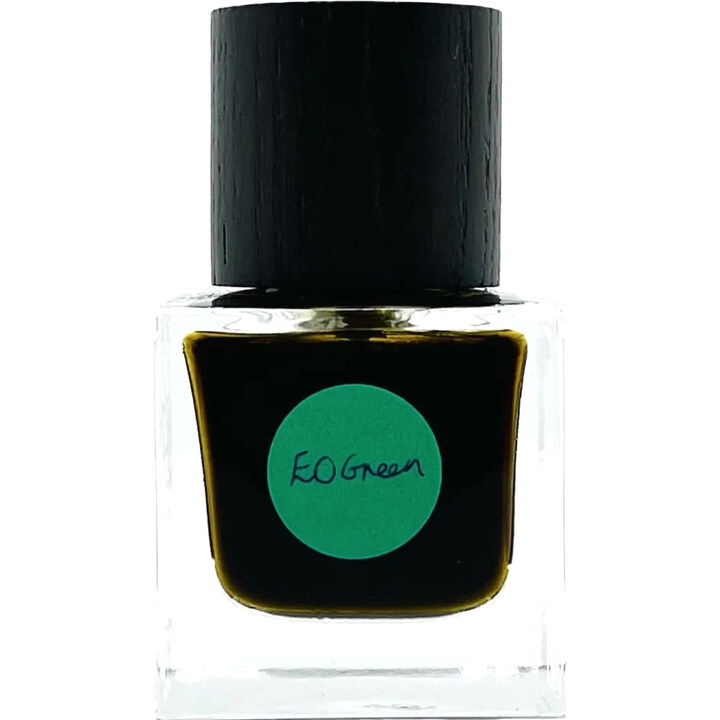
EO Green Ensar Oud

103
Top Review
Words about a lot of money, a lot of oud, and a lot of perfume
Is it necessary to indulge in such expensive fragrances? When is the limit reached?
We are talking about 30ml / $485. Why is this stuff so expensive?
Ensar, the man who has made real oud socially acceptable. My respect goes out to him. He has always believed in his oud and has continued to crawl through every jungle in Asia for months, searching for THE special agarwood.
By now, he has grown so large that I don't think he can manage everything alone anymore. So many diverse oud releases, so many new perfumes. I think he has put together a solid team that builds the fragrances for the label. Ensar's knowledge of oud and his collection of oud distillates is, of course, a huge advantage in the oud niche.
Now, onto the fragrance!
EO Green starts with a remarkably bitter yuzu accord, fleshy, strong, and shrill. A kind of water mist accompanies it, like a subtle aqua note. That could be the lotus. The oak moss brings even more green moisture in; I also smell herbs, moss, green tea. Very fine and somewhat hidden, jasmine looks around in the damp green.
Above all this hovers a fresh, ethereal note, like mint or camphor with a hint of citrus. To me, it smells like a bright, citrusy incense. Something earthy-spicy resonates now, reminiscent of fresh ginger. This is where the ouds come in and steer the fragrance into darker green realms. Dark woods, wet woods, old woods. Roots are there, compacted earth, clay. Acetone sandalwood.
A fragrance experience like no other. There is nothing fecal or animalistic here; there are beautiful oud distillates incorporated. The other very high-quality materials (I almost swear there are other things in it than stated) perfectly support the various oud characters and bring out the maximum. With so many different ouds, it is challenging for the fragrance not to collapse in on itself and for the ingredients not to extinguish each other's light.
Now the question is, is it worth the money? That is something everyone must decide for themselves. Everything here is natural (at least that’s how it smells), and all the components are first class. We don't need to talk about the oud; Ensar uses the best oud in the world. All of this is extremely costly; moreover, the concentration of oil here is considerably high. But as always, the price is generated by the market price and the customer's willingness to pay. So I don't think Ensar has to worry about hunger.
Certainly, it offers, even for seasoned perfume enthusiasts, a new perspective on perfume. Especially on natural perfume. Years ago, it was labeled as esoteric and reform house fragrances, but natural perfumes are currently experiencing a renaissance. And Ensar was one of the pioneers. He had the guts to launch a natural perfume that simply costs 500 bucks. Essentially placing it under the classic attars and filling the whole thing into spray bottles. And it keeps going for Ensar. He has now reached the clientele that will soon snatch the flacons from him for $1500. Hats off!
------- ADDENDUM ------
Since there are a few concerned users who denounce the poaching of oud (which is absolutely correct), here are some information about oud extraction:
It is very true that in many countries in Southeast Asia, where there were wild agarwood trees 20 years ago, they can no longer be found. All "varieties" are endangered to the point of near extinction. There has been a lot of illegal poaching; just look at the tourist shops in Laos, Vietnam, Thailand. There are tons of agarwood in the form of figurines, souvenirs, etc. Therefore, poaching of agarwood trees has been prohibited for about 20 years. In almost all Asian countries, there have been projects for the reforestation of semi-wild agarwood trees for years. Agarwood can only be exported with CITES certification.
Wild oud:
A living tree brings nothing to the agarwood hunter. It is the dead and heavily fungus-infested wood pieces, trees that are interesting. At some point towards the end of the tree's life, the tree is attacked by a fungus (this can take years/decades), and as a counter-reaction, the tree produces the valuable resins. Only when the tree is "fatally" infested or already dead does it make sense to take the tree. Finding a dead agarwood tree is associated with weeks of searching in the jungle. The wildlife wardens or prefectures responsible for the forest area levy taxes/bribes per kilo/tree (depending on the region and country).
Plantation oud:
Like other plantation woods used for perfume oil production (sandalwood, guaiac wood, any tropical woods), there are now thousands of agarwood plantations throughout Asia. The trees are "inoculated" with the fungus and can then be harvested/tapped after about 8-10 years. Here too, CITES certifications are needed to show from which plantations the wood originates.
I have gathered this information over the years and cannot refer to a specific source.
We are talking about 30ml / $485. Why is this stuff so expensive?
Ensar, the man who has made real oud socially acceptable. My respect goes out to him. He has always believed in his oud and has continued to crawl through every jungle in Asia for months, searching for THE special agarwood.
By now, he has grown so large that I don't think he can manage everything alone anymore. So many diverse oud releases, so many new perfumes. I think he has put together a solid team that builds the fragrances for the label. Ensar's knowledge of oud and his collection of oud distillates is, of course, a huge advantage in the oud niche.
Now, onto the fragrance!
EO Green starts with a remarkably bitter yuzu accord, fleshy, strong, and shrill. A kind of water mist accompanies it, like a subtle aqua note. That could be the lotus. The oak moss brings even more green moisture in; I also smell herbs, moss, green tea. Very fine and somewhat hidden, jasmine looks around in the damp green.
Above all this hovers a fresh, ethereal note, like mint or camphor with a hint of citrus. To me, it smells like a bright, citrusy incense. Something earthy-spicy resonates now, reminiscent of fresh ginger. This is where the ouds come in and steer the fragrance into darker green realms. Dark woods, wet woods, old woods. Roots are there, compacted earth, clay. Acetone sandalwood.
A fragrance experience like no other. There is nothing fecal or animalistic here; there are beautiful oud distillates incorporated. The other very high-quality materials (I almost swear there are other things in it than stated) perfectly support the various oud characters and bring out the maximum. With so many different ouds, it is challenging for the fragrance not to collapse in on itself and for the ingredients not to extinguish each other's light.
Now the question is, is it worth the money? That is something everyone must decide for themselves. Everything here is natural (at least that’s how it smells), and all the components are first class. We don't need to talk about the oud; Ensar uses the best oud in the world. All of this is extremely costly; moreover, the concentration of oil here is considerably high. But as always, the price is generated by the market price and the customer's willingness to pay. So I don't think Ensar has to worry about hunger.
Certainly, it offers, even for seasoned perfume enthusiasts, a new perspective on perfume. Especially on natural perfume. Years ago, it was labeled as esoteric and reform house fragrances, but natural perfumes are currently experiencing a renaissance. And Ensar was one of the pioneers. He had the guts to launch a natural perfume that simply costs 500 bucks. Essentially placing it under the classic attars and filling the whole thing into spray bottles. And it keeps going for Ensar. He has now reached the clientele that will soon snatch the flacons from him for $1500. Hats off!
------- ADDENDUM ------
Since there are a few concerned users who denounce the poaching of oud (which is absolutely correct), here are some information about oud extraction:
It is very true that in many countries in Southeast Asia, where there were wild agarwood trees 20 years ago, they can no longer be found. All "varieties" are endangered to the point of near extinction. There has been a lot of illegal poaching; just look at the tourist shops in Laos, Vietnam, Thailand. There are tons of agarwood in the form of figurines, souvenirs, etc. Therefore, poaching of agarwood trees has been prohibited for about 20 years. In almost all Asian countries, there have been projects for the reforestation of semi-wild agarwood trees for years. Agarwood can only be exported with CITES certification.
Wild oud:
A living tree brings nothing to the agarwood hunter. It is the dead and heavily fungus-infested wood pieces, trees that are interesting. At some point towards the end of the tree's life, the tree is attacked by a fungus (this can take years/decades), and as a counter-reaction, the tree produces the valuable resins. Only when the tree is "fatally" infested or already dead does it make sense to take the tree. Finding a dead agarwood tree is associated with weeks of searching in the jungle. The wildlife wardens or prefectures responsible for the forest area levy taxes/bribes per kilo/tree (depending on the region and country).
Plantation oud:
Like other plantation woods used for perfume oil production (sandalwood, guaiac wood, any tropical woods), there are now thousands of agarwood plantations throughout Asia. The trees are "inoculated" with the fungus and can then be harvested/tapped after about 8-10 years. Here too, CITES certifications are needed to show from which plantations the wood originates.
I have gathered this information over the years and cannot refer to a specific source.
Translated · Show original
55 Comments
Very nicely described, especially the part about the Oud info-I haven’t looked into that topic yet!
Thanks for the background information.
Their scents are really good, but....
I admire Ensar's work as well; I really liked a lot of it (some less so) and even had a travel spray from him, which I can highly recommend (as long as it's available), since the scents are usually extremely potent and you can get a long way with occasional use without having to rob the next bank ;)
Good to know.
I truly appreciate natural oud, as it is a rare treasure.
To be continued:
As for the second, much more expensive category, it consists of wild agarwood. To be continued...
https://www.parfumo.de/Benutzer/Turbobean/Blog/Eintrag/Oud_aus_Thailand_oder_Warum_auch_der_letzte_Adlerholzbaum_gefllt_wird_
And it's definitely an intriguing brand, but with the sheer number of releases and the prices, it’s hard to keep up, and I do find the quality varies quite a bit.
It's quite a hefty price to pay, but everyone makes that decision for themselves; quality is usually more expensive. I'm definitely curious now ;)
Really well written and a pleasure to read again :D