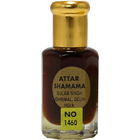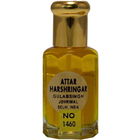


 Mysore sandalwood
 Henna blossom
Sapho
23 Reviews
Translated · Show original
Sapho
Very helpful Review
10
A sepia-brown fragrance
I find it difficult to approach the Indian world of fragrances for two
reasons. The first is that the scents I am currently testing - and
here a heartfelt thanks to Floyd - are so unfamiliar and exotic to my nose
that it feels overwhelming. Secondly, I have never been to India and have had little contact with
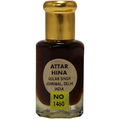
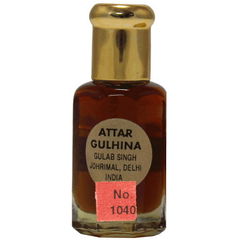
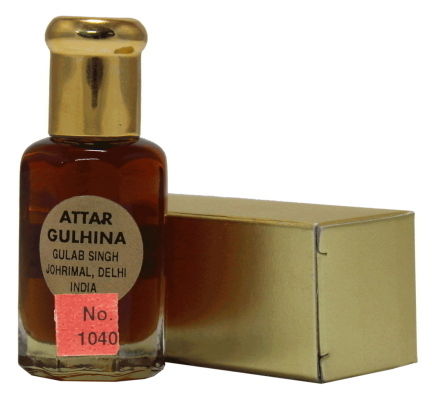
Indian culture. I decided to start with Attar Gulhina, as
the manufacturer's website lists only two fragrance notes for this scent,
namely sandalwood and henna flower. I know sandalwood, so
there was really only the color wood flower left to discover. The scent I perceived
was, well, peculiar. I would describe it as earthy, intense, and cheerful,
almost festive. It smells to me like dry autumn leaves being swept up
on a cold, sunny day. However, I did not find the scent to be
sensual, as one often reads.
I then began to read about henna bushes and learned that the scent of their
flowers has been known and beloved in the East for millennia; it is even called
'Mohammed's favorite scent'. The ancient Greeks referred to it as Kypros, and
it may have helped Kypris to turn Ares' head. Rome borrowed the name Cypros from
Greek culture, and even, who would have thought, the original Protestant Martin refers to henna as Traubencopher in his
translation of the Song of Solomon. The fragrance oil derived from henna flowers
was valued not only for its olfactory qualities but also as a
remedy. It was used especially for leprosy and various skin diseases, from abscesses and
tumors to chickenpox. While reading, my thoughts drifted into a daydream
where I was young again, eagerly anticipating a grand celebration. A minor chord
echoed softly in the background, as guests were also expected
who were rumored to have the 'evil eye'. I was warned and hesitated about
whether I should expose myself to it when I noticed
that I was not alone. Someone stroked my head. An old woman sat beside
me. Time had turned her skin, hair, and the sari she wore sepia-brown.
Even her kind eyes had taken on this color. At first, I thought it was Shitala,
the goddess of illness, who often appears to people in this form, but it was Parvati,
the mother goddess, who smiled at me. "I will rub your palms and soles with henna oil,
that will protect you from the evil eye," she said and got to work. As
a farewell, she raised her hand as if to bless me and dabbed a
drop of the protective oil on my forehead with her index finger like a sign.
The scent of the henna flower embraced me, and I felt safe. On to the celebration!
In 2024, henna was added by UNESCO to the list of the intangible
cultural heritage of humanity.
reasons. The first is that the scents I am currently testing - and
here a heartfelt thanks to Floyd - are so unfamiliar and exotic to my nose
that it feels overwhelming. Secondly, I have never been to India and have had little contact with
Indian culture. I decided to start with Attar Gulhina, as
the manufacturer's website lists only two fragrance notes for this scent,
namely sandalwood and henna flower. I know sandalwood, so
there was really only the color wood flower left to discover. The scent I perceived
was, well, peculiar. I would describe it as earthy, intense, and cheerful,
almost festive. It smells to me like dry autumn leaves being swept up
on a cold, sunny day. However, I did not find the scent to be
sensual, as one often reads.
I then began to read about henna bushes and learned that the scent of their
flowers has been known and beloved in the East for millennia; it is even called
'Mohammed's favorite scent'. The ancient Greeks referred to it as Kypros, and
it may have helped Kypris to turn Ares' head. Rome borrowed the name Cypros from
Greek culture, and even, who would have thought, the original Protestant Martin refers to henna as Traubencopher in his
translation of the Song of Solomon. The fragrance oil derived from henna flowers
was valued not only for its olfactory qualities but also as a
remedy. It was used especially for leprosy and various skin diseases, from abscesses and
tumors to chickenpox. While reading, my thoughts drifted into a daydream
where I was young again, eagerly anticipating a grand celebration. A minor chord
echoed softly in the background, as guests were also expected
who were rumored to have the 'evil eye'. I was warned and hesitated about
whether I should expose myself to it when I noticed
that I was not alone. Someone stroked my head. An old woman sat beside
me. Time had turned her skin, hair, and the sari she wore sepia-brown.
Even her kind eyes had taken on this color. At first, I thought it was Shitala,
the goddess of illness, who often appears to people in this form, but it was Parvati,
the mother goddess, who smiled at me. "I will rub your palms and soles with henna oil,
that will protect you from the evil eye," she said and got to work. As
a farewell, she raised her hand as if to bless me and dabbed a
drop of the protective oil on my forehead with her index finger like a sign.
The scent of the henna flower embraced me, and I felt safe. On to the celebration!
In 2024, henna was added by UNESCO to the list of the intangible
cultural heritage of humanity.
Updated on 11/22/2025
8 Comments
 Cfr
Cfr Floyd
Floyd