

 Indian spices
 Sandalwood
ElAttarine
98 Reviews
Translated · Show original

ElAttarine
Top Review
43
Fragrance Heritage
forty-five tender aromatic herbs and
spices warm like cashmere wool
on sharply bright sandalwood resins
that slowly ground
soften
Nagarmotha
light-dark
smoky
woody
…
∞
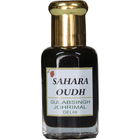
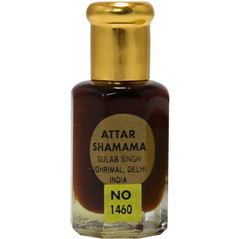
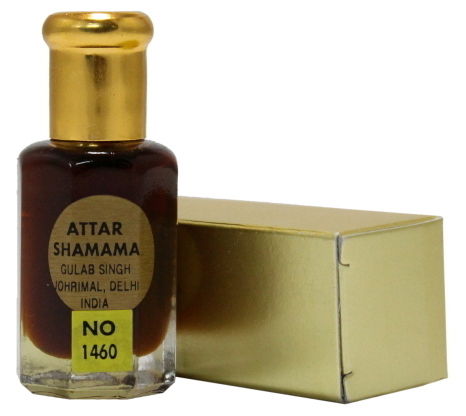
It flashes like lightning across a dramatic evening sky: Indian spices and herbal aromas, and right alongside, very bright-resinous-sharp sandalwood with solvent-like overtones. Gradually, the whole thing becomes softer, earthier, almost balsamic, yet remains tension-filled between bright and dark resinous and earthy facets, while also appearing almost hypnotically calming. According to the homepage of the perfume house Gulabsingh Johrimal, founded in 1816, Shamama belongs to the Indian fragrance heritage; traditional perfumers each have their own secret Shamama recipes. I can imagine that Nagarmotha is also involved here, as I perceive the attar over long stretches in exactly this woody-smoky-earthy manner.
-----
On "Indiaherald," it is explained that Shamama is a Persian word that simply means "good scent." Each Shamama is made from about 45 raw materials. All Shamama manufacturers have their own methods and produce it according to traditional customs and techniques, using flowers, but also Bala, Nagarmotha, Mukhtar Sugandh Mantri, and various types of herbs and spicy spices from the Himalayas. The use of herbs gives the perfume a warming effect and is said to be useful for maintaining body heat in winter.
Many types of problems are said to be able to be healed with Shamama perfume, which is therefore also used as medicine. It is said to be usable as medicine for insomnia, anxiety, stress, fever, or cold symptoms, simply by applying it to the hand and inhaling the aroma for colds and headaches. I can easily imagine the latter, but I also just enjoy the scent.
www.indiaherald.com/Health/Read/994663265/
what-is-Shamama-where-does-it-come-from-and-how-does-it-work
spices warm like cashmere wool
on sharply bright sandalwood resins
that slowly ground
soften
Nagarmotha
light-dark
smoky
woody
…
∞
It flashes like lightning across a dramatic evening sky: Indian spices and herbal aromas, and right alongside, very bright-resinous-sharp sandalwood with solvent-like overtones. Gradually, the whole thing becomes softer, earthier, almost balsamic, yet remains tension-filled between bright and dark resinous and earthy facets, while also appearing almost hypnotically calming. According to the homepage of the perfume house Gulabsingh Johrimal, founded in 1816, Shamama belongs to the Indian fragrance heritage; traditional perfumers each have their own secret Shamama recipes. I can imagine that Nagarmotha is also involved here, as I perceive the attar over long stretches in exactly this woody-smoky-earthy manner.
-----
On "Indiaherald," it is explained that Shamama is a Persian word that simply means "good scent." Each Shamama is made from about 45 raw materials. All Shamama manufacturers have their own methods and produce it according to traditional customs and techniques, using flowers, but also Bala, Nagarmotha, Mukhtar Sugandh Mantri, and various types of herbs and spicy spices from the Himalayas. The use of herbs gives the perfume a warming effect and is said to be useful for maintaining body heat in winter.
Many types of problems are said to be able to be healed with Shamama perfume, which is therefore also used as medicine. It is said to be usable as medicine for insomnia, anxiety, stress, fever, or cold symptoms, simply by applying it to the hand and inhaling the aroma for colds and headaches. I can easily imagine the latter, but I also just enjoy the scent.
www.indiaherald.com/Health/Read/994663265/
what-is-Shamama-where-does-it-come-from-and-how-does-it-work
37 Comments
 Cfr
Cfr Floyd
Floyd