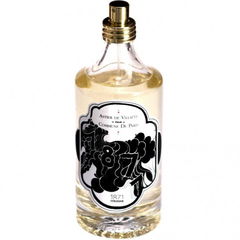
Commune de Paris – Cologne 1871
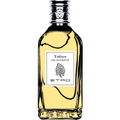
Astier de Villatte is a curious French outlet specializing in the production of hand-made ceramics. Although their portfolio is much wider than just ceramics, all their products have a vintage or even a kooky feel to them. Thanks to that, it’s a brand with a soul, not a common attribute for many contemporary brands. Astier de Villatte’s entrance into the olfactory realm was equally unconventional, yet perfectly logical: a collection of scented dishwashing liquids. Subsequently, they launched a series of eau de colognes, one of which is “Commune de Paris – Cologne 1871”, the focus of this review.
“Commune de Paris” kicks off the show with (surprise, surprise) citruses: lemon and bergamot. But at this point the predictability of the fragrance ends as it gradually veers from the path a typical eau de cologne would take by introducing lavender as well as two other distinct notes into the mix: coumarin (the smell of freshly cut grass) and benzaldehyde (the smell of almonds). Later in the drydown I can also detect benzoin, which, coupled with the other three notes, gives the fragrance a pleasant, powdery finish. Some reviewers have pointed out that the combination of the notes creates the “barbershop effect”, but I’d argue that there’s definitely nothing overtly masculine about “Commune de Paris”.
In the dog days of the summer, one of the things I find the most refreshing is a good old eau de cologne. However, I’m even more intrigued when that eau de cologne tweaks the traditional formula and brings something new to the table. To me, “Commune de Paris” is that kind of scent. It’s light, fresh, playful and very satisfying to wear. What more can one ask for?
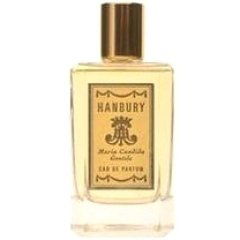
Maria Candida Gentile "Hanbury"
Most of you will agree with me that these are trying times we’re experiencing at the moment. To escape the never-ending flow of (mainly) negative news, occasional bouts of anxiety as well as the drag of isolation, I’ve found great comfort in long walks on footpaths along fields, in forests and parks. They’ve had a therapeutic effect on me and helped me unwind, get all the troubles and worries out of my head and, most importantly, stay sane. My collection of perfume samples has assisted Mother Nature in this effort and the extra free time I’ve had on my hands lately has enabled me to rediscover a couple of interesting scents in my collection. Enter “Hanbury” by Maria Candida Gentile. Let’s go on a short trip, shall we?
The ambition behind “Hanbury” is to evoke an aroma of a garden, more specifically the Giardini Botanici Hanbury in La Mortola, Italy. The gardens themselves have a rich history dating back to 1867. Perhaps the person they owe their present state and esteem to the most is Lady Dorothy Hanbury, another muse for the eponymous fragrance. Unfortunately, I have never been to the botanical gardens, but from what I’ve seen in the photos, they look like a place right up my alley: a green oasis, a sanctuary for regaining the inner peace and balance. And thanks to Ms Candida Gentile’s talent as a perfumer, I now have some idea what the gardens smell like. The air is permeated with a soft melange of citruses that marries an aroma of white flowers (dominated by what to this reviewer seems to be jasmine) in full bloom, sprinkled with a few drops of honey. The base contains white musk, one of my least favourite notes in perfumery. Though it is true that instead of detergent-like freshness my nose hankers after a dirtier, earthier smell to round off this aromatic excursion, the presence of the dreaded note does not spoil the overall result.
Being a sweetish, white flower-centred fragrance, it's undeniable “Hanbury” leans feminine. Yet the more I wear it, the stronger I’m convinced that it could actually serve as an interesting (and longer-lasting) alternative to the traditional eau de cologne. All you daydreamers out there (female and male), give “Hanbury” a sniff, will you?
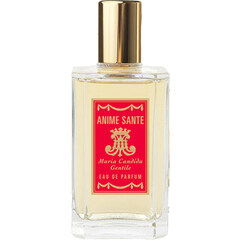
Anime Sante by Maria Candida Gentile
Judging by its name, I expected “Anime Sante” (or Holy Souls) to be a perfume composed around the note of frankincense. This in itself would be a very gratifying idea to me as Maria Candida Gentile surely knows how to incorporate the note effectively into her creations without making it smell too churchy or overwhelming. “Sideris”, “Exultat” or “Gershwin” exemplify not only the perfumer’s technical expertise, but also her artistic sensitivities. Imagine my surprise then when I first smelt “Anime Sante” and detected no trace of frankincense whatsoever. Instead, its head is dominated by a sweet flowery aroma of frangipani, so sweet in fact that at times it reminds me of the smell of pink bubble gum. To my relief, however, this phase lasts only for a couple of minutes. Although the sweetness never recedes completely, it becomes less intense and more palatable in the heart where a combination of melon and almond milk adds a gourmand accord to the scent. This accord permeates the drydown with the support of benzoin. Nevertheless, at this stage woody notes emerge as well, which tones the sweetness down even further.
“Anime Sante” will appeal to lovers of sweet, floral-gourmand fragrances. While that might sound like a description of some banal, uninspiring product, fear not. In Ms Candida Gentile’s capable hands, it turns into a lovely scent. Well, I guess the lady holds the title of a master perfumer for a reason.
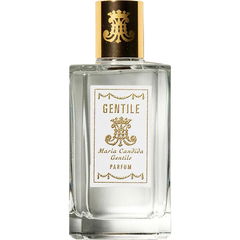
"Gentile" by Maria Candida Gentile
When reviewing a fragrance, a true aficionado ought to look beyond the matter of gender. The traditional (and strict) “Pour Femme/Homme” labelling might be used for the benefit of the average consumer, but to the perfumer lover such information is simply superfluous. Instead of the existing norm, if I had to describe a scent, I’d rather use the softer (and inclusive) term “feminine-/masculine-leaning”.
Maria Candida Gentile’s fragrance “Gentile” is an excellent example of a masculine-leaning fragrance. Being composed of only four main notes frequently employed in “Pour Homme” perfumes (namely basil, geranium, osmanthus and vetiver), one is left to wonder what the final product will smell like, given the limited palette of, well, let’s be honest, run-of-the-mill notes. On a number of occasions Ms Candida Gentile has proved to me that she’s a magician when it comes to composing perfumes and that even with very little she’s capable of creating something far from mundane. Gentile’s opening is intensely verdant- in fact, to the point of actually tingling one’s nose. Within fifteen minutes, however, the green accord gives way to the perfume’s floral heart. Both geranium and osmanthus soften it and clear the way for the vetiver base. At this point, “Gentile” is smooth while retaining its masculine-leaning character.
Who is “Gentile” for? My initial answer was: for a gentleman who has green fingers and a heart of gold, for a man who one loves to huddle up to for warmth, comfort and his beautiful scent. Yet in my honest opinion, this fragrance is bound to enchant anyone who can appreciate a well-made fragrance that smells like the great outdoors and good old times.
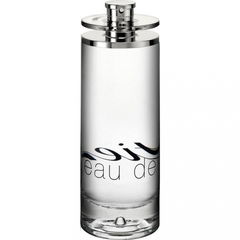
Eau de Cartier
I like complex fragrances. Those that take you down a meandering path or perform a couple of elegant pirouettes on the way to the to the drydown. Extra satisfying are those indecipherable ones that you mislead you to believe you’ve got them all figured out, yet still manage to play their trump card months after first spritzing them on. What a bliss!
And then there are those scented waters that, without much (or any, for that matter) ado, cut to the chase: what you smell is what you get. In a sense I appreciate this sort of honesty and although I feel a great deal more contented when fragrances abstain from hitting the fast-forward button, there are several instances in this category worthy a sniff.
“Eau de Cartier” is one such scent. Its purpose, it would seem, is to promote the concept of cleanliness entirely devoid of complexity. A silk-smooth ride down a straight path. Now there’s absolutely nothing wrong with that as long as at least a hint of thought goes into the creation of such a… non-brainer. “Eau de Cartier” is a delicate mix of citruses and herbs, resting on a sheer musky base. I suspect it’s white musk, which is one of my least favourite notes in perfumery. Fortunately, its presence is toned down here, so the drydown lacks hissy tones. Yes, there’s a trace of a laundry detergent, but it’s kept in check. All in all, the whole composition is quite pleasant and fun to wear though it must be pointed out its projection and longevity border on abysmal. Despite this, who knows, I might give it a chance next summer… just for the heck of it!