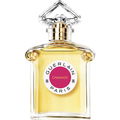
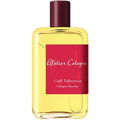
Marieposa
Reviews
Filter & Sort
Detailed
Translated · Show original
Between Dream and Awakening
With a blurred gaze from half-closed eyes, I wonder if it is merely the echo of a dream that has settled over my thoughts like frost traces from November fog on juniper thorns. And yet, birch branches whisper leather against my skin. A palpable memory of yesterday's perfume lingers in my hair. Do you smell it? Will you softly blow on the blonde fuzz on my arms until the fine hairs stand up? Or will you notice the chill of my bare shoulders and place your warm hand on my back? But perhaps it is just the foreign sheet from the cupboard with the lavender branches. With closed eyelids, I feel your warmth and the blooming of rose petals on my skin, where your lips wrote poems.
Where dream and awakening meet, I feel your presence.
**
Lyn Harris is a master of subtle tones with a distinctive signature. Often, her fragrances are more aura than perfume, more felt than smelled, and sometimes they seem to carry the echo of something familiar that resonates within me long after the scent has faded. In the case of Leather, it is a hint of "Cuir de Russie (Eau de Toilette) | Chanel." A delicate whisper that merges with my skin and accompanies me with this suggestive whisper of iris and birch tar. It's a bit like there's a memory of Cuir de Russie from the day before in my hair, occasionally brushing against my consciousness, but then this cozy shiver and accelerated heartbeat sneak in. The other airy, interconnected notes are so delicate that they can hardly be isolated or analyzed. There is a crisp coolness like a forest breeze in November fog, which I would simply attribute to the listed juniper, a hint of gentle sweetness that could come from roses - at least it smells like how it feels to touch a fresh rose petal - and such a delicate, herbal lavender note like in a bedsheet stored with dried flowers.
All of this makes Leather a classically composed fragrance that is far from conventional. So featherlight and fleeting that it has tempted me to longingly re-spray more than once today, yet so clear in its form and statement that memory and suggestion seamlessly fill the gaps between the sprays.
“Do you know the place between sleeping and waking? The place where your dreams are still with you? … There I will wait for you,” says J. M. Barrie's "Peter Pan," and somehow I can't shake the feeling that Lyn Harris knows this place very well too.
Where dream and awakening meet, I feel your presence.
**
Lyn Harris is a master of subtle tones with a distinctive signature. Often, her fragrances are more aura than perfume, more felt than smelled, and sometimes they seem to carry the echo of something familiar that resonates within me long after the scent has faded. In the case of Leather, it is a hint of "Cuir de Russie (Eau de Toilette) | Chanel." A delicate whisper that merges with my skin and accompanies me with this suggestive whisper of iris and birch tar. It's a bit like there's a memory of Cuir de Russie from the day before in my hair, occasionally brushing against my consciousness, but then this cozy shiver and accelerated heartbeat sneak in. The other airy, interconnected notes are so delicate that they can hardly be isolated or analyzed. There is a crisp coolness like a forest breeze in November fog, which I would simply attribute to the listed juniper, a hint of gentle sweetness that could come from roses - at least it smells like how it feels to touch a fresh rose petal - and such a delicate, herbal lavender note like in a bedsheet stored with dried flowers.
All of this makes Leather a classically composed fragrance that is far from conventional. So featherlight and fleeting that it has tempted me to longingly re-spray more than once today, yet so clear in its form and statement that memory and suggestion seamlessly fill the gaps between the sprays.
“Do you know the place between sleeping and waking? The place where your dreams are still with you? … There I will wait for you,” says J. M. Barrie's "Peter Pan," and somehow I can't shake the feeling that Lyn Harris knows this place very well too.
31 Comments
Translated · Show original
The Thing with the Fall from Grace
Did you know that I can't remember my dreams? And yet they invade me in the darkness, laying like black fog over my nightly thoughts. They cannot be controlled, cannot be managed, and although I know they will vanish as soon as the racing of my heart subsides, I am not naive enough to deny them.
Even now, my heart wants to leap, and yet I place my trembling fingers on the closure of the vessel that they will later, much later, call a box in their helplessness. If I were to turn around, I could observe how your eyes widen.
A thousand reasons will be found to belittle what I do. They will call me "ignorant" with a dismissive shake of the head and focus on how helpless and weak I was, misguided by the determination of my creation.
You must have seen how my jaws tighten, could even guess how the anger of conviction slows my breathing. My hand has become completely calm as I break the flower-shaped seal of the vessel. It would be easy to smash everything into pieces, and yet I will only open the lid. Calm and strength pulse in my veins as I, with seemingly endless effort and deepest conviction, free the inevitable green glow from its cage, sacrificing my own safety, comfort, and prosperity, and being the first of all to taste the pain that comes with doing what is right.
They will speak of the evils I have unleashed for millennia. Of my disobedience, my weakness, and my curiosity. The flash of hope and realization at the moment I opened the box will, however, be dismissed in their arrogance, just like the strength with which I have borne all this.
But you understand the courage it takes to look so deeply into the mirror on the other side of the vessel. For nothing else was bound within it but ourselves.
From now on, I will remember my dreams.
**
Blindfolded, I would have certainly classified St. Clair's Pandora as a dark floral galbanum chypre from the 1970s, and I must admit that the little vial I have been sniffing repeatedly for over a year and have now been wearing sparingly for days gives me plenty of puzzles: Normally, fragrances start with brighter, lighter, fresher top notes, gradually warming up and becoming darker towards the base. Pandora, however, greets me despite the pronounced citrus with a dark undertone and a slightly smoky bitter green note, which I would have identified without a second of doubt as galbanum, and not just any galbanum, but slightly tilted like in my vintage bottle of Chanel No. 19, which has a peculiar pull on me that does not occur with the intact versions of the fragrance.
However, galbanum is not listed here, and as I somewhat helplessly navigate along the pyramid, I conclude that it must be a mixture of tomato leaf, vetiver, and what is listed here as apple, which I perceive as galbanum. Soon, abstract indolic flowers join this herbaceous green and unusually dark top note, which I cannot for the life of me isolate individually, before a more buttery than powdery iris with tonka highlights brightens the fragrance.
Even the initially chypre-typical base with rather herbaceous, leathery labdanum and rich oak moss holds surprises, as suddenly I perceive the dark green galbanum glow from the top note again.
Pandora is not the only fragrance from the house that excites and amazes me, and once again I can hardly believe that Diane St. Clair is a self-taught perfumer. This surprising fragrance progression is truly unique and does not undermine the impression of having a well-proportioned classic under my nose. On the contrary. This blend of indie daring and classic backbone is unfortunately far too rare.
Pandora was released alongside its sister scent "Eve | St. Clair Scents," which I unfortunately do not know, in the Audacious Innocence collection: “The stories of Pandora and Eve, who reached for the forbidden apple, have much in common. Both came to symbolize women who were punished for disobeying orders and acting on their impulses towards curiosity. We believe that women who challenge the rules and follow their curiosity are striving towards creativity, innovation and independence.” It says on the homepage. Hallelujah! I don't have much to add to this thought, and yet I must slightly disagree regarding St. Clair's Pandora: Impulsive and innocent is, in my perception, nothing at all about Pandora. What I smell here fits a mature woman who knows exactly what she is doing and does not shy away from becoming uncomfortable in full awareness when necessary.
Dear Gandix, you have made me incredibly happy with this precious sample. Thank you!
Even now, my heart wants to leap, and yet I place my trembling fingers on the closure of the vessel that they will later, much later, call a box in their helplessness. If I were to turn around, I could observe how your eyes widen.
A thousand reasons will be found to belittle what I do. They will call me "ignorant" with a dismissive shake of the head and focus on how helpless and weak I was, misguided by the determination of my creation.
You must have seen how my jaws tighten, could even guess how the anger of conviction slows my breathing. My hand has become completely calm as I break the flower-shaped seal of the vessel. It would be easy to smash everything into pieces, and yet I will only open the lid. Calm and strength pulse in my veins as I, with seemingly endless effort and deepest conviction, free the inevitable green glow from its cage, sacrificing my own safety, comfort, and prosperity, and being the first of all to taste the pain that comes with doing what is right.
They will speak of the evils I have unleashed for millennia. Of my disobedience, my weakness, and my curiosity. The flash of hope and realization at the moment I opened the box will, however, be dismissed in their arrogance, just like the strength with which I have borne all this.
But you understand the courage it takes to look so deeply into the mirror on the other side of the vessel. For nothing else was bound within it but ourselves.
From now on, I will remember my dreams.
**
Blindfolded, I would have certainly classified St. Clair's Pandora as a dark floral galbanum chypre from the 1970s, and I must admit that the little vial I have been sniffing repeatedly for over a year and have now been wearing sparingly for days gives me plenty of puzzles: Normally, fragrances start with brighter, lighter, fresher top notes, gradually warming up and becoming darker towards the base. Pandora, however, greets me despite the pronounced citrus with a dark undertone and a slightly smoky bitter green note, which I would have identified without a second of doubt as galbanum, and not just any galbanum, but slightly tilted like in my vintage bottle of Chanel No. 19, which has a peculiar pull on me that does not occur with the intact versions of the fragrance.
However, galbanum is not listed here, and as I somewhat helplessly navigate along the pyramid, I conclude that it must be a mixture of tomato leaf, vetiver, and what is listed here as apple, which I perceive as galbanum. Soon, abstract indolic flowers join this herbaceous green and unusually dark top note, which I cannot for the life of me isolate individually, before a more buttery than powdery iris with tonka highlights brightens the fragrance.
Even the initially chypre-typical base with rather herbaceous, leathery labdanum and rich oak moss holds surprises, as suddenly I perceive the dark green galbanum glow from the top note again.
Pandora is not the only fragrance from the house that excites and amazes me, and once again I can hardly believe that Diane St. Clair is a self-taught perfumer. This surprising fragrance progression is truly unique and does not undermine the impression of having a well-proportioned classic under my nose. On the contrary. This blend of indie daring and classic backbone is unfortunately far too rare.
Pandora was released alongside its sister scent "Eve | St. Clair Scents," which I unfortunately do not know, in the Audacious Innocence collection: “The stories of Pandora and Eve, who reached for the forbidden apple, have much in common. Both came to symbolize women who were punished for disobeying orders and acting on their impulses towards curiosity. We believe that women who challenge the rules and follow their curiosity are striving towards creativity, innovation and independence.” It says on the homepage. Hallelujah! I don't have much to add to this thought, and yet I must slightly disagree regarding St. Clair's Pandora: Impulsive and innocent is, in my perception, nothing at all about Pandora. What I smell here fits a mature woman who knows exactly what she is doing and does not shy away from becoming uncomfortable in full awareness when necessary.Dear Gandix, you have made me incredibly happy with this precious sample. Thank you!

36 Comments
Translated · Show original
Pans Labyrinth
The smoke clouds from the detonations have followed me into the impenetrable black-green of the night forests, through the sharply cutting, towering grasses and ferns, to the barren branches of the dead tree. It feels as if I can hear their voices in the distance, barking harsh commands, fleeing the red-glowing saffron flames or surrendering to their crackling tongues, for it is far too late to extinguish them.
I tighten my fingers around the three magical stones, so that they warm in my hand like leather, crawling on bare knees through the mud, into the seemingly endless darkness of the tree, where undulating roots stretch out like greedy fingers, moss and lichens weave into my hair, and beetles and worms coil around my limbs. Traces of burnt smell have followed me, of gasoline. With hands sinking into the muck, I can hardly hold onto the stones or follow the animal tracks between the tree walls, but I do not give up until a drop of blood shines in the moonlight and lost blossoms sprout on branches thought to be dead. For I am Princess Moanna and I am not afraid.
**
Sometimes it is incredible how immediately and intensely a fragrance can evoke a very specific memory or association. In the case of Le Pere du Noire - which I have been sniffing for quite a while but have not dared to wear properly until today - I immediately hear the film score of Pans Labyrinth in my head.
The top note, in which I primarily perceive the sharp facets of vetiver, nagarmotha, and saffron, blazes threateningly like an approaching fire, where small clouds of gasoline detonate again and again - and perhaps I feel a bit like Guillermo del Toro's Ofelia, as she escapes the flaming inferno in Vidal's headquarters at the end of the film, holding her baby brother in her arms.
The sharpness lingers for a while and I fight my way through the lance-like, sharp-edged leaves of vetiver grasses before the fragrance seems to become cooler and earthier. Apparently, I am still Ofelia, but now at an earlier point in the film, as I sink to my knees and crawl over muddy floors into the interior of the dead tree. The earthy-rooty facets of vetiver blend with cold, bitter green and the smoky-leathery sides of nagarmotha, which keeps a memory of the initial inferno alive. There is also a mineral note whose origin I cannot decipher, and castoreum becomes increasingly perceptible. Animals must have left their ferries on my path.
As my heartbeat quickens, I try to identify something floral in the fragrance. Roses are usually not my best friends, but in this black-green darkness, their sweetness would be a small guide, and after all, they are listed among the fragrance notes. Interestingly, I can only discern something rose-like in the slightly warmer, leathery base - a few soft petals finally soften the fragrance, and a metallic note that reminds me of blood pierces my skin like a needle. I am not surprised by this development, as Ofelia's blood is also shed in the film before the thought-to-be-dead tree can bloom again.
The scent journey that Le Pere du Noire sends me on is incredibly intense and just as captivating and disturbing as Guillermo del Toro's dark fairy tale. And just as the film stages the power of disobedience and polyphony, the fragrance dares to escape the ubiquitous dictate of pleasing without sacrificing wearability.
There is a film trailer here: https://www.youtube.com/watch?v=nxDKN4wwo5k
Dear Floyd, thank you for the testing opportunity - and even though Pans Labyrinth came to mind here, you are still my favorite faun.
I tighten my fingers around the three magical stones, so that they warm in my hand like leather, crawling on bare knees through the mud, into the seemingly endless darkness of the tree, where undulating roots stretch out like greedy fingers, moss and lichens weave into my hair, and beetles and worms coil around my limbs. Traces of burnt smell have followed me, of gasoline. With hands sinking into the muck, I can hardly hold onto the stones or follow the animal tracks between the tree walls, but I do not give up until a drop of blood shines in the moonlight and lost blossoms sprout on branches thought to be dead. For I am Princess Moanna and I am not afraid.
**
Sometimes it is incredible how immediately and intensely a fragrance can evoke a very specific memory or association. In the case of Le Pere du Noire - which I have been sniffing for quite a while but have not dared to wear properly until today - I immediately hear the film score of Pans Labyrinth in my head.
The top note, in which I primarily perceive the sharp facets of vetiver, nagarmotha, and saffron, blazes threateningly like an approaching fire, where small clouds of gasoline detonate again and again - and perhaps I feel a bit like Guillermo del Toro's Ofelia, as she escapes the flaming inferno in Vidal's headquarters at the end of the film, holding her baby brother in her arms.
The sharpness lingers for a while and I fight my way through the lance-like, sharp-edged leaves of vetiver grasses before the fragrance seems to become cooler and earthier. Apparently, I am still Ofelia, but now at an earlier point in the film, as I sink to my knees and crawl over muddy floors into the interior of the dead tree. The earthy-rooty facets of vetiver blend with cold, bitter green and the smoky-leathery sides of nagarmotha, which keeps a memory of the initial inferno alive. There is also a mineral note whose origin I cannot decipher, and castoreum becomes increasingly perceptible. Animals must have left their ferries on my path.
As my heartbeat quickens, I try to identify something floral in the fragrance. Roses are usually not my best friends, but in this black-green darkness, their sweetness would be a small guide, and after all, they are listed among the fragrance notes. Interestingly, I can only discern something rose-like in the slightly warmer, leathery base - a few soft petals finally soften the fragrance, and a metallic note that reminds me of blood pierces my skin like a needle. I am not surprised by this development, as Ofelia's blood is also shed in the film before the thought-to-be-dead tree can bloom again.
The scent journey that Le Pere du Noire sends me on is incredibly intense and just as captivating and disturbing as Guillermo del Toro's dark fairy tale. And just as the film stages the power of disobedience and polyphony, the fragrance dares to escape the ubiquitous dictate of pleasing without sacrificing wearability.
There is a film trailer here: https://www.youtube.com/watch?v=nxDKN4wwo5k
Dear Floyd, thank you for the testing opportunity - and even though Pans Labyrinth came to mind here, you are still my favorite faun.
29 Comments
Translated · Show original
Because no dream was ever just a dream
“They both fell silent, lay with open eyes, feeling each other's closeness, their distance.”
(Arthur Schnitzler, Dream Story)
I believe it was the second when aldehydic flashes made the cloud of incense sparkle, as my laughter rose like bursting champagne bubbles in a chalice and I stretched my hands up into the rain of cream-white shimmering pearls, wanting to catch them before they clattered onto the stone floor of the cathedral. I wanted to float or at least walk, placing foot after foot on the invisible staircase in the air, but weightlessness denied me its service. And so I listened with concentrated tension as each of my steps echoed in the vastness of the space, caught in the silence of the dome of the cathedral and in the flickering of countless white candles. A drop of No 5 blossomed in my décolletage for the midnight mass like the black lilies in the vases. Just a turn, a waltz in the invisible arms of a dream, my heartbeat under ylang silk, a swirling without stumbling and finally the longed-for floating, until I let my heated skin rest against the cool walls, because no dream was ever just a dream.
https://www.youtube.com/watch?v=phBThlPTBEg
**
The legend, or rather Michael Edwards in his book “Perfume Legends,” states that Chanel No 22 was originally nothing more than one of the proposed variants of the fragrance that was to become Chanel No 5 in 1921. Although Coco Chanel chose the now-famous icon of the house, she found this version so appealing that the aldehydic-floral incense beauty of No 22 saw the light of day just a year later. And indeed, one does not have to wait long to realize that No 5 and No 22 are siblings - and if one looks at previous descriptions, it seems that the world divides into people who perceive the incense in No 22 and those who do not.
I belong to those who smell the incense in the fragrance. Oh yes! And I have from the very beginning and not just in the base, as the pyramid suggests. At first, No 22 seems heavier than No 5, the waxy aldehydes even more pronounced and the incense interwoven with floral soap. When this heavy cloud lifts, the fragrance begins to glow and shimmer with a pearlescent hue. I do not perceive tuberose, but rather creamy ylang and indolic jasmine in the Chanel-typical triad with rose and iris powder. Warm and cool notes approach each other, only to drift apart again, and I involuntarily imagine a woman wearing No 5 for Easter night or Christmas mass.
Over time, No 22 becomes softer, warmer, and gentler, shedding the strict coolness that remains until the end in No 5. Additionally, a more pronounced iris comes to the forefront, sweetened with a hint of vanilla. In the base, I think I also catch whiffs of resinous incense and candle-smoke-like vetiver, as well as myrrh, oak moss, and traces of light woods.
Throughout the entire progression, the extrait remains close to the skin, yet perceptible, weaving threads of dreams with delicate warmth, so that the tender intimacy of this fragrance embrace is granted only to those who are invited to come closer.
“The soul is a vast land,” is said to have been uttered by the quoted Arthur Schnitzler. So is Chanel No 22.
Dear BeatriceA, thank you for allowing me to experience this pearlescent beauty.
(Arthur Schnitzler, Dream Story)
I believe it was the second when aldehydic flashes made the cloud of incense sparkle, as my laughter rose like bursting champagne bubbles in a chalice and I stretched my hands up into the rain of cream-white shimmering pearls, wanting to catch them before they clattered onto the stone floor of the cathedral. I wanted to float or at least walk, placing foot after foot on the invisible staircase in the air, but weightlessness denied me its service. And so I listened with concentrated tension as each of my steps echoed in the vastness of the space, caught in the silence of the dome of the cathedral and in the flickering of countless white candles. A drop of No 5 blossomed in my décolletage for the midnight mass like the black lilies in the vases. Just a turn, a waltz in the invisible arms of a dream, my heartbeat under ylang silk, a swirling without stumbling and finally the longed-for floating, until I let my heated skin rest against the cool walls, because no dream was ever just a dream.
https://www.youtube.com/watch?v=phBThlPTBEg
**
The legend, or rather Michael Edwards in his book “Perfume Legends,” states that Chanel No 22 was originally nothing more than one of the proposed variants of the fragrance that was to become Chanel No 5 in 1921. Although Coco Chanel chose the now-famous icon of the house, she found this version so appealing that the aldehydic-floral incense beauty of No 22 saw the light of day just a year later. And indeed, one does not have to wait long to realize that No 5 and No 22 are siblings - and if one looks at previous descriptions, it seems that the world divides into people who perceive the incense in No 22 and those who do not.
I belong to those who smell the incense in the fragrance. Oh yes! And I have from the very beginning and not just in the base, as the pyramid suggests. At first, No 22 seems heavier than No 5, the waxy aldehydes even more pronounced and the incense interwoven with floral soap. When this heavy cloud lifts, the fragrance begins to glow and shimmer with a pearlescent hue. I do not perceive tuberose, but rather creamy ylang and indolic jasmine in the Chanel-typical triad with rose and iris powder. Warm and cool notes approach each other, only to drift apart again, and I involuntarily imagine a woman wearing No 5 for Easter night or Christmas mass.
Over time, No 22 becomes softer, warmer, and gentler, shedding the strict coolness that remains until the end in No 5. Additionally, a more pronounced iris comes to the forefront, sweetened with a hint of vanilla. In the base, I think I also catch whiffs of resinous incense and candle-smoke-like vetiver, as well as myrrh, oak moss, and traces of light woods.
Throughout the entire progression, the extrait remains close to the skin, yet perceptible, weaving threads of dreams with delicate warmth, so that the tender intimacy of this fragrance embrace is granted only to those who are invited to come closer.
“The soul is a vast land,” is said to have been uttered by the quoted Arthur Schnitzler. So is Chanel No 22.
Dear BeatriceA, thank you for allowing me to experience this pearlescent beauty.
44 Comments
Translated · Show original
The Baltic Way
I probably didn't really understand it.
For hours, our old Lada had been rolling through summer birch forests, and Grandma had dozed off beside me in the back seat while I watched my mother nervously fiddling with her brand-new suede gloves in the front seat. She was wearing the green dress made of silky fabric that she usually only took out of the closet when someone was getting married, and she had dressed me in my best clothes with such a solemn expression that it stifled any budding protest. My father smiled to himself at the wheel and drummed the rhythm of the song he was humming with one hand.
No, I must have missed something.
It was one of those indoor songs that we children weren't allowed to sing in the garden or on the street, and which the adults sang together behind closed doors with tense jaws. I sighed and felt my heart beat a little faster. I squinted until the vague green of the birch leaves blurred in the sunlight and breathed in the scent of the leather gloves, but then the car lost speed.
Suddenly, the road outside was full of carelessly parked cars and people who waved at us cheerfully until we parked the Lada at the edge of a flower meadow, filling a gap.
And maybe I understood a little, as Grandma climbed out of the car with unsteady legs and a tear in her eye, as the people here joyfully welcomed us right in the middle of the street, in the middle of nowhere, and I saw my mother take a deep breath with flushed cheeks.
Then the leather of her glove closed around my hand, and I naturally slipped my other hand into Grandma's, but not just me - as if by a secret signal, all these strangers held hands. The murmur of excited voices fell silent, and energy seemed to vibrate from person to person. For a moment, everything was still until a song from indoors started playing from somewhere.
We all joined in.
**
Sleeping Quechua is a quiet, gentle, and authentic suede scent. In the top note, the leather accord is wonderfully supported by a delightfully unruly angelica, which complements each other so perfectly that I can't help but wonder why this combination isn't constantly smelled. Additionally, there's a hint of pepper in the periphery that I wouldn't have noticed without looking at the notes list. I also don't smell any mate, but rather associate it with bright leaf green, which gradually weaves together with hay-like tobacco and a minimally indolic jasmine heartbeat. However, all these notes remain consistently on the periphery, forming only a restrained chorus around this simple, straightforward, and finely balanced leather accord, which I like a little more with each wear and which indeed remains stable all the way into the musky, subtly animalistic base.
As reduced and modern as it is, the scent reminds me in its structure and clear language a bit of "Cuir d'Ange | Hermès," while Sleeping Quechua is distinctly more robust with its green accents.
Conceptually, Aistis Mickevičius, the creative force behind FUMparFUM, actually wants to invite us to the Andes, but I always find myself mentally stuck in Mickevičius' Lithuanian homeland, specifically on August 23, 1989, at 7:00 PM, to be precise. On that day, when holding hands changed the world, approximately two million people formed an unbroken human chain across more than 600 kilometers from Tallinn through Riga to Vilnius for a quarter of an hour, singing songs that the Russian occupying power had forbidden them, thus standing up for the independence of their countries with nonviolent resistance and a touch of civil disobedience. This legendary human chain went down in history as "the Baltic Way" and remains unparalleled as a peaceful moment celebrating freedom.
Unfortunately, I have never been to the Baltic States and only know one Lithuanian, my grandpa, who embodied so much of the stubborn gentleness that must have been necessary to unite all these people across national borders, social classes, ages, and genders in one idea. It is exactly this power of quiet tones, this unruly tenderness that I find in Sleeping Quechua, and I appreciate every spritz of this scent that strikes such a fine nerve with me.
Unfortunately, my grandpa died very young and did not experience the Baltic Way. He probably wouldn't have said much about it, just sitting on his bench in front of the house in Chiemgau with a smile and humming a song. But somehow, I like the thought that he would be happy because I now wear this gentle leather scent that comes from Lithuania and which I associate with him and this very special day.
Dear Misca, I thank you from the bottom of my heart for allowing me to get to know this scent.
For hours, our old Lada had been rolling through summer birch forests, and Grandma had dozed off beside me in the back seat while I watched my mother nervously fiddling with her brand-new suede gloves in the front seat. She was wearing the green dress made of silky fabric that she usually only took out of the closet when someone was getting married, and she had dressed me in my best clothes with such a solemn expression that it stifled any budding protest. My father smiled to himself at the wheel and drummed the rhythm of the song he was humming with one hand.
No, I must have missed something.
It was one of those indoor songs that we children weren't allowed to sing in the garden or on the street, and which the adults sang together behind closed doors with tense jaws. I sighed and felt my heart beat a little faster. I squinted until the vague green of the birch leaves blurred in the sunlight and breathed in the scent of the leather gloves, but then the car lost speed.
Suddenly, the road outside was full of carelessly parked cars and people who waved at us cheerfully until we parked the Lada at the edge of a flower meadow, filling a gap.
And maybe I understood a little, as Grandma climbed out of the car with unsteady legs and a tear in her eye, as the people here joyfully welcomed us right in the middle of the street, in the middle of nowhere, and I saw my mother take a deep breath with flushed cheeks.
Then the leather of her glove closed around my hand, and I naturally slipped my other hand into Grandma's, but not just me - as if by a secret signal, all these strangers held hands. The murmur of excited voices fell silent, and energy seemed to vibrate from person to person. For a moment, everything was still until a song from indoors started playing from somewhere.
We all joined in.
**
Sleeping Quechua is a quiet, gentle, and authentic suede scent. In the top note, the leather accord is wonderfully supported by a delightfully unruly angelica, which complements each other so perfectly that I can't help but wonder why this combination isn't constantly smelled. Additionally, there's a hint of pepper in the periphery that I wouldn't have noticed without looking at the notes list. I also don't smell any mate, but rather associate it with bright leaf green, which gradually weaves together with hay-like tobacco and a minimally indolic jasmine heartbeat. However, all these notes remain consistently on the periphery, forming only a restrained chorus around this simple, straightforward, and finely balanced leather accord, which I like a little more with each wear and which indeed remains stable all the way into the musky, subtly animalistic base.
As reduced and modern as it is, the scent reminds me in its structure and clear language a bit of "Cuir d'Ange | Hermès," while Sleeping Quechua is distinctly more robust with its green accents.
Conceptually, Aistis Mickevičius, the creative force behind FUMparFUM, actually wants to invite us to the Andes, but I always find myself mentally stuck in Mickevičius' Lithuanian homeland, specifically on August 23, 1989, at 7:00 PM, to be precise. On that day, when holding hands changed the world, approximately two million people formed an unbroken human chain across more than 600 kilometers from Tallinn through Riga to Vilnius for a quarter of an hour, singing songs that the Russian occupying power had forbidden them, thus standing up for the independence of their countries with nonviolent resistance and a touch of civil disobedience. This legendary human chain went down in history as "the Baltic Way" and remains unparalleled as a peaceful moment celebrating freedom.
Unfortunately, I have never been to the Baltic States and only know one Lithuanian, my grandpa, who embodied so much of the stubborn gentleness that must have been necessary to unite all these people across national borders, social classes, ages, and genders in one idea. It is exactly this power of quiet tones, this unruly tenderness that I find in Sleeping Quechua, and I appreciate every spritz of this scent that strikes such a fine nerve with me.
Unfortunately, my grandpa died very young and did not experience the Baltic Way. He probably wouldn't have said much about it, just sitting on his bench in front of the house in Chiemgau with a smile and humming a song. But somehow, I like the thought that he would be happy because I now wear this gentle leather scent that comes from Lithuania and which I associate with him and this very special day.
Dear Misca, I thank you from the bottom of my heart for allowing me to get to know this scent.
28 Comments