
Mörderbiene
Reviews
Filter & Sort
Detailed
Translated · Show original
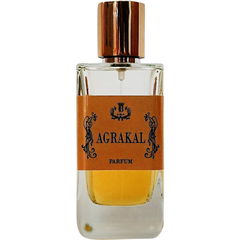
Moths in the Closet? Use Agrakal!
Lemon oil, lavender sachets, and cedar wood work reliably when little moth caterpillars voraciously eat through coats and suits.
And Enrico Buccella relies on the complete triumvirate, because more is more.
Buccella, known for his visually striking and eccentric compositions for his three labels, presents Agrakal in an unusually moderate way. What repels moths develops into a delightful fragrance for my nose, evoking scents reminiscent of classic cologne styles.
Not only does the typical structure with a citrusy top note transitioning into the herbal heart please me, but the initial closeness to Colonia by Lorenzo Villoresi - both in terms of individual notes and the recognizable quality - speaks for itself.
The Villoresi is of course even more delicate, less compact, and Agrakal ultimately breaks free from the Cologne realms.
The dominant lavender, with a washed-out dose of coumarin, almost evokes Fougère feelings, and the resting base note - musk (of the darker kind) has been fortunately used sparingly - carries the scent surprisingly long.
And while its name* would indeed fit a moth repellent, the fragrance is probably a bit too expensive for such use - and also too precious. But in my wardrobe, a bit of lemon peel and cedar chips will now join the bunch of lavender.
*Agrakal is Kabyle (a Berber language) for the Mediterranean.
And Enrico Buccella relies on the complete triumvirate, because more is more.
Buccella, known for his visually striking and eccentric compositions for his three labels, presents Agrakal in an unusually moderate way. What repels moths develops into a delightful fragrance for my nose, evoking scents reminiscent of classic cologne styles.
Not only does the typical structure with a citrusy top note transitioning into the herbal heart please me, but the initial closeness to Colonia by Lorenzo Villoresi - both in terms of individual notes and the recognizable quality - speaks for itself.
The Villoresi is of course even more delicate, less compact, and Agrakal ultimately breaks free from the Cologne realms.
The dominant lavender, with a washed-out dose of coumarin, almost evokes Fougère feelings, and the resting base note - musk (of the darker kind) has been fortunately used sparingly - carries the scent surprisingly long.
And while its name* would indeed fit a moth repellent, the fragrance is probably a bit too expensive for such use - and also too precious. But in my wardrobe, a bit of lemon peel and cedar chips will now join the bunch of lavender.
*Agrakal is Kabyle (a Berber language) for the Mediterranean.
12 Comments
Translated · Show original
Calling a spade a spade
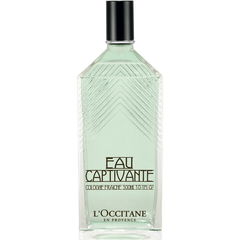
Certainly, I initially fell for this fragrance because of the dreamily consistent art deco bottle, but given the early summer that has long settled here at the French border, its inner qualities also manage to convince me.
The scent is quite quickly outlined: imagine a chilled glass of water with a slice of lemon and a mint leaf enjoyed next to a lavender bush.
This is entirely sugar-free and never touches the shrill cocktail-like quality, maintaining its French lightness and brand-typical naturalness.
If some support is needed to get out of the hammock after a siesta, this fresh scent would surely be a suitable choice. And sometimes there are those moments, right?
As a so-called Cologne fraîche, it is naturally not a paragon of sillage and longevity - however, this is balanced out by a correspondingly generously sized bottle.
In short, a fragrance for the lighter sides of life that knows how to ease the hot days a little, completely carefree and simple - and so simply, this child is named: captivant.
Edit: at Jacko's suggestion, I would like to add that this fragrance has already been discontinued, although the Parfumo database does not yet know this - le gain aussitôt dévoré que touché...
The scent is quite quickly outlined: imagine a chilled glass of water with a slice of lemon and a mint leaf enjoyed next to a lavender bush.
This is entirely sugar-free and never touches the shrill cocktail-like quality, maintaining its French lightness and brand-typical naturalness.
If some support is needed to get out of the hammock after a siesta, this fresh scent would surely be a suitable choice. And sometimes there are those moments, right?
As a so-called Cologne fraîche, it is naturally not a paragon of sillage and longevity - however, this is balanced out by a correspondingly generously sized bottle.
In short, a fragrance for the lighter sides of life that knows how to ease the hot days a little, completely carefree and simple - and so simply, this child is named: captivant.
Edit: at Jacko's suggestion, I would like to add that this fragrance has already been discontinued, although the Parfumo database does not yet know this - le gain aussitôt dévoré que touché...
18 Comments
Translated · Show original
Ivy
Ivy is the name of a minor character in Max Frisch's most famous work - Homo faber, as its title suggests - whose popularity is largely due to the fact that it has been presented to countless generations in the form of school reading, and has always been among the more accessible texts offered to young people. Accessible indeed, yet peppered with countless reference points, providing ample room for literary analysis.
Ivy, as Max Frisch named the lover of the main character, is meant to illustrate both the clinging nature of the lover herself and the general perception of women held by the main character. Ivy - the ivy plant - as a toxic climbing plant, as a weakening parasite, so the broad consensus.
Unfortunately, ivy is neither a parasitic nor a climbing plant.
Even back in school, I associated the image of ivy more with Walter himself, the main character, than with his lover Ivy.
Ivy is a self-climber that, forming a stable stem axis, could theoretically support its own weight, and is therefore not necessarily dependent on a supporting structure.
Meanwhile, it is now predominantly held in biology that ivy growth on trees is fundamentally harmless, and that only small trees and large shrubs can die from being overgrown when deprived of light.
Ivy, then, which, if allowed, conquers the nature around it, just as modern technology, with Walter's involvement, conquers the world.
Ivy as a shade plant, fitting the cool, calculating disposition of the technician.
Ivy, which, if not kept in check, can destroy more delicate plants.
Ivy, which is toxic depending on the dose.
Ivy for a rational, rootless, and ultimately dependent citizen of the world.
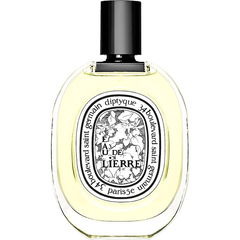
Eau de Lierre, what a wonderful name for a perfume. Melodious, yet somehow simple, while giving space to the imagination of the one smelling it - and thus perfectly fitting the scent itself.
Just like the ivy itself, the calculated beauty and simplicity of this Diptyque works both for the rational technician and the young lover.
Eau de Lierre, which clings green and cool to the brick walls of New York.
Eau de Lierre, which winds lightly and elegantly around the columns and statues of Roman ruins.
Eau de Lierre, optionally a gray three-piece suit or a light summer dress, each worn under the soothing shade of light foliage.
But I don’t want to give a false impression; Ergo's Eau de Gartenabfälle captures it somehow as well.
Thank you dear Knopfnase for making this lovely re-smelling possible!
Ivy, as Max Frisch named the lover of the main character, is meant to illustrate both the clinging nature of the lover herself and the general perception of women held by the main character. Ivy - the ivy plant - as a toxic climbing plant, as a weakening parasite, so the broad consensus.
Unfortunately, ivy is neither a parasitic nor a climbing plant.
Even back in school, I associated the image of ivy more with Walter himself, the main character, than with his lover Ivy.
Ivy is a self-climber that, forming a stable stem axis, could theoretically support its own weight, and is therefore not necessarily dependent on a supporting structure.
Meanwhile, it is now predominantly held in biology that ivy growth on trees is fundamentally harmless, and that only small trees and large shrubs can die from being overgrown when deprived of light.
Ivy, then, which, if allowed, conquers the nature around it, just as modern technology, with Walter's involvement, conquers the world.
Ivy as a shade plant, fitting the cool, calculating disposition of the technician.
Ivy, which, if not kept in check, can destroy more delicate plants.
Ivy, which is toxic depending on the dose.
Ivy for a rational, rootless, and ultimately dependent citizen of the world.
Eau de Lierre, what a wonderful name for a perfume. Melodious, yet somehow simple, while giving space to the imagination of the one smelling it - and thus perfectly fitting the scent itself.
Just like the ivy itself, the calculated beauty and simplicity of this Diptyque works both for the rational technician and the young lover.
Eau de Lierre, which clings green and cool to the brick walls of New York.
Eau de Lierre, which winds lightly and elegantly around the columns and statues of Roman ruins.
Eau de Lierre, optionally a gray three-piece suit or a light summer dress, each worn under the soothing shade of light foliage.
But I don’t want to give a false impression; Ergo's Eau de Gartenabfälle captures it somehow as well.
Thank you dear Knopfnase for making this lovely re-smelling possible!
18 Comments
Translated · Show original
Fluffy Swanling Short Comment
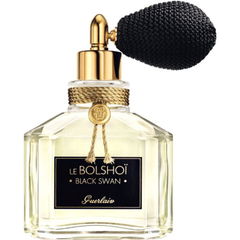
In Black Swan, one of Guerlain's highly exclusive little treasures, I perceive a lily of the valley note as the red thread running through the fragrance, initially accompanied by wonderfully refreshing citrus notes. This is somewhat creamy, yes, gourmand-like, perhaps the sandalwood vanilla base is already playing a role here, but overall it is incredibly invigorating.
Here, I think less of black or even white swans, but rather of the small, sweet, playful swanlings that are neither white nor black and are all fluffy, frolicking behind their swan mother through the water.
After about ten minutes, these citrus notes fade away far too early, leaving the lily of the valley note, which is then piggybacked by a huge swanling caricature named musk fluff.
That's it, not much more happens - except that at some point along the way, the lily of the valley gets lost and now and then a sweetly creamy sandalwood vanilla peeks shyly out from its hiding place.
This fluffy musk monster seems to be Monsieur Wasser's favorite animal, as it can be found in many of his fragrances: Cologne du Parfumeur, various newer Aqua Allegorias, ...
I could wring the creature's neck!
Here, I think less of black or even white swans, but rather of the small, sweet, playful swanlings that are neither white nor black and are all fluffy, frolicking behind their swan mother through the water.
After about ten minutes, these citrus notes fade away far too early, leaving the lily of the valley note, which is then piggybacked by a huge swanling caricature named musk fluff.
That's it, not much more happens - except that at some point along the way, the lily of the valley gets lost and now and then a sweetly creamy sandalwood vanilla peeks shyly out from its hiding place.
This fluffy musk monster seems to be Monsieur Wasser's favorite animal, as it can be found in many of his fragrances: Cologne du Parfumeur, various newer Aqua Allegorias, ...
I could wring the creature's neck!
18 Comments
Translated · Show original
Some Become More Beautiful with Age
S Efai blooms only after seven years - we learned that back in elementary school.
Of course, that's nonsense, as it suggests that ivy is a hapaxanthic plant.
In retrospect, I'm not sure if our teacher simply misspoke - according to my current understanding, ivy actually blooms for the first time after about seven years, but then annually - or if this was one of those cloaked life lessons she liked to throw around.
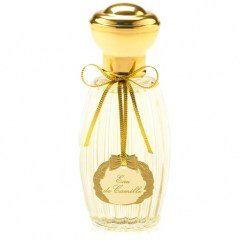
Eau de Camille was created by Annick Goutal for her then seven-year-old daughter, who liked the smell of ivy.
And if the ivy was as old as she was, it must have just bloomed for the first time back then.
Well aware that ivy does not necessarily smell pleasant when in bloom, I still imagine an ivy-covered wall in full bloom - not with the actual, inconspicuous flowers of ivy, but more splendid, matching the lovely floral scent of this perfume.
I think of golden-green garden happiness, wrapped in the late summer September sun.
Idyllic, with dancing bees around late flowers and the wild ivy by the west wall.
In ancient times, ivy was consistently regarded as a symbol of the joyfully celebrating gods and their feasts, which were often crowned with ivy as much as with vine leaves.
And Eau de Camille is a cheerful, light-hearted fragrance, playful and telling of freedom, defying all late summer melancholy.
Somehow fitting the image of the seven-year-old girl dancing with the bees, while the adults comment benevolently on the flowerbeds with wine glasses and beer bottles, or discuss the last game of the first local handball team over the grill.
A light summer scent that can be worn by both young and young-at-heart - and by those who become more beautiful with age.
Eau de Camille is the fragrance that makes the sun sing of summer on this snowy February morning.
Of course, that's nonsense, as it suggests that ivy is a hapaxanthic plant.
In retrospect, I'm not sure if our teacher simply misspoke - according to my current understanding, ivy actually blooms for the first time after about seven years, but then annually - or if this was one of those cloaked life lessons she liked to throw around.
Eau de Camille was created by Annick Goutal for her then seven-year-old daughter, who liked the smell of ivy.
And if the ivy was as old as she was, it must have just bloomed for the first time back then.
Well aware that ivy does not necessarily smell pleasant when in bloom, I still imagine an ivy-covered wall in full bloom - not with the actual, inconspicuous flowers of ivy, but more splendid, matching the lovely floral scent of this perfume.
I think of golden-green garden happiness, wrapped in the late summer September sun.
Idyllic, with dancing bees around late flowers and the wild ivy by the west wall.
In ancient times, ivy was consistently regarded as a symbol of the joyfully celebrating gods and their feasts, which were often crowned with ivy as much as with vine leaves.
And Eau de Camille is a cheerful, light-hearted fragrance, playful and telling of freedom, defying all late summer melancholy.
Somehow fitting the image of the seven-year-old girl dancing with the bees, while the adults comment benevolently on the flowerbeds with wine glasses and beer bottles, or discuss the last game of the first local handball team over the grill.
A light summer scent that can be worn by both young and young-at-heart - and by those who become more beautiful with age.
Eau de Camille is the fragrance that makes the sun sing of summer on this snowy February morning.
16 Comments