
Mörderbiene
Reviews
Filter & Sort
Detailed
Translated · Show original
There are still good things out there
I had a somewhat unsatisfying afternoon in terms of perfume yesterday.
First, there was a sample from Penhaligon's Portraits Collection, named after the founder William Penhaligon. The direct consequence of the test: I was unsure whether to burst into anger or tears at this sacrilege. After a calming walk, I then raised the scent from 0 to 4.5. But by then, the sample was already in the trash.
Then came the blog from Turandot - I’m still kneading my neck, which is hurting from the vigorous nodding. So much truth in so few lines. Ouch.
And yet I know that I can't just leave it at that. Not that I could disagree. But there are still good things out there.
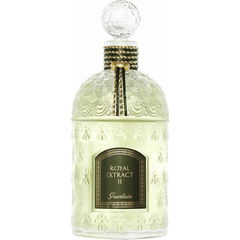
So I got something good to drink, put on something good to listen to, and set out in search of something good to smell - it was to be Guerlain's Royal Extract II.
As a contrast program immediately following, it certainly had good cards, but it also knew how to play them well.
Royal Extract II refers, just like the unspeakable sacrilege from the island, to the founder, in this case Pierre-Francois Pascal Guerlain, who created the 'Extrait Royale des Fleurs' in 1828, the year of its opening - and has, like the Brit, nothing further to do with it except for the advertising text.
However, that doesn’t change the fact that Royal Extract II is quite a peculiar scent.
The backbone consists of a cheerfully spring-fresh hyacinth and the frivolity of the same somewhat restrained by bitter galbanum. With this contrast of light and dark, Thierry Wasser already achieves a certain fundamental tension.
With a gently bitter citrus (yes, that works!) and an underlying spiciness, a slightly soapy chypre texture emerges, with the hyacinth being subtly underpinned by other floral notes as it develops.
In the base, the illusion of a light leathery note emerges, which may only be triggered by the generously dosed galbanum.
Chanel's N°19 is mentioned here multiple times as a comparison scent. I only have an older version of the EdP for direct comparison, and a fundamental similarity cannot be denied.
However, I see Royal Extract II more between Cristalle and Cabochard - with the former, it shares the crystal-clear frivolity of the hyacinth, which appears much more subdued in N°19, and with the latter, the lavish dose of bitter galbanum with slight leathery nuances, which, in turn, was also used much more moderately in N°19. The harmonious softness of N°19 is missing in this Guerlain, which I find all the more surprising since this is supposed to be pure perfume. For that, the scent is unusually transparent, yet powerful, and yes, also edgy.
In summary, it is herbaceous, cool, elegant, and wonderfully retro.
Not a century scent like Sous le Vent, for example, but at least a refreshing delight in the inflation of boredom. And yet similarly unattainable.
First, there was a sample from Penhaligon's Portraits Collection, named after the founder William Penhaligon. The direct consequence of the test: I was unsure whether to burst into anger or tears at this sacrilege. After a calming walk, I then raised the scent from 0 to 4.5. But by then, the sample was already in the trash.
Then came the blog from Turandot - I’m still kneading my neck, which is hurting from the vigorous nodding. So much truth in so few lines. Ouch.
And yet I know that I can't just leave it at that. Not that I could disagree. But there are still good things out there.
So I got something good to drink, put on something good to listen to, and set out in search of something good to smell - it was to be Guerlain's Royal Extract II.
As a contrast program immediately following, it certainly had good cards, but it also knew how to play them well.
Royal Extract II refers, just like the unspeakable sacrilege from the island, to the founder, in this case Pierre-Francois Pascal Guerlain, who created the 'Extrait Royale des Fleurs' in 1828, the year of its opening - and has, like the Brit, nothing further to do with it except for the advertising text.
However, that doesn’t change the fact that Royal Extract II is quite a peculiar scent.
The backbone consists of a cheerfully spring-fresh hyacinth and the frivolity of the same somewhat restrained by bitter galbanum. With this contrast of light and dark, Thierry Wasser already achieves a certain fundamental tension.
With a gently bitter citrus (yes, that works!) and an underlying spiciness, a slightly soapy chypre texture emerges, with the hyacinth being subtly underpinned by other floral notes as it develops.
In the base, the illusion of a light leathery note emerges, which may only be triggered by the generously dosed galbanum.
Chanel's N°19 is mentioned here multiple times as a comparison scent. I only have an older version of the EdP for direct comparison, and a fundamental similarity cannot be denied.
However, I see Royal Extract II more between Cristalle and Cabochard - with the former, it shares the crystal-clear frivolity of the hyacinth, which appears much more subdued in N°19, and with the latter, the lavish dose of bitter galbanum with slight leathery nuances, which, in turn, was also used much more moderately in N°19. The harmonious softness of N°19 is missing in this Guerlain, which I find all the more surprising since this is supposed to be pure perfume. For that, the scent is unusually transparent, yet powerful, and yes, also edgy.
In summary, it is herbaceous, cool, elegant, and wonderfully retro.
Not a century scent like Sous le Vent, for example, but at least a refreshing delight in the inflation of boredom. And yet similarly unattainable.
23 Comments
Translated · Show original
Troppo Gentile
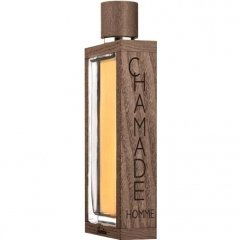
Chamade Homme is a very calm fragrance that, despite a certain development, feels quite static. Behind a pale spicy wooden door lies a chypre-like structure.
At first, there is something pale spicy citrusy, before pale spicy flowers take over, leading into an unmistakably pale spicy base. Overall, I find it difficult to isolate individual notes in Chamade Homme; consciously, I can really only identify powdery violets.
When I smell Chamade Homme, I quickly think of 'Gentile', another men's fragrance that, however, is more open about its nature because it is named as it is: 'nice'.
A scent that promises more - because the brand has actually produced consistently characterful fragrances, and the listed notes are quite promising.
A fragrance that offers less, which is also somewhat pale spicy, ultimately a Fougère that is just too nice. Chamade Homme can be considered, in a way, as a chypre equivalent to it - and vice versa.
Both are fragrances for the man for whom perfume is a necessary accessory that should not attract unnecessary attention.
For the man who scents himself to be scented - because that's just how it's done for occasions.
Or even for a lady - it probably wouldn't be noticed by anyone.
Chamade Homme would thus be a candidate for a job interview and a board meeting (Swiss excluded, there they wear something else).
Chamade Homme is so smooth and colorless that I can't find it bad. Troppo gentile indeed.
And so that I can still somehow make the curve: Natale gentile, dear ones!
At first, there is something pale spicy citrusy, before pale spicy flowers take over, leading into an unmistakably pale spicy base. Overall, I find it difficult to isolate individual notes in Chamade Homme; consciously, I can really only identify powdery violets.
When I smell Chamade Homme, I quickly think of 'Gentile', another men's fragrance that, however, is more open about its nature because it is named as it is: 'nice'.
A scent that promises more - because the brand has actually produced consistently characterful fragrances, and the listed notes are quite promising.
A fragrance that offers less, which is also somewhat pale spicy, ultimately a Fougère that is just too nice. Chamade Homme can be considered, in a way, as a chypre equivalent to it - and vice versa.
Both are fragrances for the man for whom perfume is a necessary accessory that should not attract unnecessary attention.
For the man who scents himself to be scented - because that's just how it's done for occasions.
Or even for a lady - it probably wouldn't be noticed by anyone.
Chamade Homme would thus be a candidate for a job interview and a board meeting (Swiss excluded, there they wear something else).
Chamade Homme is so smooth and colorless that I can't find it bad. Troppo gentile indeed.
And so that I can still somehow make the curve: Natale gentile, dear ones!
17 Comments
Translated · Show original
'Now I have seen the world, I have grown tired of discovering...'
There are phases in the testing life of a perfume where one feels they can no longer discover anything new. Where one sample resembles another, and everything seems to have been experienced already, as if one is running on a hamster wheel, going in circles.
I have been there, set my sample box aside for quite a while, indulged in the familiar, and dedicated myself to other things.
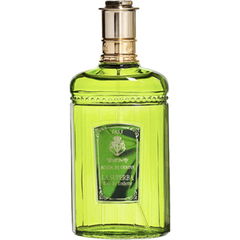
This time, I also tackled my decant stock and didn’t realize what a revelation Rovo Nero is - until now, as my decant is quickly nearing its end.
I came across the brand Acqua di Genova because of its classic cologne, which is said to have been created in the mid-19th century, but ultimately failed to convince me.
However, the handcrafted bottle captivated me, and that’s why I sought out more scents from the brand - including this one.
Rovo Nero can be classified as a Chypre in its structure, but for me, it goes far beyond that.
In my perception, classic perfumery is married with independent experiments here.
The start is initially citrusy with a distinctly orange hue. Shortly thereafter, autumnal spice joins in; I believe I can discern a background immortelle as well as some pepper. Over this lies a soapy veil that is so typical of tarragon, which can be found in a similar form in many Chypre classics. In this fine soapiness, something clove-like joins in, beneath which a rosy darkness mingles.
Soon, the scent paints images of a damp forest floor with decaying leaves on mushrooms and half-rotted, moss-covered wood. However, this impression is preserved by a bright, perfumed powderiness and a fine sweetness before the pure natural impression.
Overall, the entire fragrance is masterfully blended and comes across as extremely high quality.
Rovo Nero is certainly not a perfume that reveals itself at first sniff; it may even be somewhat demanding, but that is precisely what sets it apart from the recurring mass.
Especially now in autumn, it has been a joy to wear it on long walks.
Now, I am certainly back in the home office testing marathon.
And perhaps I will indeed bring one of those beautiful Genova bottles into my home.
I have been there, set my sample box aside for quite a while, indulged in the familiar, and dedicated myself to other things.
This time, I also tackled my decant stock and didn’t realize what a revelation Rovo Nero is - until now, as my decant is quickly nearing its end.
I came across the brand Acqua di Genova because of its classic cologne, which is said to have been created in the mid-19th century, but ultimately failed to convince me.
However, the handcrafted bottle captivated me, and that’s why I sought out more scents from the brand - including this one.
Rovo Nero can be classified as a Chypre in its structure, but for me, it goes far beyond that.
In my perception, classic perfumery is married with independent experiments here.
The start is initially citrusy with a distinctly orange hue. Shortly thereafter, autumnal spice joins in; I believe I can discern a background immortelle as well as some pepper. Over this lies a soapy veil that is so typical of tarragon, which can be found in a similar form in many Chypre classics. In this fine soapiness, something clove-like joins in, beneath which a rosy darkness mingles.
Soon, the scent paints images of a damp forest floor with decaying leaves on mushrooms and half-rotted, moss-covered wood. However, this impression is preserved by a bright, perfumed powderiness and a fine sweetness before the pure natural impression.
Overall, the entire fragrance is masterfully blended and comes across as extremely high quality.
Rovo Nero is certainly not a perfume that reveals itself at first sniff; it may even be somewhat demanding, but that is precisely what sets it apart from the recurring mass.
Especially now in autumn, it has been a joy to wear it on long walks.
Now, I am certainly back in the home office testing marathon.
And perhaps I will indeed bring one of those beautiful Genova bottles into my home.
13 Comments
Translated · Show original
Sola dosis facit venenum
There are plenty of vetiver fragrances, ranging from the classic spicy-fresh representatives like those from Carven and Guerlain to the balsamic-warm interpretations such as Vetiver Ambrato. Here, I would like to refer to the collection folder 'Oriental Vetiver' by the user Yatagan.
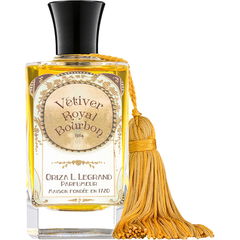
I would place Vetiver Royal Bourbon by Oriza Legrand somewhere between these extremes. It lacks the classic citrus top notes and the characteristic freshness of the former group; the fragrance has body and weight, but it is too harsh and lacks the sweetness to be categorized in the latter group.
The vetiver note is similarly gnarly as in Etro's Vetiver, suggesting the use of Bourbon vetiver.
However, it appears here, as do all accompanying notes, to be rather subtly used.
The brisk herbal freshness of mint and thyme blends over the rugged vetiver with sweet styrax and vanilla tobacco.
Overall, it comes across as slightly medicinal, which I sometimes quite enjoy.
However, I did not choose the title for that reason alone - what characterizes Vetiver Royal Bourbon is primarily the measured use of the individual fragrance notes. Here, there are some notes that I find very difficult in high doses. Thyme quickly becomes too smoky for me, mint too dentist-like, vetiver too gnarly, tobacco too sweet, iris too powdery, immortelle too spicy, leather...
Here, however, it seems that the perfumer Hugo Lambert has struck the golden mean; the proportions are right, and the individual notes combine to create an extremely pleasant and anything but boring vetiver fragrance. They provide each other with space to unfold and interact to create a highly engaging scent experience that captivates me profoundly.
The wish list just misses the mark, which, however, is less about the fragrance itself and more about my collection, which already includes a middle-ground vetiver with Odin's No. 08.
Nevertheless, I would like to express a clear recommendation for testing, not just for vetiver enthusiasts.
Thanks to Floyd.
I would place Vetiver Royal Bourbon by Oriza Legrand somewhere between these extremes. It lacks the classic citrus top notes and the characteristic freshness of the former group; the fragrance has body and weight, but it is too harsh and lacks the sweetness to be categorized in the latter group.
The vetiver note is similarly gnarly as in Etro's Vetiver, suggesting the use of Bourbon vetiver.
However, it appears here, as do all accompanying notes, to be rather subtly used.
The brisk herbal freshness of mint and thyme blends over the rugged vetiver with sweet styrax and vanilla tobacco.
Overall, it comes across as slightly medicinal, which I sometimes quite enjoy.
However, I did not choose the title for that reason alone - what characterizes Vetiver Royal Bourbon is primarily the measured use of the individual fragrance notes. Here, there are some notes that I find very difficult in high doses. Thyme quickly becomes too smoky for me, mint too dentist-like, vetiver too gnarly, tobacco too sweet, iris too powdery, immortelle too spicy, leather...
Here, however, it seems that the perfumer Hugo Lambert has struck the golden mean; the proportions are right, and the individual notes combine to create an extremely pleasant and anything but boring vetiver fragrance. They provide each other with space to unfold and interact to create a highly engaging scent experience that captivates me profoundly.
The wish list just misses the mark, which, however, is less about the fragrance itself and more about my collection, which already includes a middle-ground vetiver with Odin's No. 08.
Nevertheless, I would like to express a clear recommendation for testing, not just for vetiver enthusiasts.
Thanks to Floyd.
25 Comments
Translated · Show original
British Trio - A Comparative Sketch
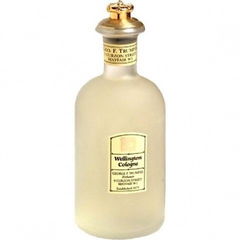
After I pulled Wellington from the sample canister yesterday (thematically faithful to a former shortbread tin), it became almost imperative for me to trace the connections of the Trio Infernale from the island, namely and in chronological order Wellington, Blenheim Bouquet, and Town & Country. The three are spaced about a quarter of a century apart, and while fashion and taste regarding certain art forms underwent the greatest transformations around the turn of the century - not least due to social and political developments - the evolution of British fragrance preferences seemed to stagnate.
For a strong similarity between the three scent brothers cannot be denied.
All three share a greenish-tinged, lemon-dominated hesperidic opening, an underlying or subsequent herbaceous foundation with coniferous undertones, as well as a simple decrescendo with powdery hints as a conclusion.
And yet, upon closer examination, differences can be discerned.
First, it is noticeable in direct comparison that Wellington is significantly more powdery throughout its entire development than its fragrance cousins.
And there are also (suspected) differences in content. By the way, the pyramids are not much help - they suggest a complete absence of citrus notes in Town & Country, and no lavender is mentioned for Wellington. However, it is present; my nose would have to be very mistaken.
Starting with the top note, it can be seen that the lemon in Blenheim Bouquet and Town & Country comes across very fruity-zesty-sour and is additionally supported by typically aromatic lime. Wellington, on the other hand, offers plenty of herbaceous green bergamot alongside the lemon as an equal partner, with slightly orangey tones also resonating. And while Blenheim Bouquet and Town & Country - always within the very similar, previously described framework, mind you - subsequently take the route into the herb garden next to the kitchen door, Wellington chooses the flower bed in the opposite direction. Very subtle, though, and therefore not further differentiable; I would probably trust the indicated lily of the valley, as a delicate floral powder mixes into the fragrance composition.
Nothing more can be said about the fragrance developments, as the base decrescendo is already setting in.
If I had to visualize the connections of the three fragrances, I would do so with a sharp triangle: Blenheim Bouquet and Town & Country connected by the short side, Wellington at the more distant, acute angle.
Wellington could also be related to another Brit - I think of Lords, or Douro. There, the notes and developments that Blenheim Bouquet lacks can be found, such as the slightly orangey opening and the floral-tinged heart.
Wellington as the child of Blenheim Bouquet and Lords? Considering the timeline, it is probably the other way around, but thematically it seems quite plausible.
Lovers of other fragrance directions may now shake their heads, 'everything smells the same' - however, I have hereby justified the possession of all three [four(five)] fragrances, so it only tangentially affects me :)
For a strong similarity between the three scent brothers cannot be denied.
All three share a greenish-tinged, lemon-dominated hesperidic opening, an underlying or subsequent herbaceous foundation with coniferous undertones, as well as a simple decrescendo with powdery hints as a conclusion.
And yet, upon closer examination, differences can be discerned.
First, it is noticeable in direct comparison that Wellington is significantly more powdery throughout its entire development than its fragrance cousins.
And there are also (suspected) differences in content. By the way, the pyramids are not much help - they suggest a complete absence of citrus notes in Town & Country, and no lavender is mentioned for Wellington. However, it is present; my nose would have to be very mistaken.
Starting with the top note, it can be seen that the lemon in Blenheim Bouquet and Town & Country comes across very fruity-zesty-sour and is additionally supported by typically aromatic lime. Wellington, on the other hand, offers plenty of herbaceous green bergamot alongside the lemon as an equal partner, with slightly orangey tones also resonating. And while Blenheim Bouquet and Town & Country - always within the very similar, previously described framework, mind you - subsequently take the route into the herb garden next to the kitchen door, Wellington chooses the flower bed in the opposite direction. Very subtle, though, and therefore not further differentiable; I would probably trust the indicated lily of the valley, as a delicate floral powder mixes into the fragrance composition.
Nothing more can be said about the fragrance developments, as the base decrescendo is already setting in.
If I had to visualize the connections of the three fragrances, I would do so with a sharp triangle: Blenheim Bouquet and Town & Country connected by the short side, Wellington at the more distant, acute angle.
Wellington could also be related to another Brit - I think of Lords, or Douro. There, the notes and developments that Blenheim Bouquet lacks can be found, such as the slightly orangey opening and the floral-tinged heart.
Wellington as the child of Blenheim Bouquet and Lords? Considering the timeline, it is probably the other way around, but thematically it seems quite plausible.
Lovers of other fragrance directions may now shake their heads, 'everything smells the same' - however, I have hereby justified the possession of all three [four(five)] fragrances, so it only tangentially affects me :)
12 Comments