Log in

Profumo

Profumo

Reviews
1 - 5 by 289
Translated · Show originalShow translation
Don't judge a book by its cover
As banal as it sounds, this can certainly be applied to fragrances. Take this one, for example.
And yes, I admit it, I tend to judge by its cover too. Whoever doesn’t, throw the first bottle!
Bam - “Wannabe-Oud”! - there was the verdict! Even Arquiste needs, who can blame them, something with oud. Everyone wants it. A fancy story around it and the job is done. Everything is a bit more sophisticated than elsewhere and oh so ‘wearable’, at least compared to the other, mostly convoluted niche stuff.
Arquiste, that’s it. Period, done. On to the next vial…

But, mea culpa: Anyone who has had the chance to sniff countless perfumes over the decades inevitably has a kind of coordinate system in which new scents are quickly located. Order must be!
But just as one should read a book before judging it, a fragrance certainly deserves a more in-depth sniff. Especially when the brand and perfumer are not among the worst.
Of course, I usually do this. Only when a genre is a bit ‘over’ for me, a careful judgment might not come immediately.
Aha, another one of those! Label on, drawer closed.

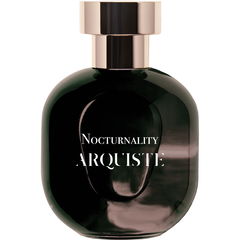
As oud-y as it may seem, “Nocturnality” is a fragrance that can fall victim to this. But beware, there’s more to it!

Interestingly, a controversy on Fragrantica led me back to it. There, someone angrily expressed how disgusted he was by the inspiration that Rodrigo Flores-Roux had for “Nocturnality”: “So, Nocturnality is inspired by a man wanting and lusting after another man….I’m no longer interested. I’m disgusted.” He justifies his disgust with the assertion that a true Christian cannot serve two masters: the true God and a lifestyle that He despises. “We cannot serve God and Sexual Immorality.”

Donald and his people here too, seriously?

Ultimately, this erratic fundamentalist at least compelled me to delve into the Arquiste-typical story that the house gives to each of its works:

October 1996, New York City

“In the neon-lit nights of New York City, a young perfumer roams the city after dark, searching for inspiration. The humid air carries a hint of spilled alcohol, cigarette smoke, and the sweat of people moving in underground clubs. He meets a man who glides through the scene like a ghost, whose scent is a mix of neoprene, leather boots, and something undefinable. Drawn to the city’s nocturnal underworld - where desire and abandon merge into an intoxicating blend - he absorbs the essence of the night. However, he realizes that he is not only capturing this prevailing, sexual scent but also losing himself in it.”

Well, 1996 was a few years past my wild nightlife days, but not so long that they didn’t still resonate. And the two hottest gay locations still existed, each with a very distinctive, completely different scent aura: one rather sultry-sweet, the other leathery-artificial: Both permeated by smoke, cocaine, and poppers fumes. “Nocturnality” clearly stems from the leather scene. Not that of the hairy, often pot-bellied bears who prefer real leather, but that of the trimmed, fit guys with a preference for rubber and neoprene.

While “Knize Ten” is the scent print of a respectable Viennese shoe salon from the 1920s, “Nocturnality” takes us straight into the darkroom of a fetish club, where faux leather and rubber notes combine with the sweet-fruity solvent smell of poppers and the latex scent of condoms. Sounds wild, but it’s not at all. Because Flores-Roux naturally creates a very wearable fragrance from it: full of erotic vibes and underlying animalic notes, but not precarious for a moment. And that’s truly the wonder of this fragrance: despite all the hyraceum, civet, and castoreum, all the latex and neoprene - it’s all there! - the scent smells quite civilized and pleasing.

I didn’t expect that. When I read about all these animalic additions, I envisioned something in the style of “Kouros,” or its nobler, more buttoned-up variant “Sang Bleu.” Arquiste’s own “El” also clearly goes in this direction. But, not at all. This form of heaving chest hair eroticism has nothing to do with “Nocturnality,” absolutely nothing. Not even with the leathery lustfulness of a “Fetish” by Neill Morris or a “Palindrom II” by Santi Burgas (also Flores-Roux!). No, “Nocturnality” breathes a different spirit. Not less hedonistic, but a more synthetic, almost sterile one. Less YMCA, more Techno. Less joint, more designer drug.

One might think that sterility and hedonism exclude each other. However, the “M7” introduced by YSL in 2002 showed that the synthetic oud, often associated with medical practices, can indeed evoke erotic allure. So too here.
Only with the difference that there is no oud in it at all. No synthetic and certainly no natural. And yet I think I smell oud.
Where does this illusion come from?

Yes, I was disappointed. The notes had promised something different: more daring, dirtier, rougher. But, as I said: not “Kouros 2.0”.
After sniffing a bit deeper, I realize: there’s something bubbling underneath, subcutaneously, so to speak.
Beneath the starched white lab coat, rubber chaps, faux leather harness, and silicone cock ring can be sensed, meaning: the olfactory counterpart of gay fetish culture, along with its orgiastic promises. Damn well concealed, so that you don’t notice it at first!

A nice move actually, and somehow familiar: “Shalimar,” “Jicky,” “Mouchoir de Monsieur,” the Eau de Parfum of “Héritage.” Only Guerlain has packaged pure lust under the guise of civilized French refinement.
Others followed suit. Of course, Arquiste too!

Now, the animalic aspect is an important, perhaps the decisive facet of this fragrance, but far from the only one. To conceal it well, you need others that cover well without overpowering. “Civet” by Zoologist is a prime example: a fragrance that carries animalism in its name yet doesn’t put it on display.

In “Nocturnality,” a velvety rose, balsamic resins, peppery notes, hints of dark chocolate and tart berries, all enveloped by the aforementioned oud chimera, form a kind of olfactory paravant that strives to conceal the lascivious-erotic activities behind it, but is really just pretending to do so. Almost unnoticed, the animalic secretions and remnants do flood the membranes of our olfactory cells, quietly and steadily, gradually revealing the true character of the fragrance.
Fragrant exposed lustfulness is not what this is, rather something that is poorly concealed.

Triggers me.

Setting aside this whole 90s New York fetish club thing, the fragrance surely works for all genders and ages. But anyone who enjoys being a little flirty (and does so persistently, as the scent lasts forever!) might discover a congenial scent partner here.
19 Comments
Profumo 4 months ago 32 23
Translated · Show originalShow translation
'Juniperus Oxycedrus', purred by Antonios Zibetkater
Recently, I tried to explain to an acquaintance that I choose my daily fragrance based on the colors of my clothing that I decide on in the morning. I received confused looks.
Come?
When I then explained to her that, for example, I would only wear a green fragrance with a red T-shirt under duress, an oriental fragrance with a blue one, or a citrus scent with a violet T-shirt, she began to ponder.

It's true. When the color of the fragrance corresponds with that of my clothes, I simply feel more comfortable. However, there's a catch with fragrance colors. Not everyone associates the same color with the same scent.
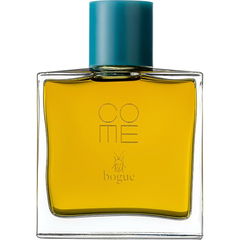
Antonio Gardoni's latest creation is clearly green for me. It is obviously so for him as well, because now and then he dyes the caps of his bottles: with Douleur, it was a vibrant pink that matched this bold fragrance wonderfully, and here it is a matte, dark, coniferous green. Exactly the green of the pointed columnar cypress trees that reach skyward throughout Italy.
However, the cypress is a base note; it is not the protagonist. The main characters are others: foremost among them is the close relative 'Juniperus Oxycedrus', also known as prickly juniper, or its dark, viscous, camphor-like smoky oil, which is obtained from the distillation of bark and branches, sometimes referred to as juniper tar or Cade oil. Antonio Gardoni loves it.

He already prominently featured it in Tyrannosaurus Rex by Zoologist, in LITA for his own label as well, and now again. However, each time in different settings, so one can truly speak of three completely different fragrances. Nevertheless, the juniper tar impresses its characteristic stamp on them.
But Antonio Gardoni not only loves 'Juniperus Oxycedrus', he also loves Chypre notes, often classically interwoven with a hint of civet. And benzoin, which, with its sweet-balsamic nuances, provides a wonderful counterpoint to all things bitter and smoky.

Et voilà, the basic structure of his new fragrance is outlined: a solid top-down Chypre framework over bitter-skinned bergamot, a subtle floral bouquet of ylang-ylang, jasmine, and rose, leading to an earthy-mossy base of patchouli, oakmoss, and labdanum. This typical Chypre sound in a vintage look would already be fragrance enough, but it is far from a work of the alchemist from Brescia. Instead, he lets his wonderfully soft-furred civet cat, whom we already know, purr around the notes, dripping dark, smoky juniper tar from a pipette into the well-known Chypre idyll and enhancing the green nuances of the juniper and cypress with a hint of vetiver. Its scent spectrum ranges from grassy to earthy, sometimes slightly smoky accented, and is absolutely essential for a perfume with the attribute green. Interestingly, the no less obligatory galbanum does not come into play here.

What does come into play, however, is the balsamic warmth and the hint of vanilla from the benzoin (both Siam and the spicier Sumatra benzoin), which the perfumer apparently prefers over the common amber mixtures that also contain benzoin, which are used everywhere and serve the same function: to round out the fragrance, give it sensuality, and fix it on the skin. Amber mixtures, however, are usually more dominant, excellently suited to convey oriental opulence olfactorily, while benzoin acts more subtly and elegantly when isolated.

That there are also other fragrance components involved, such as honey, wax, fermented tea, fig, or my beloved immortelle - all understandable and plausible. I cannot isolate them, as they do not step forward solistically. Joining the background chorus, they surely contribute their share to this green-spicy, subtly animalic Chypre.

This keyword attribution also applies to a fragrance that 'Come' reminded me of immediately after the first spray: Robert Piguet's 'Futur'. Not that the two works smell terribly similar, no, they do not. It is more their attitude, their presence. 'Green' was excitingly reinterpreted by 'Futur' nearly 60 years ago with subtly smoldering animalism, brighter, powdery, aldehydic than Antonio Gardoni's 'Come' six decades later. Yet while the fragrance color of the oldie may be a brighter green, it still appears similarly matte, almost veiled, yet velvety soft, just like the coniferous dark green of the late successor, which is overall of a stronger stature.

One more word about the animalism: no one needs to fear the infamous Kouros effect. Antonio Gardoni once again manages to skillfully dim (or mask) the precarious facets of civet, known as skatole, while simultaneously letting the sensual-erotic aspects shine through.
It may be that some will still lament too much animal, but for me, Gardoni once again hits that miraculous measure of fragrant lust that makes me want to throw myself around one of his works once more. Translating eroticism into fragrance, Antonio Gardoni is unmatched. He is a master, an irresistible seducer - at least for me. As I said, it may be that some find this down below still too coarse, too little sublime. But the balanced relationship between coarseness and sublimation triggers me immensely.

Since we haven't smelled anything from the fragrance magician from Northern Italy for a long time, I almost feared he had somewhat exhausted the cosmos of his fragrance preferences and was now dedicating himself more to his other focal points of design and architecture. But far from it: with 'Come', he makes a powerful return.
And at least for me (but I am also a Gardoni disciple), it is a true delight to be able to offer something real, something true to the nose after all the mediocre woody-amber and other synthetic stuff.
It feels as if after all the Trumpian bluster, tastelessness, and deception, we finally hear a voice of reason again - comparable to an olfactory sigh of relief that has long been awaited, far too long. Fortunately, colleagues like Canali, Corticchiato, Thierry, Ellena, Giacobetti, Sheldrake, and a few others provide such moments of relief just as reliably. But a new work from Brescia is something special. Especially since Antonio Gardoni takes his time, an unreasonably long time by today's standards.
However, considering that the great Edmond Roudnitska only created about 20 fragrances throughout his entire career, one becomes humble.

So may he take the necessary time in the future, even if it takes years.
As long as he does not fall silent.

A note on the rumored naming:

The Italian phrase 'Come Quando Fuori Piove' (like when it rains outside) refers to "Poker all'italiana," an Italian variant of poker, where the initial letters stand for the respective suits. Come for Cuori (hearts), the most valuable suit in the ranking.

23 Comments
Profumo 7 months ago 33 27
Translated · Show originalShow translation
Multifaceted Idyll
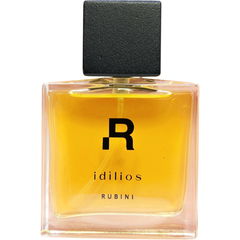
After the flight through fragrant darkness, we now arrive at the olfactory idyll. Brightness, calm, and harmony, instead of all sorts of sharp spices and conflicting contrasts. Even the Rubini-typical hard shells that encase the bottle promise, after the scratchiness of ‘Hyperion’, a silky smoothness in white-pink and light blue pastels.

But beware: what escapes from this spray head is still Rubini! This means that this house, or rather the responsible duo Andrea Rubini/Cristiano Canali, cannot launch a trivial, universally pleasant scent that simply wants to smell good, balanced, rounded, emotional, and soft. No, this scent, idyll or not, is a Rubini scent, a typical one, thoroughly.

The mere selection of notes initially made me shudder: coconut, champaca, mandarin, musk, vanilla...brrrrrrr. Not that I find these notes terrible - I too enjoy the smell of sunscreen from time to time, reminding me of sunny, hot childhood days by the lake. But what the heck has gotten into Rubini to bet on this worn-out horse?

Well, they are not the only ones. Sunscreen scents, or those inspired by beach scenarios in general, are currently quite ‘in’. Miguel Matos has dealt with this topic several times, Arquiste too, recently Marlou, and now Rubini.

But beforehand: there is nothing aquatic about this scent, absolutely nothing. And yet the mentioned notes convey the image of a sunny Caribbean beach, albeit not as blatantly as one might think. Something disturbs this stale idyll: leathery, light smoky, herb-fruity, and green aromas waft over, and no, it is not a group of bikers smoking a joint and slaughtering a pineapple. Here we leave the Caribbean idyll and head east, into Asian realms and a tea house surrounded by blooming osmanthus bushes.

The complex scent profile of this flower forms something like the key note of ‘Idilios’: alongside the floral notes, leathery, fruity, and smoky nuances characterize this profile, but not in the way we are used to here in Europe, rather modulated. Just as a lychee does not taste like a plum, but somehow has similarities, the osmanthus flower only faintly smells of peach, not quite as juicy, comparably sweet, but with less fruit acids, and the leathery facets that peach skin brings also acquire a strangely corporeal, almost meaty quality here, lightly smoked to boot - a somewhat quirky mix that I find smells damn good!

Looking solely at the presentation of the osmanthus flower, ‘Idìlios’ reminds me of ‘Cuir de Chine’ by Les Indémodables, where this leathery corporeality was wonderfully highlighted. Here, however, it does not come to the fore as clearly, but is still present and gives the idyllic scent scenario exactly the spin it needs to avoid becoming sleepy as a base.

Green tea, with its straw-dry, also subtly smoky nuances, is another important player on this scent stage, contrasting the floral and fruity sweetness and largely keeping them in check, so that ‘Idìlios’ comes with a certain base sweetness, but in perception - at least for me - does not appear particularly sweet at all.

A hint of vanilla and the finest light musk round it all off without veering too much into the oriental or animalistic realm. Throughout the entire scent progression, the action remains focused on the center. Osmanthus and green tea form the axis around which everything revolves: the Caribbean intro as well as the cozy, semi-oriental conclusion.

What further characterizes this scent is a slightly synthetic, lacquer-like quality that seems to permeate everything. It doesn’t bother me at all; on the contrary. Similar to the corporeality of the osmanthus flower, it gives the scent just the tension it needs to remain exciting, prompting the wearer to sniff themselves repeatedly, to delve into what is developing so multifaceted and contradictory in terms of scent. And this lacquer note in combination with osmanthus also reminds me of one of my favorite scents, ‘Flesh’ by Pekji, which, however, does without the Caribbean intro and develops significantly more animalistic over time.

All in all, I believe that Andrea Rubini and Cristiano Canali have once again created an extremely successful and interesting scent that fits wonderfully into the extraordinary series of Rubini fragrances. All strong character representatives, yet still connected by a familial bond. A bond that is characterized by a certain stylish eccentricity, a consistently high level, and brilliant craftsmanship.

Bravo, keep it up!!

And please do not fall into the breathlessness of other houses that once started so promisingly, only to ultimately succumb to mediocrity.
27 Comments
Translated · Show originalShow translation
About a Wonderful Encounter of Orange and Amber
I understand that this fragrance is difficult to decipher as a Chypre - it is certainly not a Chypre-in-your-face like "Mitsouko." I also understand that many perceive it as monothematic, as it is primarily the orange that sets the tone here. Yes, I also understand that it is said to lack originality; citrus-fresh Eau-de-Something has indeed been around for decades in abundance.
But, and here comes a big BUT: I love it, and I mean LOVE it!
Now, I do have a fondness for this genre: with Chanel's "Pour Monsieur" and Dior's "Eau Sauvage" as the grand masters on the tableau, Le Gallion's "Eau Noble" and the wonderful "Eau de Guerlain" within reach, and the novice "Bigarade Concentrée" by Frédéric Malle and Parfums d’Empire's "Azemour les Orangers" on equal footing.
For this one, however, I would leave them all behind, all of them. At least for now...

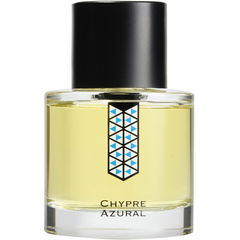
In this fresh, juicy-bitter orange note, more of an orange peel note, I could just dive in. And who doesn't know the feeling when you bend a piece of peel from a fresh, plump orange between two fingers and see tiny droplets shoot out when held up to the light, instantly releasing a wonderfully airy-bitter-fruity aroma? That's exactly how "Chypre Azural" smells - at the beginning!
Because anyone who claims they smell nothing more than that note has not truly experienced this fragrance, let alone finished smelling it. The Chypre-Azural miracle happens later when the few finely balanced base notes begin to blossom, giving the fragrance body, depth, and an astonishing longevity for citrus scents. As I said, there are only a few fragrant players - but isn't the good old Eau Sauvage also a wonder of reduction?!

Those who enjoy the scent of tarragon, that fresh green herbaceousness that almost leans towards vetiver grass, will find the fragrance even more appealing, as tarragon plays a quietly yet crucial role in the scent development, beautifully contrasting the peel bitterness, picking it up and extending it into the base. Accompanied by a hint of rose, just enough to allow a floral presence to be sensed almost subcutaneously, without ever breaking through. This bitter-fruity-spicy-floral trio is supported by a stable oakmoss-patchouli base, which comes across as quite chypre-like and unfolds rather discreetly yet persistently.
So far, so good, so unremarkable, one might think, but now comes the miraculous twist: it is once again the amber that makes the difference. And when I say amber, I mean amber, not ambroxan (Orcanox etc.) and certainly not amber.
Amber, ambergris, colloquially: whale vomit.

The small, exceptionally fine perfume house Les Indémodables from the southern French Alpine town of Annecy has the decisive advantage over many much larger and more significant houses, as it is located at the source of the best natural raw materials. The husband of the founder and owner Valérie Pulverail, Remi Pulverail, runs a company called "L’Atelier Français Des Matières," which offers a special ambergris tincture in consistently high quality. This is quite a significant factor for perfume production, as amber cannot simply be cultivated; one must wait until a sperm whale has relinquished the indigestible parts of its meal to the ocean, where they mature and oxidize over a longer period.
The fact that Madame Pulverail can order said ambergris tincture from Monsieur Pulverail, so to speak, through the small service route, has led to the happy circumstance that Les Indémodables now has three fragrances in its range that contain natural amber. "Chypre Azural" was the first.
And even though the 2% of the fragrance oil content may seem small, there is indeed a significant amount of this miracle substance compared to most fragrances with natural ambergris blends. Exactly enough, in fact, for the fragrance to begin to shine, to expand and fix itself. As a fixative, the amber here does a remarkable job: the scent lasts and lasts and lasts. Moreover, the amber contributes some aspects of its kaleidoscopic scent profile: salty nuances, for example, a hint of the sea, overlaid with azure blue, and finally, with leathery and animalistic undertones, a hint of its dark, corporeal depth.
An orange chypre of cheerful naturalness and elegance, framed and held by radiant sunny azure - that’s how I would characterize "Chypre Azural" in a few words.

In my opinion, Florence Fouillet has created an exceedingly beautiful perfume here. In fact, I find that the first fragrances of this brand (as so often) are simply the best. All of them are by her, by the way. The fact that only Antoine Lie has contributed since then may be due to the belief that a big name is capable of even greater things. However, in my impression, there is an interesting phenomenon here: the big names working for many houses, whether they are Duchaufour, Lie, Feisthauer, or Matos, Lomros, and so on, less often embody the olfactory fingerprint of a company than their own. This means that a Matos fragrance is usually recognizable everywhere, just as is a Duchaufour fragrance, or one by Antoine Lie. The individuality, what distinguishes the houses olfactorily from one another, is somewhat lost in this process, and in the case of Les Indémodables, I honestly find that a bit unfortunate. Not that the Lie fragrances for this house are worse than the initial Fouillet fragrances (the two amber fragrances "Escale en Indonesie" and "Ambre Suprême" are great!), but those by Florence Fouillet once gave this company its unmistakable scent identity, which has now become a bit more interchangeable.

So, back to the roots: back to "Fougère Emeraude," to "Cuir de Chine," and to "Chypre Azural" - they are simply too good!
29 Comments
Translated · Show originalShow translation
Haven't we had this before?
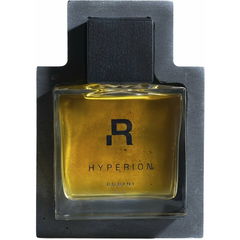
Few fragrance houses excite me as much as the small northern Italian brand Rubini. But beware, the creations of this label are anything but pleasing. Complex, at times unwieldy, they present unusual accords that defy all common fragrance categories. Anyone trying to place them within the familiar coordinate system of terms like Chypre/Fougère/Oriental is likely to fail. But that’s exactly what makes them special: characterful independence.
That you have to work for them.

Now one might ask why we should work for fragrances when they simply need to smell good. And fortunately, many do, very many in fact!
As an example: just sniffing Chanel's ‘Bois des Îles’ and the fragrance world should be in order. What more do you need? You want to kneel down.
But the Rubinis are not made that way. Early olfactory orgasms? Excluded. Instead, they cause wrinkled noses. Stiff and buttoned up, they are stingy with their charms, keeping themselves covered. Sometimes leading you down the wrong paths, revealing their true nature only gradually.

The last two, ‘Nuvolari’ and ‘Odenaturae’, were more accessible - this one is definitely not. Alongside ‘Tambour Sacré’, ‘Hyperion’ is perhaps even the most challenging, in any case the least pleasing fragrance from the house. Not that it lacks charming aspects; it certainly has those! Still, even I, who greatly appreciate the works of Andrea Rubini and Cristiano Canali, was initially puzzled.

Seriously: a frankincense fragrance with plastic-like undertones, biting spiciness, latent threatening animalism, along with diffuse aquatic notes - really? Haven't we had this before?
‘Copal Azur’, ‘Bleu Turqoise’, ‘Squid’, and now this questionable combination of cool, sacred smoke, salty spray, and all sorts of driftwood?
Well, why not, as the aforementioned are quite tame compared to the olfactory challenge named ‘Hyperion’.

The key note that unfolds immediately is still the most harmless: frankincense. In combination with bitter-fruity yuzu, peppery notes, and complex juniper spice, an opening develops that reminds me in its richness of contrast of another Canali fragrance, ‘Tiger’ by Zoologist. There, yuzu successfully provides the necessary counterpart instead of kumquat (as once the peach did in ‘Mitsouko’). But what follows is - at least for my nose - a task named ambergris.
When the fragrance was presented at a trade fair in early 2024, the amber was still missing, as the desired tincture had not yet arrived at that time. Now that it has been incorporated into the composition, I am quite sure it has significantly altered the result.
For better or worse? Who knows. Amber is tricky. It can smell good, but it doesn’t have to. Its scent profile is completely disparate. Antoine Lie has showcased it appropriately in recent years for Les Indémodables and Eris Parfums. Its multifaceted scent kaleidoscope can be well traced here: from dry wood to warm skin, from salty watery notes to unfathomably deep animalism, from earthy aromas to shimmering ozonics. The Frenchman managed to harmoniously complement this diffuse play of notes, even with daring accents like cocoa (‘Mxxx.’) or immortelle (‘Ambre Suprême’). The Italian Canali, on the other hand, takes a different approach. Instead of framing the various accents, he lets them exist. Not out of inability, but because he wants to.
And here comes Hyperion into play, son of Uranus (Heaven) and Gaia (Earth), Titan of Light. His name means “guardian from above” or “he who goes upward,” following the Greek syllables ‘hyper’ and ‘iôn’. Messrs. Rubini and Canali recommend this long-throning gentleman as a spiritual companion, should one wish to “search for oneself, to discover the infinite within” while floating through the vastness of space.

Aha.

Hyperion as a kind of Virgil, who once led Dante into the underworld, now intending to take us by the hand in a fragrant way to Heaven.
Well, every perfume needs its story today, preferably a ‘fancy’ one.
Granted.

For me, the fragrance is almost like a rougher ‘Squid’, albeit without the sea reference, which is largely missing here. The aquatic component, although present, is rather dry, or better: desiccated, like spray on sun-warmed rock. And instead of synthetic ambrox sound, the real amber club, including erotic grime. Dark sensual radiance, instead of polished artificiality.
But there is also this plastic touch, which, in my perception, comes off as less chemical, somehow ‘rougher’. Sweet accents hold back, even if an amber-patchouli accord gently bathes the evening sky of the fragrance in fine red. No vanilla and benzoin in sight - and I like that!
With the help of a framework of cool smoke and amber, fruitily spicy-woody accented, this fragrance is meant to lift us into Hyperion's fragrant heaven.

Does that work?
Well, as so often, a heartfelt: Maybe.

Those who can embrace it may be able to understand Rubini's ambition to have envisioned the scents of the universe, “(...) the feeling of emptiness, of absolute peace, and the infinite echo of an unfathomable cosmos.”
Those who cannot will still experience a somewhat successful smoky-amber fragrance, as there have been many, thus lacking a unique selling point.
I myself place myself somewhere in between. The ambitions seem a bit forced to me, but that this work is their most ambitious yet, I somehow believe the Rubinis.

Meanwhile, the creators could have played it safe and pulled entirely different registers of the fragrance organ: ambroxan and woody amber, the overused warhorses of modern perfumery, for example. Success would have been guaranteed, as would the nose-wrinkling of connoisseurs.
However, the feedback is likely to be mixed: on one hand, recognition for the olfactory craftsmanship (it is, after all, a Canali fragrance and the man knows his stuff!) and the courage to consistently pursue their own sometimes unwieldy, offbeat, perhaps somewhat academic path. On the other hand, head-shaking, even rejection due to the lack of pleasingness and frilly appeal.

It’s a bit like comparing Puccini with Schönberg. Of course, the melt, the familiar catchiness is missing, which I gladly forgo in favor of the magnetism that the music of the 12-tone composer can exert on me.
I experienced something similar with ‘Hyperion’. The longer I sniffed the fragrance, which initially seemed rather unappealing to me, the deeper I delved into scent spheres that could hardly be more stimulating.

Hats off to Rubini and please keep it up!
31 Comments
1 - 5 by 289