Log in

Profumo

Profumo

Reviews
51 - 55 by 289
Translated · Show originalShow translation
Mitsouko 2.0 - no moss, no fun!
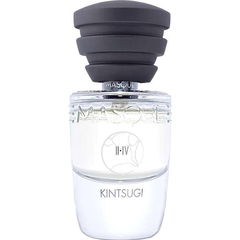
You really have to be a Chypre junkie to appreciate, or even love, this fragrance. Because unlike many scents with more or less pronounced Chypre tendencies but different focuses, ‘Kintsugi’ is a true thoroughbred, or if you will, hardcore Chypre.
From the top, through the heart, down to the base - all the unfolding accords, facets, and nuances blend seamlessly into the overarching Chypre concept.

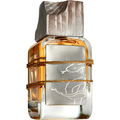
Speaking of ‘seamless’ - which brings us to the topic: ‘Kintsugi’, or ‘Kintsukuroi’, is the Japanese art form of beautifully mending broken porcelain. The broken pieces are glued together with a lacquer containing gold, creating golden veins that run through the shimmering ceramic. Only through the break and the subsequent healing of the break does the actual art form, called ‘Kintsugi’, emerge.
Translating this to the fragrance of the same name, one might come to the obvious conclusion that the essential oak moss for Chypres takes on the role of the gold lacquer, uniting the individual fragrance components.
However, that is not the case at all, and that makes ‘Kintsugi’ so special.
‘Kintsugi’ is more of a ‘Mitsouko 2.0’.

While the legendary Guerlain scent is dominated from head to toe by oak moss, in ‘Kintsugi’ this role is taken over by patchouli, or a so-called ‘Patchouli Coeur’, an absolute from which all the musty and moldy aspects of the once-popular patchouli oils have been removed through fragmentation. The parts that convey a damp, mossy, woody-earthy scent impression have been reassembled, or as one supplier describes it: “...you can detect dead leaves, wet wood and an earthy odour.... It also recalls the smell of rain.”
For a long time, patchouli has accompanied the indispensable oak moss, along with labdanum and bergamot, whenever the perfumer wanted to achieve a Chypre effect. But since the usability of oak moss (as well as the cheaper tree moss) has been reduced to a homeopathic dose, good advice is hard to come by, and alternatives are being feverishly sought. Synthetic mosses have been used with varying success, and even the laboriously purified oak moss, free from the incriminated atranol, has not proven to be entirely convincing, as it lost its ability to serve as a fixative.

With the main actor out, patchouli now apparently takes center stage. For his Chypre scent ‘French Affair’, Quentin Bisch placed a much clearer emphasis on this highly complex fragrance ingredient than on the no less complex oak moss. Even more patchouli-centered is James Heeley’s ‘Chypre 21’, where the little usable moss essentially serves only as a fig leaf, and he adds another fragrance component to the Chypre structure: algae.
Vanina Muracciole is also said to have worked with Japanese red algae, at least that’s what ‘cafleurbon.com’ claims. In contrast to ‘Chypre 21’, however, I feel that the algae are less pronounced here.
In general, ‘Chypre 21’ can be well compared to ‘Kintsugi’, as both fragrances not only have a large overlap in notes but also smell quite similar. ‘Kintsugi’ is in a way the extrait version of ‘Chypre 21’, its even fuller, darker, and more bitter-scented variant. And indeed, the Masque scent surpasses that of James Heeley in terms of longevity and projection by far (which is a good thing, as the meager 35ml should last a while and the exorbitant price becomes bearable..).
However, ‘Kintsugi’ is not simply the perfume version of ‘Chypre 21’; the fragrance takes the final and decisive step in reviving the Chypre genre: it completely forgoes oak moss, and as it is heard, also the use of synthetic substitutes, such as Evernyl.

Thus, the mission ‘Resurrection of a Believed-Dead’ finds its glorious, hopefully only temporary end with ‘Kintsugi’, and all Chypre enthusiasts should actually be rejoicing with joy.
Alas, they are not...
In the comments about the fragrance, associations range from painter’s department, ashtray, strict artificial leather, freshly cut raw potato, to bad breath.
General bewilderment is followed by brusque rejection, and only a few can find anything to appreciate in ‘Kintsugi’.
Strange - I find this fragrance fantastic!

While I can somewhat understand all the cited associations, except for the bad breath, I do not share them. I can relate the most to the potato and the painter’s department, as I indeed find a herbal-dusty, as well as a vegetative-earthy-damp aspect at the pivot of the fragrance, the Patchouli Coeur.
But despite the omnipresence of this Patchouli Coeur, the typical accompanying notes for Chypres, such as bergamot and rose, are quite recognizable. Magnolia contributes a subtle white floral accord, while ‘Ambrinol’ adds the leathery and animalic facets of ‘Ambregris’. A hint of unsweetened vanilla gives the fragrance a certain roundness without pushing it excessively in an oriental direction, and violet and raspberry leaves provide a touch of green freshness.
The glue that holds all these notes together - to return to the art form ‘Kintsugi’ - is the aforementioned ‘Patchouli Coeur’.
The creators of the fragrance wanted it to transform into the gold lacquer and decoratively cover the individual notes, analogous to the cracked ceramic.

Has this endeavor succeeded? Is the entire inspiration comprehensibly implemented?
I believe so, very well indeed.

Purists will grumble that ‘Kintsugi’ is not a Chypre at all, as there is no oak moss in sight. Yes, they are right. But even the dome of Florence was criticized for not being a real dome, as it was not completed in the Gothic style, but in the new forms of the Renaissance.
There are times when fundamental changes occur, and in the realm of Chypre fragrance, it seems that a time has come with the replacement of oak moss by patchouli. Sure, the new, modern Chypres smell a bit different; especially in the base, patchouli leaves a slightly different undertone. But everything that makes a Chypre, the typical herbal bitterness, the ink-like mineral-salty dampness, the earthy-woody undertones - it’s all there!

It should also be mentioned that ‘Kintsugi’ can be worn by all genders. Men might find the fragrance too feminine due to its floral components, while women might perceive its dark-bitter tone as too masculine - but wasn’t that also the case with ‘Mitsouko’?
8 Comments
Translated · Show originalShow translation
Tel Aviv to Spray On
There are days, who doesn't know them, when you just have to reward yourself.
The day before yesterday was one of those days, and as if drawn by magical forces, I found myself in front of the shelf with the new Lubin fragrances. A few days earlier, I had already been here, testing all of them and finally deciding on ‘Condottiere’.
I took the remaining test strips home to sniff them again in peace, and I also got a small sample of ‘Gajah Mada’.
Interestingly, I didn't like ‘Gajah Mada’ as much anymore, even though it was previously in the running against ‘Condottiere’. Instead, two others came into focus: ‘Sarmate’ and ‘Sinbad’.
If I had to decide on one of the two without another test, it would have been ‘Sarmate’. The scent is extremely well done: balsamic, leathery, and with a beautiful oud note.
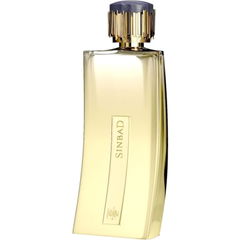
However, it ended up being ‘Sinbad’, even though I’m not a big fan of fragrances with prominent orange blossom, and its penetrating, sweet-indolic, and somewhat waxy scent can quickly get on my nerves.
But after I sprayed both on - this time on my skin - I found, contrary to my expectations, that one was nice but also quite boring, while the other: - Wow! - that one grabbed me instantly.

Not that it was the first distinct orange blossom scent I had encountered, no, but the special thing about ‘Sinbad’ is that while the blossom does define the scent (the O-blossom is a major influencer, similar to tuberose...), it fortunately does not completely dominate.
‘Fleur du Mâle’, ‘APOM pour Homme’, of course also ‘Fleur d’Oranger’ by Lutens, or ‘Dilmun’ by Villoresi, just to name a few - all O-blossom-centered fragrances that I personally cannot wear because the blossom completely overwhelms me.
Yet I actually like this accord - in principle. A bit more subdued, embedded in the right environment, I appreciate it quite a bit, and in ‘Sinbad’ I have even enjoyed it a lot for the past two days!
Because here the environment is right, at least for me.
With oriental additions like cinnamon, vanilla, sandalwood, and a hint of pepper, paired with a fresh-fruity hesperidic opening and a balsamic base that fades out with a touch of ambergris, but above all with the counterpoint I love, geranium, or rather rose geranium (although rose is listed, I perceive the fresher rose geranium more), Thomas Fontaine creates a beautiful framework that skillfully encloses and contains the often overwhelming orange blossom.

In the promotional text for his fragrance, Sindbad, the sailor from ‘One Thousand and One Nights’, is described as an adventurer who, before thrilling his listeners with his stories, washed his hands with rose and orange blossom essences.
And Thomas Fontaine has indeed made this moment the focal point of his fragrance.
It occurred to me that I also have a bottle of rose water and orange blossom water in my kitchen, the contents of which I sometimes need to recreate a cake I had a few times in Israel: a rather sweet, yet juicy semolina cake that is soaked with rose and orange blossom water.
Like in fragrances, these essences are also quite penetrating in baked goods - some would even say: intrusive, as they are anything but common in these latitudes.
But I love them. They transport me back to the Carmel market in Tel Aviv and to one of the city's cafés, where in the evenings, a hint of orange blossom often wafts around from one of the many orange trees in Tel Aviv.
‘Sinbad’ is, for me, almost Tel Aviv to spray on - at least a little bit.

Otherwise, what I wrote about ‘Condottiere’ applies to this fragrance as well: apparently, the perfumers, in this case Thomas Fontaine, were able to work with good raw materials and had sufficient freedom to express their art.
All the notes in ‘Sinbad’ are beautifully blended; nothing grates or squeaks here, quite the opposite. Everything is very nicely intertwined and has an almost creamy consistency.
Fortunately, the fragrance is not overly sweet. There is a risk with these fragrance components, but Monsieur Fontaine skillfully navigated around one or two sugar and caramel pitfalls, also adding slightly smoky facets, so that the fragrance, despite a tolerable base sweetness, can also be appreciated by wearers of more robust scents.

Longevity and projection are in line with a perfume concentration, namely enormous! ‘Sinbad’ accompanies the wearer with its dense, spicy-floral, but also subtly smoky, oriental aroma throughout the whole day, the whole night, into the early morning.

The packaging and bottle are exceptionally elaborate, which should somewhat reconcile the discerning consumer with the horrendous price. Above all, however, the content is right: an extremely beautiful fragrance concept has been skillfully implemented here with noticeably good materials.

And then - last but not least - the fragrance simply smells good.
What more could you want?!
9 Comments
Translated · Show originalShow translation
As a leader of mercenary troops, still scented with iris - it's been a while!
This fragrance unites three scent notes that I greatly appreciate: iris (or iris root), violet (or violet leaf), and leather.
There are plenty of iris fragrances, as well as violet fragrances, both in combination with leather, and there are countless leather fragrances anyway. While I don't know of a fragrance that combines all three notes, there is likely one out there.
In any case, this combination is fantastic!
Grassy-green violet leaf, the olfactorily closely related buttery-woody-powdery iris, and a hint of smooth leather merge into a wonderfully bright fragrance, whose floral facets come across as neither sweet-floral nor indolic.
Since iris and violet notes are derived not from the flower, but from the iris rhizome and the violet leaf, they bring a completely different scent spectrum than, for example, rose or lily, whose petals are used for scent extraction.
The rhizome of the iris, from which the so-called iris butter is obtained, brings along subtle floral, bright, talc-like, and slightly earthy nuances, while the scent of the violet leaf exudes a bit of delicate floral notes, but above all a lot of bright green freshness.
Both scent notes are therefore also well-suited for men's perfumery, which often struggles with more opulent floral bouquets, especially when they consist of so-called white flowers, such as tuberose, gardenia, or jasmine.
However, iris and violet can now often be found in men's fragrances: 'Fahrenheit' comes to mind, as does the older 'Grey Flannel'; 'L’Homme de Coeur' by Divine, as well as the well-known 'Dior Homme'.

Condottieri were leaders of smaller mercenary armies that enjoyed high esteem in Italy during the early Renaissance and were known for strutting around well-dressed and with great fanfare. They were also said to have made extensive use of the popular scent essences of the time, and what could be more fitting than the emblem flower of the city of Florence: the iris.

Delphine Thierry has truly not created the first iris fragrance with 'Condottiere' (like all fragrances in this new 'Les Aristia' collection, it does not reinvent the wheel), but she has crafted an exceptionally beautiful one, with incredible radiance. The selection of raw materials must have been particularly helpful here, but of course, the clever composition and not least the relatively high perfume oil content. The fragrances in this line are indeed perfumes. Not Eau de Parfums, but actually perfumes, thus lying above the EdP in terms of fragrance oil content, albeit probably only slightly.
In terms of scent development, projection, and longevity, they behave just as one would expect from perfumes: the scent development is more gradual, denser, without dramatic, abrupt changes; the presence is significant and reaches quite a radius, meaning a sparing dosage is advisable, while at the same time the longevity is enormous. I can still clearly perceive the scent the next morning.

In addition to the protagonists iris, violet, and leather, other contributors also play a role in this successful performance and should not be overlooked, although they hardly go beyond a supporting role: alongside a citrus-herbaceous hesperidic opening, contrasted with a hint of wormwood-like angelica, it is mainly light, dark berry accents that contribute more aroma than sweetness, as well as some cashmeran in the base.
Cashmeran is a fragrance component that I usually don't like, especially not when used in a sweet, cloying context. However, here, in a dry, floral-leathery concept, I actually find it quite fitting.

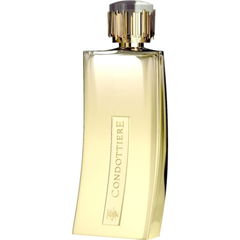
The special bottle must also be mentioned, as it likely comes from Serge Mansau, the probably most famous and successful bottle designer.
Not only is its characteristic curvature striking, giving it almost a substantial body, but also the elaborate closure, which adorns the head of this bottle-like being like a kind of crown. The bottle itself is gilded and becomes increasingly transparent towards the top. The crown that adorns it has a distinct Art Deco flair, and the stone that shifts between light green and dark violet even shows, with some imagination, the emblem flower iris (at least I think I can spot it on my bottle...).
The box itself is huge and elaborately crafted, and the entire presentation - box/bottle/content - is exceptionally elegant.

I have already paid more for sloppier presentations, not to mention the sometimes questionable contents. Not everything that comes across as so exclusive and noble lives up to its promise.
Here, however, I must say, I am completely satisfied!
8 Comments
Translated · Show originalShow translation
Not your grandma's or grandpa's scent: Chypre can still do a lot in the new millennium!
I believe you need to be of a certain - not to say: more mature - age to appreciate Chypre fragrances. I can’t explain otherwise why a reliable number of consumers claim to be too young for one or another scent of this genre. Occasionally, they are also labeled with attributes like grandma or old man scent, which always annoys me a bit, but probably only because I am slowly starting to belong to that generation myself.
And since I love Chypre fragrances, I don’t like to be told that it’s only because I have more than half a century behind me...

On the contrary: I liked Chypre fragrances even when I was in my twenties. ‘Eau Sauvage’ and ‘Armani pour Homme’ (now: ‘Eau pour Homme’) were scents I wore often. I particularly liked (and still like) the bitter facets of these fragrances.
Many young people, however, love sweet scents above all - the sweeter, the better. Bitter notes are often met with distrust and usually associated with something toxic.
So it may be a privilege of aging that one gradually becomes more tolerant of bitterness, but perhaps it is less a question of age than of the era.

Chypre fragrances had their heyday in the 50s, 60s, and 70s. By the 80s, they were considered outdated, even more so in the 90s, until the IFRA dealt a death blow to this genre at the beginning of the new millennium.
Another decade passed before the first perfumers attempted new Chypres. Creativity was truly required, as a classic formulation using the incriminated oak moss was out of the question.
Jacques Polge tried a combination of iris, patchouli, and labdanum (‘31 Rue Cambon’), Ralf Schwieger with rose, immortelle, and some resins (‘Afternoon of a Faun’), Bertrand Duchaufour used an oak moss largely free of the allergen atranol (‘Chypre Palatin’), while others resorted to a substitute like Evernyl or Veramoss (IFF), or Orcinyl 3 (Givaudan).

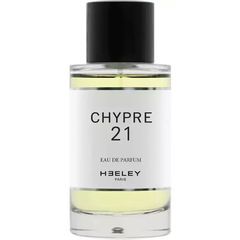
James Heeley launched his ‘Chypre 21’ in 2015, a fragrance that already carries the ambition in its name to renew the aging genre.
Has he succeeded? I think so.
However, the term ‘Chypre’ for this fragrance is often called into question.
So is it a Chypre fragrance? Yes and no, I would say - it depends on your perspective.
No, if you apply more orthodox standards, according to which the use of oak moss is absolutely essential.
Yes, if you are willing to deviate just a little from this orthodoxy. Because the step Heeley takes away from the classic Chypre structure is not that big.
The bitter, tart citrus peel of bergamot is there, the rose is there (also almost an integral part of the classic Chypre), patchouli is present, and even a tiny bit of oak moss. So far, so good, but for a veritable Chypre fragrance, that’s still quite little, especially since Heeley also forgoes the use of labdanum - another typical component of many Chypre fragrances.

Some time ago, I read in an interview with James Heeley (it was on Scentury.com, but unfortunately, it’s no longer online) that he tried to compensate for the lack of oak moss with the similarly complex scent of algae. He probably got the idea when he was working on his fragrance ‘Sel Marin’ a few years earlier, which features a whole carpet of algae at its center. This is not the case with ‘Chypre 21’, but the greenish-bitter, slightly salty aroma of the algae is quite recognizable. Oak moss also has this greenish-bitter, slightly salty facet, among several others, which distinguishes it from the scent spectrum of algae. Nevertheless, there is a certain overlap, and I think James Heeley has highlighted it beautifully.

The use of algae is not the only modern element that makes ‘Chypre 21’ a truly contemporary fragrance - saffron also plays a significant role here. As complex in scent as algae and oak moss, it enhances the characteristically bitter aftertaste typical of Chypre fragrances.
Heeley tries to build this aftertaste in the top notes using bergamot and a hint of rosemary, carries it in the heart with saffron, and reinforces it in the base with oak moss and algae.
Whether synthetic mosses are also in play, I don’t know, but I don’t get that impression. Rather, I suspect that Heeley wanted to show how the famous Chypre effect can be achieved without excessive use of synthetics.
He has definitely succeeded - in fact, I find the entire fragrance successful!

Heeley himself calls his fragrance ‘an ode to Parisian chic’. He also links it to personalities like Jackie Onassis, Grace Kelly, and the Duke and Duchess of Windsor, aka Wallis Simpson, along with her royal husband, the former short-lived King Edward VIII.
Heavy artillery, but so be it: those who don’t bark loudly won’t be heard - especially today.
Interestingly, however: none of them are French, but rather American women and an Englishman. However, they all have a strong affinity for France, particularly Paris. And James Heeley himself? He is also an Englishman, with a chosen home in Paris.
So the oak moss substitute he chose, algae, fits well here again, as they all had to cross the sea to get to Paris. And who, if not the algae, olfactorily represents the sea?

A bit speculative, I know.

Two years after ‘Chypre 21’, another Parisian perfume house - Ex Nihilo - has once again dedicated a remarkable Chypre fragrance to the chic of the French capital: ‘French Affair’. It also evokes the good old Chypre times, this time more the 70s and less the 50s, as in the case of ‘Chypre 21’.
Like that one, ‘French Affair’ also manages the balancing act between tradition and modernity.
Moreover, both are constructed quite similarly: bergamot in the top, a rose accord in the heart, patchouli and oak moss in the base, modernly accented by lychee and angelica here, and by rosemary, saffron, and algae there.
References for ‘Chypre 21’ are on one hand the original ‘Miss Dior’, and on the other hand ‘Eau Sauvage’, while ‘French Affair’ cites ‘Aromatics Elixir’ and ‘Aramis 900’.

Both fragrances, and this I particularly like, do not stop at mere citation, but emphasize especially their modern outfit. As if James Heeley and Quentin Bisch (and not to forget: Bertrand Duchaufour!) wanted to shout at us: look, what ‘Chypre’ can still do today - a lot!!

‘Chypre 21’ is absolutely unisex, has a wonderful presence that is not too loud but also not too quiet, and enormous longevity.

A great fragrance!

17 Comments
Translated · Show originalShow translation
The Rebirth of Chypres
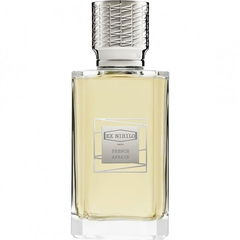
Anyone who still claims that true Chypre fragrances belong to the past is proven wrong by ‘French Affair’. Like ‘Maai’, ‘Chypre Palatin’, ‘The Afternoon of a Faun’ or ‘Chypre Shot’, this scent shows that classic Chypres are still achievable today, and that they can indeed stand alongside the classics thanks to the latest, largely allergen-free oak moss.
However, there was a long dry spell during which the development of a Chypre fragrance was essentially impossible, and thus there was no continuity in the evolution of the genre, leading to these new creations often being labeled as ‘neo-classical’.
Indeed, the references mostly lie within that time frame which was classic for Chypre fragrances: from the 1950s well into the 1970s.
‘French Affair’ clearly quotes the last great decade of Chypres, the 1970s. And here, particularly a variant, the rose-patchouli Chypre, whose most prominent representatives were ‘Aromatics Elixir’ and ‘Aramis 900’, both created by Bernard Chant in the early 1970s.
That the young French company Ex Nihilo comes up with a work nearly half a century later that quotes exactly these fragrances shows quite a bit of courage, as the originals play no role at all in today’s fragrance scene, in stark contrast to the past. On the other hand, it fits with the ubiquitous effort to revive the ‘good old days’: suddenly, new ‘classic’ Fougères are popping up, as are patchouli, amber, and musk, the favorite scents of the hippies, which are once again very much ‘en vogue’, just as oriental heavyweights like ‘Opium’ are being quoted again.
So why not the rosy patchouli Chypres of Bernard Chant?

Quentin Bisch, his successor, has created a genuine Chypre fragrance with ‘French Affair’, one that seemed unimaginable just a few years ago. The ball that IFRA had directed straight into the heart of the Chypre genre was too well-placed. The delinquent seemed dead as a doornail, but was actually just comatose, and only temporarily at that.
‘French Affair’ now boldly presents itself with a Chypre gesture as if nothing had happened, absolutely nothing.
Right at the beginning of the fragrance development, the characteristic bitter-woody-mossy base accord typical of Chypres swells, initially accompanied by fruity, sweet-bitter lychee, which contrasts beautifully with the dry, green-grassy violet leaf, which in turn transitions into a lovely, velvety-strong rose accord, which settles on rich woody-earthy patchouli, bitter oak moss, and smoky-green vetiver.
All phases of the fragrance development reveal themselves simultaneously, only the focus shifts slowly. Even after many hours, one can still smell back to the beginning, as one can sniff through to the end. ‘French Affair’ unfolds quite a volume without appearing overloaded or too heavy. Despite this enormous presence, the fragrance does not come across as loud or intrusive, but wonderfully maintains a balance between a strong presence on one hand and appropriate restraint on the other.
In this way, it somewhat aligns itself between its predecessors ‘Aromatics Elixir’ and ‘Aramis 900’: not quite as resonant as one and a bit bolder than the other.

The idea for this fragrance supposedly stemmed from the desire to pay homage to that type of Parisian dandy of the 1970s, that rare but gossip-column-filling species that meandered between the dazzling fashion world, glamorous jet set, and existentialist Rive-Gauche chic.
Jacques de Bascher, for example, became an epitome of this type: partner of Karl Lagerfeld and occasional lover of Yves Saint Laurent - an elegant gentleman with a melancholic shadowed gaze and a well-groomed mustache. Marcel Proust was once such a beau, as is today Pierre Niney, the actor who portrayed Yves Saint Laurent in the film.
Yes, I think that fits quite well. The connection with these typical Parisian scene plants works.
However, it’s not that this inspiration struck me; I had to be pointed out to it. In the case of Patricia de Nicolaï’s ‘Patchouli Homme’, today’s ‘Patchouli Intense’, also a patchouli-rose combo, I actually had this association with a Marcel Proust type.

Just as those dandies played with their feminine side, ‘French Affair’ is an absolute gender-bender, at least in my perception. A fragrance-affine colleague who was completely enamored with ‘French Affair’ and constantly clung to me repeatedly said: “Ah, what a scent, so masculine!”
Strange how different perceptions can be. A fragrance like Givenchy’s ‘Gentleman’ from 1974, which was also a patchouli-rose scent, but with a significantly higher patchouli content (here, that woody-earthy accord really creaked), I would rather describe as masculine - although I had a good friend who wore it for years...
But ‘French Affair’?
No, I find this fragrance to be absolutely unisex. Just as ‘Aramis 900’ was unisex, or is, although Bernard Chant developed it as a male counterpart to ‘Aromatics Elixir’. I, on the other hand, clearly perceive ‘Aromatics Elixir’ as feminine - the floral component seems too pronounced and prominent to me.

In any case, ‘French Affair’ is a wonderful Chypre with distinct vintage vibes, in a simultaneously modern guise: lychee gives the essential bitter-citrusy bergamot for every Chypre a fruitier touch, a good pinch of pepper and some bitter-herbaceous angelica accentuate the floral components, cedar and vetiver ventilate the mossy-resinous base.
Lychee, angelica, pepper, and cedar form the contemporary Terre d’Hermès/French Lover outfit in which ‘French Affair’ presents itself as a good old acquaintance.

But as good as the fragrance is, in my opinion, you won’t encounter it often. The fragrances from Ex Nihilo are not only quite expensive but also hard to come by, which is very unfortunate, as the combination of inspiration, skill, and good material choice is rather rare. Usually, it falters on the first, often on the last, and sometimes on everything.
Not so with Ex Nihilo, and certainly not with ‘French Affair’.

Perhaps one day the company will reconsider its distribution policy so that ‘French Affair’ might become a ‘Worldwide Affair’ after all.
Please!
8 Comments
51 - 55 by 289