
Samsamaran
Reviews
Detailed
Translated · Show original
A Fragrance Journey Through an Ancient Time
I have had Terror and Magnificence sitting here for a few months, and I have been contemplating a comment for quite some time. Somehow, I always dismissed it.
In itself, I can't add much to Meggi's comment in terms of an olfactory analysis. My nose is overwhelmed (or overloaded) by this creation. What remains for me is to convey the fragrance journey as an experience.
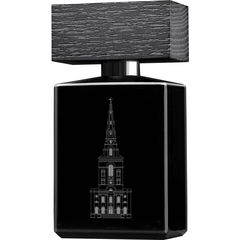
Terror and Magnificence. Beaufort tackles a theme here. It tells of an architect named Nicholas Hawksmoor. His work includes the incorporation of ancient Egyptian symbolism into the Christian church he designed. Beaufort even refers to this gentleman as "the architect of the devil." To what extent this is true, I will leave to church historians and experts. The church on the bottle is the atmospheric moment for the fragrance. Dark, pointed, threatening, the structure looms centrally on the smooth, black surface.
And here begins the fragrance journey as I perceive it. It starts piercingly. A whiff of cold smoke rises. The kind of smoke that emanates from a nearly extinguished fire. There is no ember in sight. You feel transported to a gloomy forest. Something terrible happened here not too long ago. Was it a band of robbers that broke camp? Or did the sheriff's henchmen set their remains on fire? It doesn't matter, just get away from here. This is a moment of "terror," as the name already suggests.
This synthetic mix of cold and smoke persists, but something new joins in. You step out of the forest and find yourself in front of an ancient, venerable structure. An old church. But in a time when the lords still had a say. When a malevolent glance and a reproachful word could decide one's life path. You enter the church. It is still dark, and you stand alone before the candles lit by the faithful. The scent of old hymnals fills the air. The paper has soaked up decades of incense, musty, damp air. It is still firmly believed that it stands there. The word is holy. Here is "Magnificence."
If you wait a little longer, this note doesn't develop much further. Papyrus becomes more pronounced. No more hymnals, but the leather-bound tomes from which the word of the Lord is proclaimed. The cold stone remains around you a bit. Only now it is no longer the main nave of the church. We stand in the sacristy. In the heart, where the priest prepares the mass with the altar boys.
For me, Terror and Magnificence is a successful fragrance experience. A theme has been chosen, and the composition reflects a world of experience. If it were music, it would be a concept album.
Whether one can wear the fragrance or when it fits... I leave that for everyone to decide for themselves. For me, it is a fragrance journey. I don't like to experience this too often. But I find a fascination in it.
In itself, I can't add much to Meggi's comment in terms of an olfactory analysis. My nose is overwhelmed (or overloaded) by this creation. What remains for me is to convey the fragrance journey as an experience.
Terror and Magnificence. Beaufort tackles a theme here. It tells of an architect named Nicholas Hawksmoor. His work includes the incorporation of ancient Egyptian symbolism into the Christian church he designed. Beaufort even refers to this gentleman as "the architect of the devil." To what extent this is true, I will leave to church historians and experts. The church on the bottle is the atmospheric moment for the fragrance. Dark, pointed, threatening, the structure looms centrally on the smooth, black surface.
And here begins the fragrance journey as I perceive it. It starts piercingly. A whiff of cold smoke rises. The kind of smoke that emanates from a nearly extinguished fire. There is no ember in sight. You feel transported to a gloomy forest. Something terrible happened here not too long ago. Was it a band of robbers that broke camp? Or did the sheriff's henchmen set their remains on fire? It doesn't matter, just get away from here. This is a moment of "terror," as the name already suggests.
This synthetic mix of cold and smoke persists, but something new joins in. You step out of the forest and find yourself in front of an ancient, venerable structure. An old church. But in a time when the lords still had a say. When a malevolent glance and a reproachful word could decide one's life path. You enter the church. It is still dark, and you stand alone before the candles lit by the faithful. The scent of old hymnals fills the air. The paper has soaked up decades of incense, musty, damp air. It is still firmly believed that it stands there. The word is holy. Here is "Magnificence."
If you wait a little longer, this note doesn't develop much further. Papyrus becomes more pronounced. No more hymnals, but the leather-bound tomes from which the word of the Lord is proclaimed. The cold stone remains around you a bit. Only now it is no longer the main nave of the church. We stand in the sacristy. In the heart, where the priest prepares the mass with the altar boys.
For me, Terror and Magnificence is a successful fragrance experience. A theme has been chosen, and the composition reflects a world of experience. If it were music, it would be a concept album.
Whether one can wear the fragrance or when it fits... I leave that for everyone to decide for themselves. For me, it is a fragrance journey. I don't like to experience this too often. But I find a fascination in it.
4 Comments
Translated · Show original
Good Scent, Weak Presence
The scent is nice, but the designers have dialed the longevity down to "minimum." For my nose, there's a lot of orange/grapefruit, which nestles into spices. It's a shame, because it hardly lasts. After about 2-3 hours, I have to search for it up close.