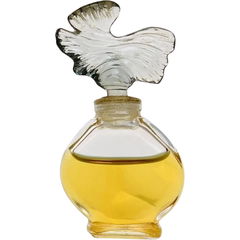

Turandot
Reviews
Filter & Sort
Detailed
Translated · Show original
Invitation to the Mind's Eye
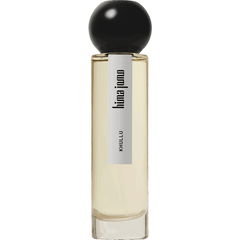
Whether Bertrand Duchaufour has ever been to Tibet, we obviously do not know. But I suspect that he has at least engaged intensively with the country and its history. I usually have very fine antennas for whether a fragrance has been tailored to create an olfactory image at all costs, or whether the perfumer has truly immersed himself in the material he wants to recreate olfactorily.
I now have enough test material from Khullu to engage with the fragrance intensively. It has become clear that I am dealing less with a perfume that I want to wear. I wouldn't even know what occasion it would fit. And yet, the fragrance fascinates me. I sit relaxed in the coziest armchair, have no other distractions, focus solely on the scent on my wrist, and suddenly find myself trapped in a mind's eye that transports me to a world that is fundamentally foreign to me, the world of nomads in the highlands of Tibet. I see, yes, I feel the rough canvas from which the yurt is woven, hear the metallic bells of the yaks, which sound so different from our cowbells, smell the open fire pit and the spices rising from the cooking area. I see the vastness of the landscape and the clarity of the mountains in eternal ice in the distance. Sounds cheesy? Maybe - for me, this is an olfactory image that forms before my inner eye, and it is all the more astonishing since it is a European fragrance house and a French perfumer created this scene with Khullu.
Unlike, for example, Spring in Bome from the same house, Khullu will probably not be a fragrance that I want to wear as a perfume. But for those who can immerse themselves in their mind's eye, it tells stories of an exotic world, where we will surely always be mere spectators. I will gladly use the samples in this way, and who knows, maybe one day Khullu will tell me a new chapter from the homeland of the Dalai Lama. Bertrand Duchaufour is, for me, a magician of scents, at least this time.
I now have enough test material from Khullu to engage with the fragrance intensively. It has become clear that I am dealing less with a perfume that I want to wear. I wouldn't even know what occasion it would fit. And yet, the fragrance fascinates me. I sit relaxed in the coziest armchair, have no other distractions, focus solely on the scent on my wrist, and suddenly find myself trapped in a mind's eye that transports me to a world that is fundamentally foreign to me, the world of nomads in the highlands of Tibet. I see, yes, I feel the rough canvas from which the yurt is woven, hear the metallic bells of the yaks, which sound so different from our cowbells, smell the open fire pit and the spices rising from the cooking area. I see the vastness of the landscape and the clarity of the mountains in eternal ice in the distance. Sounds cheesy? Maybe - for me, this is an olfactory image that forms before my inner eye, and it is all the more astonishing since it is a European fragrance house and a French perfumer created this scene with Khullu.
Unlike, for example, Spring in Bome from the same house, Khullu will probably not be a fragrance that I want to wear as a perfume. But for those who can immerse themselves in their mind's eye, it tells stories of an exotic world, where we will surely always be mere spectators. I will gladly use the samples in this way, and who knows, maybe one day Khullu will tell me a new chapter from the homeland of the Dalai Lama. Bertrand Duchaufour is, for me, a magician of scents, at least this time.
11 Comments
Translated · Show original
Courage Test Passed
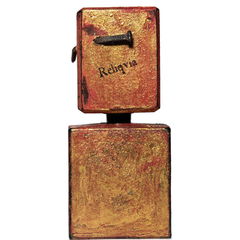
I confess, it took a considerable amount of courage to delve deeper into the work of this perfumer. This is really not my usual territory at all. Of course, I also looked into his background story, watched the documentary about him, and thus curiosity won out. I expected nothing less than an extraordinary and probably rather unbearable work of art for an average perfume lover like me, which I simply wanted to test to broaden my fragrance horizons. I just ignored the story about the crucifixion nail.
What I experienced, however, was a scent that is artistically exceptional, and yet my fear of smoky, resinous clouds full of gloom was completely unfounded. On the contrary, I am thrilled by how Filippo Sorcinelli uses spices, woods, and incense-not just the incense itself-so that the result does not come across as smoky, clerical, dark, or reminiscent of Gothic or even Walpurgis Night. I experience the fragrance on my skin as remarkably clean, velvety-silky, and rather silvery. It is rounder and much more complex and expressive than the incense fragrances from Comme des Garçons, but nothing here overwhelms me, and I tend to be rather anxious in this regard. If a perfume feels too dense, I give up quickly. It becomes too exhausting for me, and I can't truly appreciate the beauty of complex formulations. Reliqvia, on the other hand, is once again a fragrance experience that I find truly enriching.
I will definitely use up the sample. Whether I will then purchase a bottle is still up in the air, especially since the bottle itself represents the symbol that is to be honored as a relic in a rather blatant way. That even puts me off a little. But that is completely unimportant at the moment. I am simply excited about a new fragrance experience.
What I experienced, however, was a scent that is artistically exceptional, and yet my fear of smoky, resinous clouds full of gloom was completely unfounded. On the contrary, I am thrilled by how Filippo Sorcinelli uses spices, woods, and incense-not just the incense itself-so that the result does not come across as smoky, clerical, dark, or reminiscent of Gothic or even Walpurgis Night. I experience the fragrance on my skin as remarkably clean, velvety-silky, and rather silvery. It is rounder and much more complex and expressive than the incense fragrances from Comme des Garçons, but nothing here overwhelms me, and I tend to be rather anxious in this regard. If a perfume feels too dense, I give up quickly. It becomes too exhausting for me, and I can't truly appreciate the beauty of complex formulations. Reliqvia, on the other hand, is once again a fragrance experience that I find truly enriching.
I will definitely use up the sample. Whether I will then purchase a bottle is still up in the air, especially since the bottle itself represents the symbol that is to be honored as a relic in a rather blatant way. That even puts me off a little. But that is completely unimportant at the moment. I am simply excited about a new fragrance experience.
16 Comments
Translated · Show original
A Remedy for the Autumn Blues
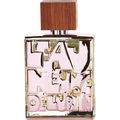
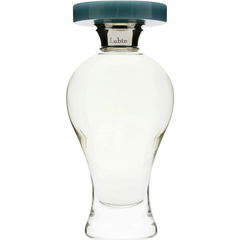
A fragrance that entices with galbanum right from the start already has an open door with me. This somewhat unruly note takes the Christkindlmarkt character away from the spices and allows the rose to spread elegance without arrogance. Frankincense and a hint of patchouli give a silvery finish and prevent the vanilla in the base from drifting into an overly sweet territory in conjunction with the tonka bean. It goes without saying that Thomas Fontaine showcases his talent once again here.
I believe Lubin will be the next brand I will delve into extensively once again. Not least because of the impressive website, where I often lose myself, telling stories that have been wonderfully translated into perfume.
Black Rose will likely be a friendly companion for me through the dreaded gray autumn, which no golden October can alleviate. But yes, I know, spring will surely come again.
I believe Lubin will be the next brand I will delve into extensively once again. Not least because of the impressive website, where I often lose myself, telling stories that have been wonderfully translated into perfume.
Black Rose will likely be a friendly companion for me through the dreaded gray autumn, which no golden October can alleviate. But yes, I know, spring will surely come again.
14 Comments
Translated · Show original
Cold = emotionless? On the contrary!
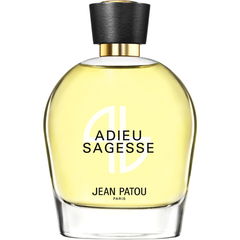
I am so fed up with the many current amber-tonka-vanilla-warm scents. The more I enjoy the clear, elevated, and yes, sometimes icy coldness that perfumes radiate when they have been transformed into the present by Thomas Fontaine. They do not need to appear cozy; rather, they are sophisticated, perhaps even a bit aloof at first. Neither does the top note barge in sales-hungrily through the door, nor do the fragrance notes of the Far East attempt to tell fairy tales from 1001 Nights in the moderately temperate zones of Central Europe.
Adieu Sagesse is, for me, an example of how a cool scent can tell an entire novel, playing on the keyboard of emotions while still remaining serious. However, a whole cornucopia of flowers plays the main role. These notes are used in such a way that they do not come across as romantic to the point of kitsch or tropical sultriness. Only a perfumer who knows how to play with nuances and does not need to go all out can achieve this.
That not only the Heritage line from Patou now belongs to the past is, for me, an example of how sacrilegious it is to handle the treasures of the fragrance world in favor of sales. The entire perfume house Patou has surely sunk into the opaque depths of a luxury corporation by now. All the more I appreciate it when perfumers do not indulge in the spirit of the times but do not deny their olfactory signature.
Adieu Sagesse is, for me, an example of how a cool scent can tell an entire novel, playing on the keyboard of emotions while still remaining serious. However, a whole cornucopia of flowers plays the main role. These notes are used in such a way that they do not come across as romantic to the point of kitsch or tropical sultriness. Only a perfumer who knows how to play with nuances and does not need to go all out can achieve this.
That not only the Heritage line from Patou now belongs to the past is, for me, an example of how sacrilegious it is to handle the treasures of the fragrance world in favor of sales. The entire perfume house Patou has surely sunk into the opaque depths of a luxury corporation by now. All the more I appreciate it when perfumers do not indulge in the spirit of the times but do not deny their olfactory signature.
15 Comments
Translated · Show original
What do I care about my chatter from yesterday!
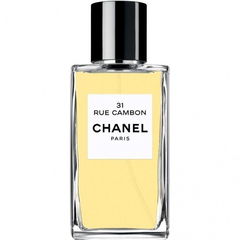
Yes, I know, Adenauer is said to have said that. But don't we all feel that way from time to time? I have caught myself today - 5 years later - no longer standing by my statement about 31 Rue Cambon EdP. However, since there are agreeing responses underneath, I won't delete it. After all, it was my impression at the time. I also suspect that I was simply disappointed back then that my dearly loved 31 Rue Cambon EdT was no longer being produced. I missed the radiance, the sprightliness of the EdT. So perhaps it wasn't entirely objective after all.
But now, a sample of the EdP has catapulted the perfume onto my wish list in no time. This is a dream scent that holds a delicate iris in check, less powdery than is usual for perfumes with iris in the heart note. Not really powdery and certainly not dusty, as I experience some iris fragrances. Fortunately, Ylang Ylang and the rose also show comparatively noble restraint, thus embodying Chanel's elegance that doesn't need to chase any trends.
To once again draw a comparison with the EdT: What was a drawback for me back then, I see differently today, as the missing lightness and radiance of the EdT has been more than compensated for in the EdP by depth and sensuality and a warm merging with the skin. The fragrance has lost none of its preciousness, and so I will enjoy the sample and slowly start to feed the piggy bank.
But now, a sample of the EdP has catapulted the perfume onto my wish list in no time. This is a dream scent that holds a delicate iris in check, less powdery than is usual for perfumes with iris in the heart note. Not really powdery and certainly not dusty, as I experience some iris fragrances. Fortunately, Ylang Ylang and the rose also show comparatively noble restraint, thus embodying Chanel's elegance that doesn't need to chase any trends.
To once again draw a comparison with the EdT: What was a drawback for me back then, I see differently today, as the missing lightness and radiance of the EdT has been more than compensated for in the EdP by depth and sensuality and a warm merging with the skin. The fragrance has lost none of its preciousness, and so I will enjoy the sample and slowly start to feed the piggy bank.
12 Comments