

We may earn a commission when you buy from links on our site, including the eBay Partner Network and Amazon.

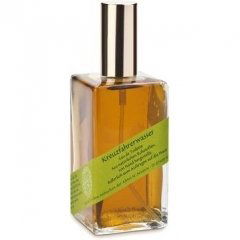
Kreuzfahrerwasser

7.3 / 10 44 Ratings
A perfume by Abtei Sankt Severin for men. The release year is unknown. The scent is spicy-green. The production was apparently discontinued.
Pronunciation Compare
Similar fragrances
We may earn a commission when you buy from links on our site, including the eBay Partner Network and Amazon.

Main accords

Spicy
Green
Fresh
Floral
Resinous

Fragrance Notes

ThymeThyme LavenderLavender RosemaryRosemary BasilBasil Indian patchouliIndian patchouli Citrus notesCitrus notes Damask roseDamask rose FrankincenseFrankincense MagnoliaMagnolia
Ratings
Scent
7.344 Ratings
Longevity
6.335 Ratings
Sillage
5.438 Ratings
Bottle
6.037 Ratings
Submitted by LuckyDog · last update on 08/14/2024.
Source-backed & verified

Smells similar

What the fragrance is similar to
Ambre Fétiche (Eau de Parfum) by Goutal
Ambre Fétiche Eau de Parfum

Reviews

4 in-depth fragrance descriptions
Mamski

12 Reviews
Translated · Show originalShow translation
Mamski
Mamski
Top Review 29  
A Good Sip
My grandfather was a winemaker, and so it happened that we children went to the grape harvest in the "Wingert" every year and helped to pick the ripe fruits. It was often very cold early in the morning, and the fog hung heavily in the steep vineyards. The hand-knitted fingerless wool gloves didn’t really keep me warm; my little fingers quickly got cold, and I could hardly feel them. From time to time, we would accidentally cut our fingers with the shears and only noticed when a little blood dripped down. Then we would stomp over to Grandpa, hold up the injured finger, and he would mumble something to himself, pull out a flask, and pour a good sip of pomace over the wound to disinfect it. Grandpa was never a man of many words, especially not of affectionate gestures, but this little treatment had something touching, benevolent, and loving about it, especially when he would ruffle my hair afterward, smile softly, and whisper not in dialect as usual, but in High German: "Be more careful!".

The smell of that good sip of pomace reminds me of the Crusader Water in the opening, albeit in a muted form, and I am not surprised at all that 85% fruit brandy is used as the base for this fragrance. Just like a good sip of pomace, it initially shakes me harshly, and it is certainly not pleasant to "smell" like schnapps, but it is just a brief moment that quickly passes, because then the scent does what a good sip of pomace does in the body: It warms. And it works.

It smells medicinal-herbaceous, ethereal, a bit kitchen-spicy, and for me, the Crusader Water is not a perfume, but a scent that cares for me and envelops me in loving goodwill. The fruit water infused with oils and herbal extracts (a bit of anise, a lot of thyme, a lot of fennel, and a little rosemary can be excellently detected, and the lavender is so caressed by these herbs that it blooms and flourishes, but never becomes arrogant) actually leaves more of an impression of a medicinal brew or a healing balm. It also becomes a bit sweet. I can't make out any flowers, and incense and citrus notes play rather no role in my scent experience. The herbs are harmoniously intertwined, but no super-duper perfume was created here. It smells exactly as it is: As if a few monks retreated and dug out an old recipe, devotedly implemented it, and bottled the scent into flacons.

I wear this scent whenever I am not feeling well. When I feel sick, run down, or annoyed, or when I am grumpy, when everything and everyone is getting on my nerves and I long for peace. Because that is exactly what the Crusader Water gives me: peace. It calms, it doesn’t rush, it takes its time, it disinfects (even nasty thoughts), heals my inner wounds, and warms. It reminds me. It reminds me internally of many things I forget in hectic times. As if Grandpa is ruffling my hair and saying: "Be more careful!".
13 Comments

Meggi

1018 Reviews
Translated · Show originalShow translation
Meggi
Meggi
Top Review 27  
A Bridge Across the Centuries
At first, the lavender presents itself as a fresh-scented variant, but underneath it stirs a small medicinal stink, which could be magnolia along with a spice vanguard. It mixes somewhat unhappily with the lavender. The result ultimately reminds me, as so often with lavender, of old skin. It has never been depicted more lifelike than here. Let's wait. Only very gradually, taking hours to do so, does the lavender find its way, with the spices (especially thyme) and incense coming to its aid. In return - it cannot be denied - the crusader water now resembles more of a medicinal brew than a perfume.

Only in the late morning do I find the 'crusader water' pleasant. In the meantime, I think of a freshly brewed herbal tea, as lavender and thyme are so ethereal-fresh that they at least brush against an impression of fennel or anise. As it progresses, I find the thought of fennel tea even surprisingly close (which, by the way, also fits the appearance of the little water perfectly). Anyway, the magnolia dominates the tea aspect. That it apparently works equally well with herbal tea, I would not have thought. Funny. In the afternoon, the scent darkens, yet it remains dominated by a now again rather musty let’s-call-it-lavender note.

And finally, a connection to the title comes together. The scent spans a bridge from the medieval crusaders, who treated their wounds with herbal brews, to today's crusaders, who alleviate their seasickness (ahem... does one even get seasick with such softie cruising?) with fennel tea. The latter is lightly sweetened, so at least a few calories are provided. In the end, it goes back, so to speak, which is indeed mostly granted to the crusaders nowadays.

Great. I sit here, completely moved by my insights into the scent, and sip from a cup of herbal tea, flavor 'ginger-orange'. Good thing I don’t have to fit that in as well.

I thank Gerdi for the sample.
20 Comments
loewenherz

917 Reviews
Translated · Show originalShow translation
loewenherz
loewenherz
Very helpful Review 16  
'Gentlemen, know this: he who does not embark…'
'…on the land where God was dead and alive,
and who does not take the cross of overseas
will hardly go to paradise.'

With this announcement (which is almost more of a threat) - loosely translated: 'You gentlemen, know this: whoever does not embark on the journey to the Promised Land will never enter paradise!' - Thibault de Champagne, King of Navarre (he belonged to the House of Blois and was also called 'Theobald the Troubadour' due to his poetry) begins his famous crusader song in 1239 at the start of the so-called 'Crusade of the Barons.' Written in Old Occitan, it is today one of the few completely preserved songs from that era and region. The medieval band Estampie wonderfully performed it in the mid-90s on their - for medieval music standards - highly regarded album 'In nomine Domini' as a playful yet driving choral song, in which the lust for war and faith are equally recognizable.

In the (supposed) tradition of those days, the Abbey of St. Severin in the Allgäu presents its crusader water - 'supposed' because neither the currently widespread method of making perfume nor the habit of adorning oneself with such things were part of the everyday habits of the Middle Ages. Many of the fragrance ingredients commonly used today, or their extraction, only spread through those very crusades and the trade that accompanied them in Central and Southern Europe, where until then, people were familiar with only simple lavender water at most. The fact that this very lavender is one of the central accords of the crusader water, which also employs sacral connoted ingredients like incense and a dark, dusty (though hardly perceptible) rose, is historically accurate in terms of fragrance, but does not disguise the fact that here only an - albeit quite convincing - illusion of a scent from the 13th century has been created - which is just right for medieval markets, an Estampie concert, or other occasions where one wears a doublet or robe.

Conclusion: know this, you gentlemen (and ladies - indeed, also them) - this is the olfactory reminiscence of a time that was presumably far less dark than we assume today, although undoubtedly hardly fragrant. An interesting and quite carefully arranged 'motto scent', but for my nose, not a (daily) wearable perfume.
3 Comments
10Scent
Fischlandmen

43 Reviews
Translated · Show originalShow translation
Fischlandmen
Fischlandmen
Top Review 17  
Who would have thought. . . .
The first spray evokes an image that captivates me from the very beginning.
One feels transported back to the time of Hildegard of Bingen. To an old monastery with dark, damp corridors. In a room, a fire blazes above which hangs a large cast iron cauldron, before which Hildegard of Bingen stands, thoughtfully mixing her ingredients to create a herbal elixir of a special kind:
A few drops of Lavandula angustifolia, a few drops of Citrus Limonum Oil, and Boswellia. The whole thing is stirred vigorously three times. Now, a bit of finely crushed basil, some from the magnolia, and Rosa Damascena is added. Finally, she refines this brew with thyme and rosemary and adds a pinch of olibanum. The heat of the fire releases a vapor that fills the entire room with this spicy scent.
Yes, one can easily imagine this fragrance. So how does it smell today???
The monks who handcraft this scent at the Abbey of St. Severin must have studied the ancient teachings of Hildegard of Bingen very well.
With the first spray, I thought for a moment, wow, I wish I had done this outdoors. I felt like I was inhaling an overdose of essential oils. BUT as intense as it was, just a few seconds later, that note vanished, and a fresh-herbaceous lavender note emerged, which was quickly chased away by a thyme/rosemary attack. Good thing these attacks are so characteristic of coming briefly and then disappearing just as quickly. And then the rose comes, reclaiming the lavender. What happens next is probably a monastery secret, making the scent soooo unique. A wonderfully balanced trio alliance forms between the lavender, the rose, and the olibanum, which has now been with me for hours.
The rosemary/thyme coalition occasionally tries to make its presence known again, but so timidly that it becomes really pleasant in interplay with the lavender and the rose.
What a fragrance!
Frankincense was never on my "must sniff" list, and I am more than positively surprised by this scent progression.

I think this is a fragrance for lovers of scents that form a unique group and cannot be categorized as either oriental or aquatic, etc. Whether it can be worn in the evening during a romantic dinner is, in this case, a question of the character and personality of the wearer, as they must be able to unite with this expressive, special, but never opulent or overwhelming scent.

For the scent's longevity and sillage, I give 100 percent, which I unfortunately cannot award in the usual rating scale due to whatever reason.

P.S.: Hildegard of Bingen lived in the 11th century and is considered one of the founders of natural medicine in the strictly Christian Europe of her time. She studied medicine and nature and created countless recipes from plants, not only native ones, thus uniting the knowledge of various religious and medical directions. She represents the teaching of holistic medicine, which is experiencing more than just a renaissance in today's time.
8 Comments

Statements

24 short views on the fragrance
42
38
On the high seas
Through the Patch River
Slow Motion Ride
Past deep green herbs
Smoke drifts like fog
Far away
Soft lavender shines
Translated · Show originalShow translation
38 Comments
24
21
In the cellar vault
herbs hang in bunches.
Smoke and
citrus light plays.
Velvety blooms
rest on a patchouli base.
Calm breaths...
Translated · Show originalShow translation
21 Comments
20
11
Dead earth & flowers' decay
Witches creep in the walls
Brewing ethereal bitter herbs
Cold incense
Monk's chant
Midnight moon
Potion
Translated · Show originalShow translation
11 Comments
13
5
Herb spicy herbs stirred
Sprinkled with warm lavender blossoms
Brewed from an old recipe and brought to new life
Translated · Show originalShow translation
5 Comments
13
3
Smells like the monks brewed this in the dead of night using all the herbs from the monastery garden: spicy, herbal.
Translated · Show originalShow translation
3 Comments
13
6
It smells a bit musty in the organic store
Herb blends, rosemary, thyme, basil
Tea: lavender-chamomile-patch
It smells so healthy here
Translated · Show originalShow translation
6 Comments
10
10
Tincture against homesickness and world-weariness - spicy, sweet, bitter, and herbally healthy; for me, it belongs to the cool evenings of golden October, when*
Translated · Show originalShow translation
10 Comments
9
4
Set sail with sea bear aromas. Even Fisherman’s Friend licorice joins the voyage. Armed for rough weather and weeks without a shower. Ahoy!
Translated · Show originalShow translation
4 Comments
10
5
Starts as an herbal remedy and ends up as fennel tea. Has a calming effect. Good for seasickness?
Translated · Show originalShow translation
5 Comments
8
4
Bitter herbal infusion turns into sweet fennel tea. We liked it better at first. Fennel tea is too healthy.
Translated · Show originalShow translation
4 Comments
More statements

Charts

This is how the community classifies the fragrance.
Pie Chart Radar Chart

Images

5 fragrance photos of the community
More images

Popular by Abtei Sankt Severin

Pax by Abtei Sankt Severin