

 Mandarin orange
 Green tea
 Gaiac wood
 Orange blossom absolute
 Iris
Iris Vegetal amber

Meggi
1018 Reviews
Translated · Show original

Meggi
Top Review
21
Hide and Seek in the Wrong Place
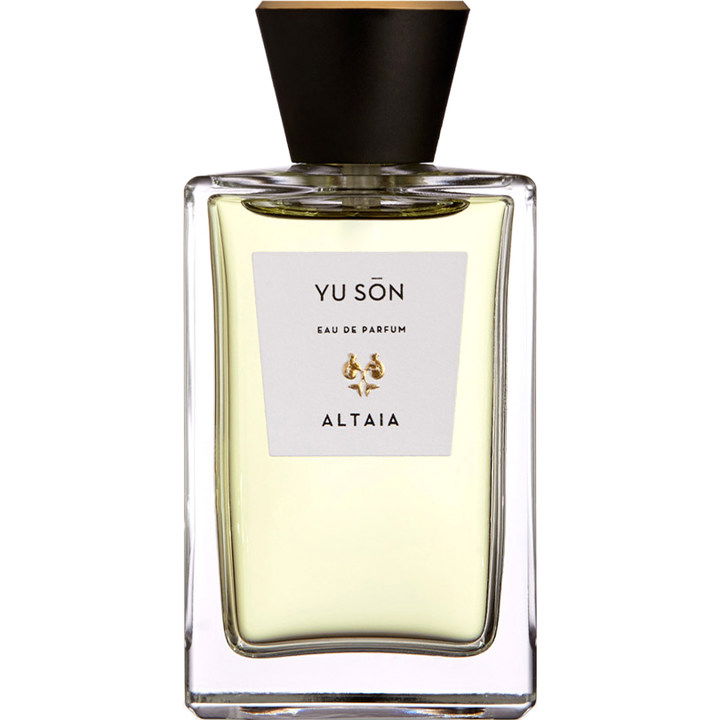
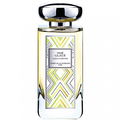
Oh dear, the mandarin is first working its way out of a layer of glue. As soon as it manages that and shoots off a few (certainly laboratory-enhanced) fruit molecules, it gets drowned in that tea note, which may be related to magnolia and might itself spring from a test tube - see below for more. Nevertheless, it all comes across as airy and refreshing. A hint of caramel creaminess grounds or rather binds the fragrance a bit. Good idea.
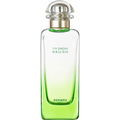
Still, it reminds me too much of the Ruhr-Uni-synthetic & Co. Especially the unfortunate ‘L'Île au Thé’ by Goutal comes to mind. Maybe not identical, the Goutal test was ages ago anyway. But in terms of character, everything I can still recall fits: plastic citrus fruit on synthetic tea.
After two hours, ‘Yu Son’ is on the skin. It is still not unpleasantly fresh and smells somehow nice; at least my discomfort with the Goutal was more pronounced. The first suspected reason was already mentioned above: the creamy binding.
The second reason is actually lamentable. Unfortunately, the most beautiful part of the fragrance fades into silence. After about three hours, the offensive chemistry temporarily gives way to a hint of ambered orange (blossom). And indeed, there is even a bitter-dark, tobacco-like, almost tarry(!) hint to be sensed. It adds seriousness to the fruity aspect and deserves a broader stage.
But by noon, that too is gone. For the rest of the day, only a stale chemical residue remains: Hedione, I think, with its apparently built-in overlap with mandarin. Compare for instance ‘L'Eau Serge Lutens’, which I unsurprisingly do not like. This sends the corners of my mouth back down. A thought of bland wood in the advancing afternoon does the rest.
One last word about the tea: It may be that the typical floral scent that hovers over a cup of green tea is difficult or even impossible to achieve without chemistry. Although I have suspected a closeness to magnolia several times, hence the association above. The floral scent of my summer magnolia indeed has such a twist. However, if the supposed magnolia in the corresponding perfume tests was also not real, I am not any further along this line with the tea theme.
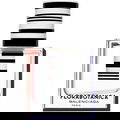
However, I recently got to know a natural fragrance with such a truly authentic tea note, ‘No. 69’ by Firn Botanical Fragrance, that I have since become a bit unforgiving towards other representatives. Why should what works naturally with black tea not also work with green (any helpful hints are always welcome!)? Perhaps then the veil of chemistry would disappear, which - and thus the circle closes - strangely smells like magnolia, even though it is supposed to be tea.
Conclusion: It’s a shame when the best part of a fragrance is hidden.
I thank Tiara for the sample.
Still, it reminds me too much of the Ruhr-Uni-synthetic & Co. Especially the unfortunate ‘L'Île au Thé’ by Goutal comes to mind. Maybe not identical, the Goutal test was ages ago anyway. But in terms of character, everything I can still recall fits: plastic citrus fruit on synthetic tea.
After two hours, ‘Yu Son’ is on the skin. It is still not unpleasantly fresh and smells somehow nice; at least my discomfort with the Goutal was more pronounced. The first suspected reason was already mentioned above: the creamy binding.
The second reason is actually lamentable. Unfortunately, the most beautiful part of the fragrance fades into silence. After about three hours, the offensive chemistry temporarily gives way to a hint of ambered orange (blossom). And indeed, there is even a bitter-dark, tobacco-like, almost tarry(!) hint to be sensed. It adds seriousness to the fruity aspect and deserves a broader stage.
But by noon, that too is gone. For the rest of the day, only a stale chemical residue remains: Hedione, I think, with its apparently built-in overlap with mandarin. Compare for instance ‘L'Eau Serge Lutens’, which I unsurprisingly do not like. This sends the corners of my mouth back down. A thought of bland wood in the advancing afternoon does the rest.
One last word about the tea: It may be that the typical floral scent that hovers over a cup of green tea is difficult or even impossible to achieve without chemistry. Although I have suspected a closeness to magnolia several times, hence the association above. The floral scent of my summer magnolia indeed has such a twist. However, if the supposed magnolia in the corresponding perfume tests was also not real, I am not any further along this line with the tea theme.
However, I recently got to know a natural fragrance with such a truly authentic tea note, ‘No. 69’ by Firn Botanical Fragrance, that I have since become a bit unforgiving towards other representatives. Why should what works naturally with black tea not also work with green (any helpful hints are always welcome!)? Perhaps then the veil of chemistry would disappear, which - and thus the circle closes - strangely smells like magnolia, even though it is supposed to be tea.
Conclusion: It’s a shame when the best part of a fragrance is hidden.
I thank Tiara for the sample.
Updated on 11/27/2018
17 Comments








 Byssted
 Luwa
Luwa Konst121
 Pflanze
 Yatagan
 Verbena
 Nattiscent
 Heikeso
 Achilles
 MlleJeanne