

 Top Notes
  Bergamot
 Heart Notes
  Rosewood
 Palmarosa
 Tea
Tea Base Notes
  Patchouli
 Clove
Clove
DasguteLeben
136 Reviews
Translated · Show original
DasguteLeben
Top Review
22
English perfume, quite!
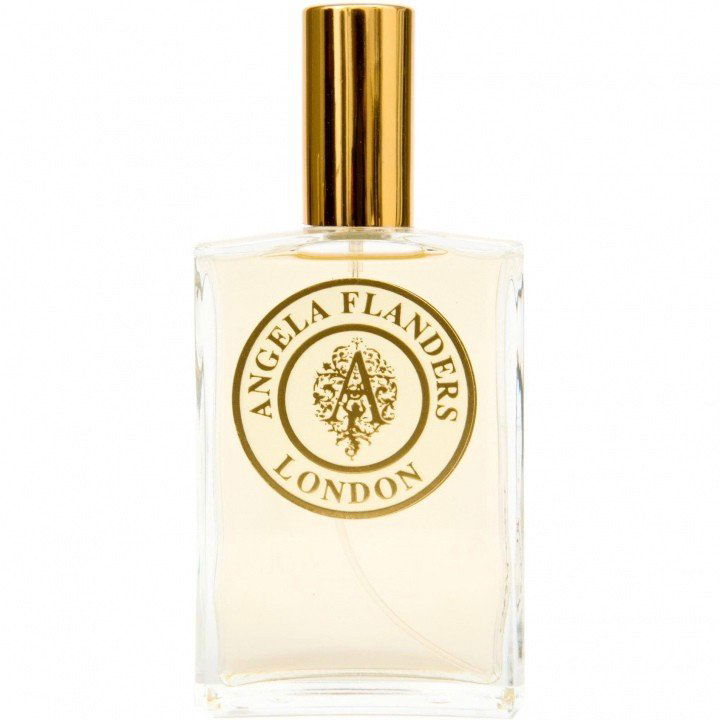
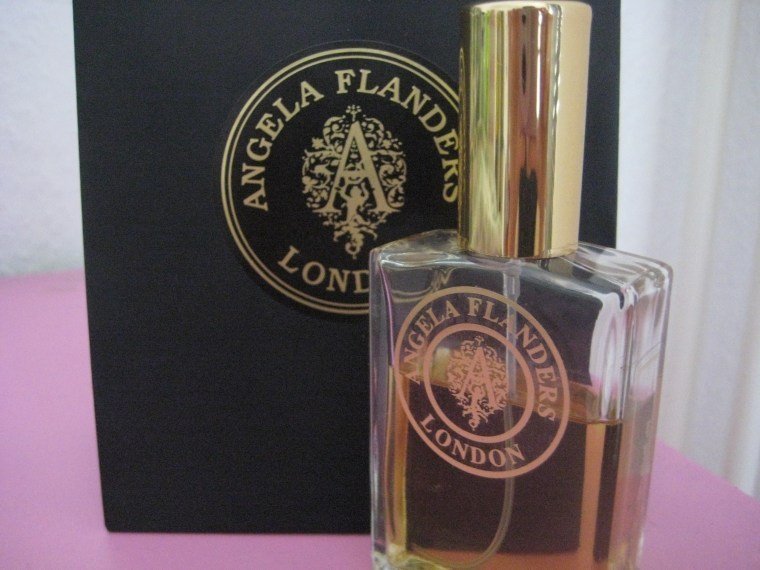
Two years ago, I stood in front of the locked door of Angela Flanders' Victorian perfume shop on Columbia Road on a weekday - a brand I had never heard of despite my love for English fragrances. The display was enticing, and I promised myself to return at the next opportunity.
Recently, during the almost traditional family week in London, the time finally came, and we visited the Columbia Road Flower Market, where all the lovely little indie shops on the street open their doors. In the meantime, I had done a bit of research and read that Mrs. Flanders had unfortunately passed away in April of this year at the blessed age of 88: an interesting woman who began her career in costume design in the sixties, then became self-employed in the seventies with interior design and antique trading, and finally discovered perfume for herself in her sixties, founding a niche brand as a self-taught perfumer at an age when most people retire. At 84, she won a FiFi Award in 2012 for Precious One as the best new indie perfume. Chapeau!
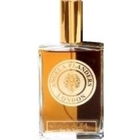
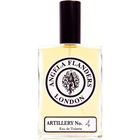
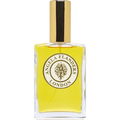
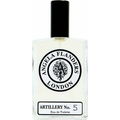
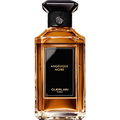
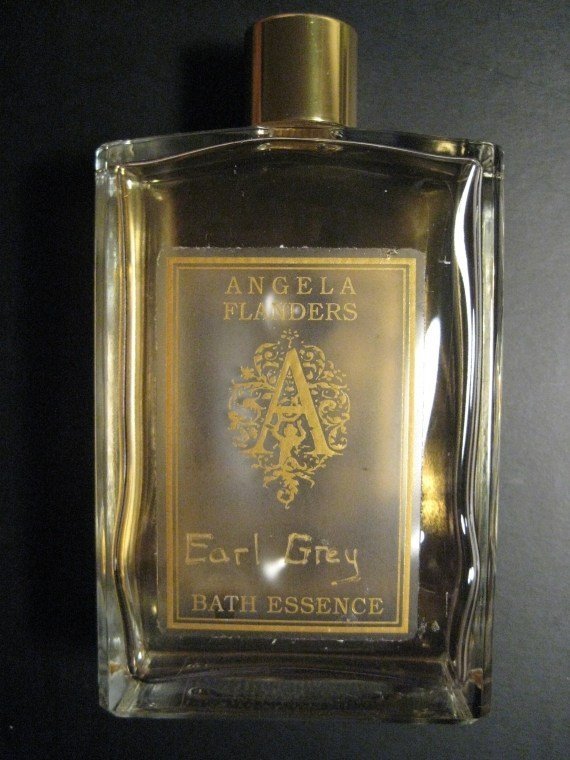
The shop is now run by her daughter, and when I visited, it was full of sniffing perfume enthusiasts. I had decided to purchase a fragrance as a souvenir and had already set my sights on Earl Grey, which sounded convincingly "English." I tried about two dozen fragrances, some very traditional (the Artillery line), others more modern (Caspian, a Cool Water scent, Black Oudh, Precious One, a typical fig), but ultimately, Earl Grey truly convinced me the most (the pleasantly animalistic Ambre Noir came in second). Earl Grey indeed embodies a very English approach to perfumery, doesn't it (a nod to Asterix)? As Peter Ackroyd argues in "Albion," his historical study of the English character, the essence of the islanders ironically lies in their ongoing assimilation of the foreign. Even the language is an Anglo-Saxon-Franco-Norman amalgam full of Celtic and Scandinavian loanwords, and its global adaptability is proverbial. Just as with gin and tonic, paisley ties, and Earl Grey tea, this fragrance creates something profoundly English from exotic elements, in this case with the help of Mediterranean bergamot (and other citrus notes), oriental spices, South American rosewood, and Indian patchouli. The bitter bergamot seems to me adorned with a bit of green-sweet lime and orangey notes - it is stronger than the reference bergamot of the clear, fine pre-synthetic Farina cologne - but not as immediately intense as Earl Grey tea when you stick your nose in the tea canister. By the way, you will search in vain for tea notes in Earl Grey EdP; this is not a Bvlgari clone! Instead, one immediately perceives a spicy mélange of nutmeg, coriander, cardamom, and clove - notes that often appear in Mrs. Flanders' fragrances and presumably trace back to the English potpourri tradition. Underneath this spice carpet lies light rosewood, and the base is patchouli - nothing that even remotely resembles the musty-earthy Villoresi patchouli or the brutal Montale Patchouli Leaves, not even the Etro reference patchouli (vintage version). No, this patch is thoroughly Anglicized, free from any earthy gloom, underbrush, or humus notes, much more Sissinghurst than Sherwood Forest.
And that's it; this fine blend accompanies the wearer for a good eight hours with mild sillage - well-mannered, neither sweet nor too bitter, and pleasantly naturally scented, but not original, rather in the manner of the draped naturalness of an English garden that celebrates nature as a perfected ideal through civilization. Completely absent are both the physical sensuality and the artistic abstraction that have marked French haute perfumery since Jicky - but who wants to smell like Jicky when invited to afternoon tea with the Dowager Countess of Grantham? Or when licking clotted cream off the body of their beloved? Earl Grey Eau de Parfum smells good and makes its wearers smell good, in the unobtrusive manner of Victorian moderation - not too little, not too much, and it does not come across as overly elegant or over-sophisticated: this is not a scent from a Duchaufour or Morillas for Penhaligon's, this parodic simulacrum of "Englishness" that mockingly wraps itself around industrial scents. Earl Grey is the work of a "dilettante," as this term was understood in the eighteenth century: one who, with deep dedication and talent, is devoted to her subject, whose intentions cannot be reduced to pecuniary concerns. Earl Grey is indeed what one calls "fine fragrance" in English. You can only test this, like all Flanders fragrances, in the two London shops (Columbia Road and Spitalfields) - a form of exclusivity as well-understood self-restraint that is much more convincing than the usual niche approach of astronomical prices that appeal to status fixations but have no relation to product quality. Fortunately, the fragrances can be ordered online (afterwards) - however, the experience of the interiors designed by Angela Flanders as Victorian total works of art, whose memory enriches the scents purchased there with an additional English dimension, is then missing.
Recently, during the almost traditional family week in London, the time finally came, and we visited the Columbia Road Flower Market, where all the lovely little indie shops on the street open their doors. In the meantime, I had done a bit of research and read that Mrs. Flanders had unfortunately passed away in April of this year at the blessed age of 88: an interesting woman who began her career in costume design in the sixties, then became self-employed in the seventies with interior design and antique trading, and finally discovered perfume for herself in her sixties, founding a niche brand as a self-taught perfumer at an age when most people retire. At 84, she won a FiFi Award in 2012 for Precious One as the best new indie perfume. Chapeau!
The shop is now run by her daughter, and when I visited, it was full of sniffing perfume enthusiasts. I had decided to purchase a fragrance as a souvenir and had already set my sights on Earl Grey, which sounded convincingly "English." I tried about two dozen fragrances, some very traditional (the Artillery line), others more modern (Caspian, a Cool Water scent, Black Oudh, Precious One, a typical fig), but ultimately, Earl Grey truly convinced me the most (the pleasantly animalistic Ambre Noir came in second). Earl Grey indeed embodies a very English approach to perfumery, doesn't it (a nod to Asterix)? As Peter Ackroyd argues in "Albion," his historical study of the English character, the essence of the islanders ironically lies in their ongoing assimilation of the foreign. Even the language is an Anglo-Saxon-Franco-Norman amalgam full of Celtic and Scandinavian loanwords, and its global adaptability is proverbial. Just as with gin and tonic, paisley ties, and Earl Grey tea, this fragrance creates something profoundly English from exotic elements, in this case with the help of Mediterranean bergamot (and other citrus notes), oriental spices, South American rosewood, and Indian patchouli. The bitter bergamot seems to me adorned with a bit of green-sweet lime and orangey notes - it is stronger than the reference bergamot of the clear, fine pre-synthetic Farina cologne - but not as immediately intense as Earl Grey tea when you stick your nose in the tea canister. By the way, you will search in vain for tea notes in Earl Grey EdP; this is not a Bvlgari clone! Instead, one immediately perceives a spicy mélange of nutmeg, coriander, cardamom, and clove - notes that often appear in Mrs. Flanders' fragrances and presumably trace back to the English potpourri tradition. Underneath this spice carpet lies light rosewood, and the base is patchouli - nothing that even remotely resembles the musty-earthy Villoresi patchouli or the brutal Montale Patchouli Leaves, not even the Etro reference patchouli (vintage version). No, this patch is thoroughly Anglicized, free from any earthy gloom, underbrush, or humus notes, much more Sissinghurst than Sherwood Forest.
And that's it; this fine blend accompanies the wearer for a good eight hours with mild sillage - well-mannered, neither sweet nor too bitter, and pleasantly naturally scented, but not original, rather in the manner of the draped naturalness of an English garden that celebrates nature as a perfected ideal through civilization. Completely absent are both the physical sensuality and the artistic abstraction that have marked French haute perfumery since Jicky - but who wants to smell like Jicky when invited to afternoon tea with the Dowager Countess of Grantham? Or when licking clotted cream off the body of their beloved? Earl Grey Eau de Parfum smells good and makes its wearers smell good, in the unobtrusive manner of Victorian moderation - not too little, not too much, and it does not come across as overly elegant or over-sophisticated: this is not a scent from a Duchaufour or Morillas for Penhaligon's, this parodic simulacrum of "Englishness" that mockingly wraps itself around industrial scents. Earl Grey is the work of a "dilettante," as this term was understood in the eighteenth century: one who, with deep dedication and talent, is devoted to her subject, whose intentions cannot be reduced to pecuniary concerns. Earl Grey is indeed what one calls "fine fragrance" in English. You can only test this, like all Flanders fragrances, in the two London shops (Columbia Road and Spitalfields) - a form of exclusivity as well-understood self-restraint that is much more convincing than the usual niche approach of astronomical prices that appeal to status fixations but have no relation to product quality. Fortunately, the fragrances can be ordered online (afterwards) - however, the experience of the interiors designed by Angela Flanders as Victorian total works of art, whose memory enriches the scents purchased there with an additional English dimension, is then missing.
11 Comments

 SchatzSucher
 Ergoproxy
 Yatagan
 Susan
Susan Gandix
 Viola8