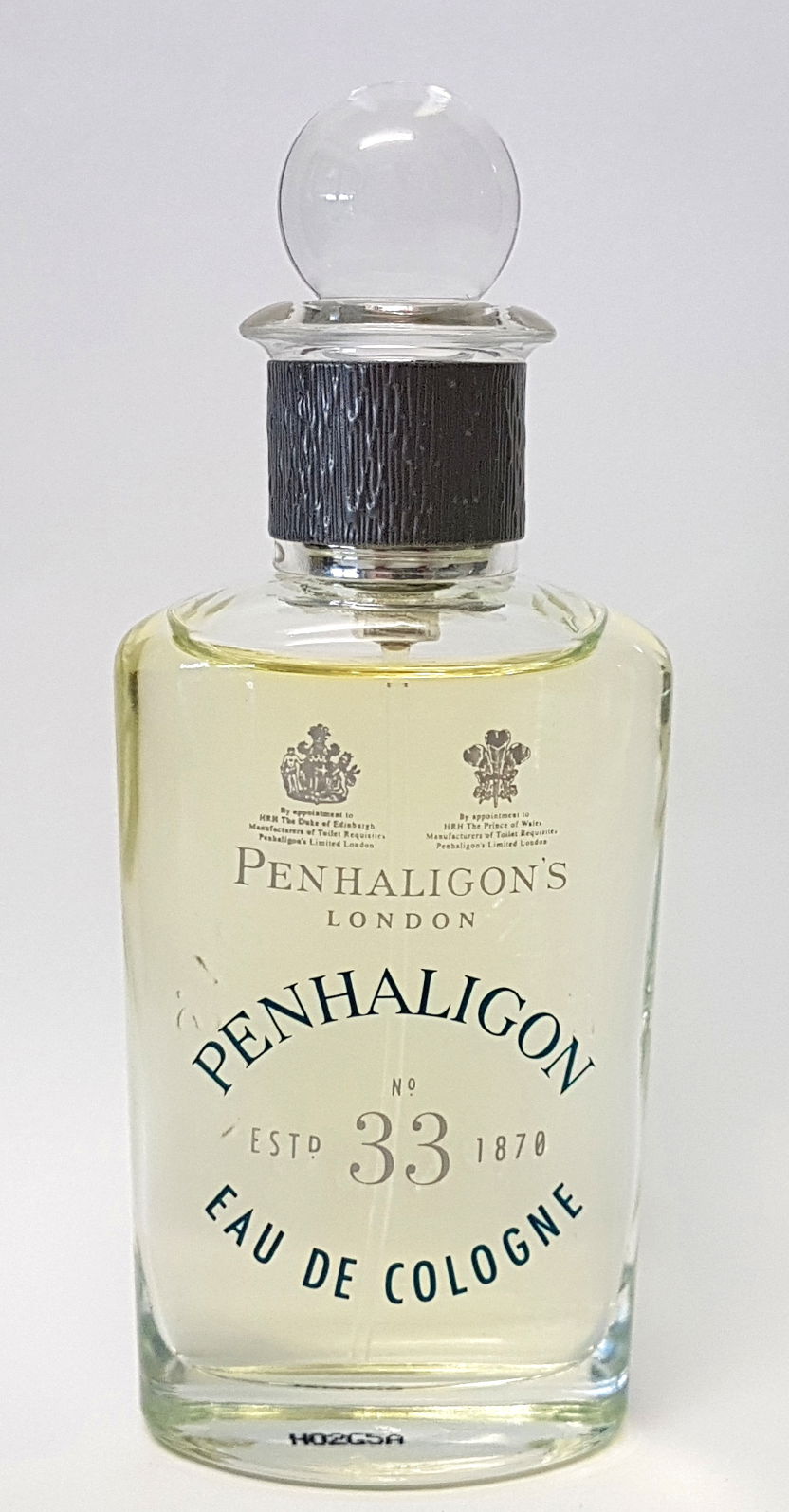
My first fragrance from this brand, or, no, not quite. I briefly tested Sartorial, but only so briefly that it doesn't qualify for a judgment, let alone a comment. Sartorial is, of course, absolutely incomparable to No. 33. Number 33 is a kind of anniversary scent for the (strangely) 145th birthday of the British traditional brand. See Interesting Facts. I'm curious about what will come for the 150th... but now, briefly to what Penhaligon's announces for Cologne No. 33: the fragrance is said to connect the brand's heritage with its enduring nature, linking tradition with modernity. Whether it achieves the former is somewhat beyond my judgment, as I would need more overview of the house's creations. But perhaps my detailed impressions can contribute to what you and we can expect here, and maybe also whether it leans more towards tradition or modernity (I already have quite concrete ideas here that may not please everyone). So, onto the scent.
The Cologne starts fresh-citrusy, soapy, with a lightly spiced sweetness that hints at what has been impressively captured in the fragrance pyramid. I say "hints" deliberately, because when I look at the pyramid, I actually expect to be overwhelmed by a tapestry of spices and flowers. The fragrance does not do that; it presents itself rather delicately; still, it is irritatingly fresh. I know the clary sage, among other things, from Antaeus, where it already gave the Greek demigod warm, slightly bitter herbal notes. Here it is also quite detectable, but a bit cooler in presentation, somewhat more distant. However, it does provide a pleasant counterbalance in the top note to the fresh, synthetic soapiness, which actually comes from where exactly? A question for the experts among us. It goes beyond citrus fruits, but I can't quite categorize it.
Speaking of which, as is often the case with citrus fruits, they don't last too long. For about 30 minutes, the citrus hints are still discernible, then a subtly spiced, blue (I absolutely agree with Rivegauches' statement) and only very subtly floral heart note appears, which is really difficult for me to dissect olfactorily. Flashback to the last paragraph: if everything listed under the heart note had really been added in proper measure, the resulting mixture would probably have checkmated even the Roadrunner. Lavender, jasmine, rose, lily of the valley, saffron, pepper. That would be the floral-spice overkill par excellence, heavy and stuffy. In the heart note of No. 33, I can at most detect a hint of rose and lavender. A lavender that comes across as very well-behaved and sweet, English and tidy. But it fits with the rose, which is also a fine and delicate one, only to be sensed. Pepper, on the other hand, I usually recognize at least 3 km against the east wind - it is one of my favorites. And it hides somewhere here, where the proverbial pepper grows. The same goes for the saffron, which I recently got to know better in 2Man.
The transition from the heart to the base note is just as subtle as the whole Cologne is subtle. It becomes a little less sweet, but remains blue, somewhat soapy, fresh, perhaps very minimally mossy, but not woody or smoky, as one might assume. I must admit that it displays something fine, sublime throughout its entire course, which I can definitely associate with British understatement. The fragrance also fades away in a similar manner.
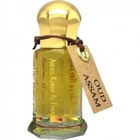
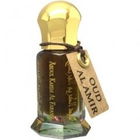
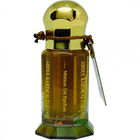
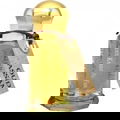
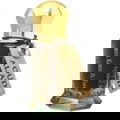
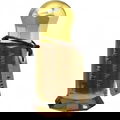
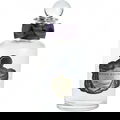
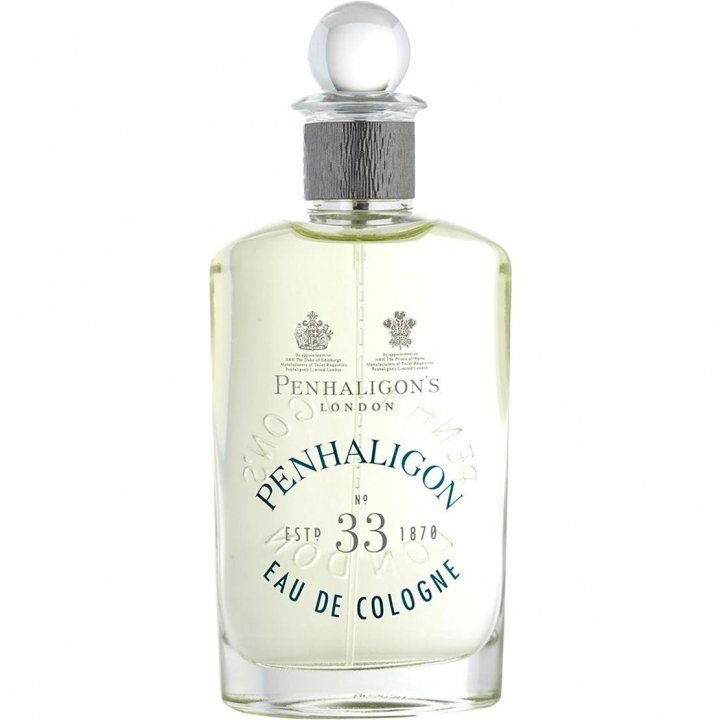
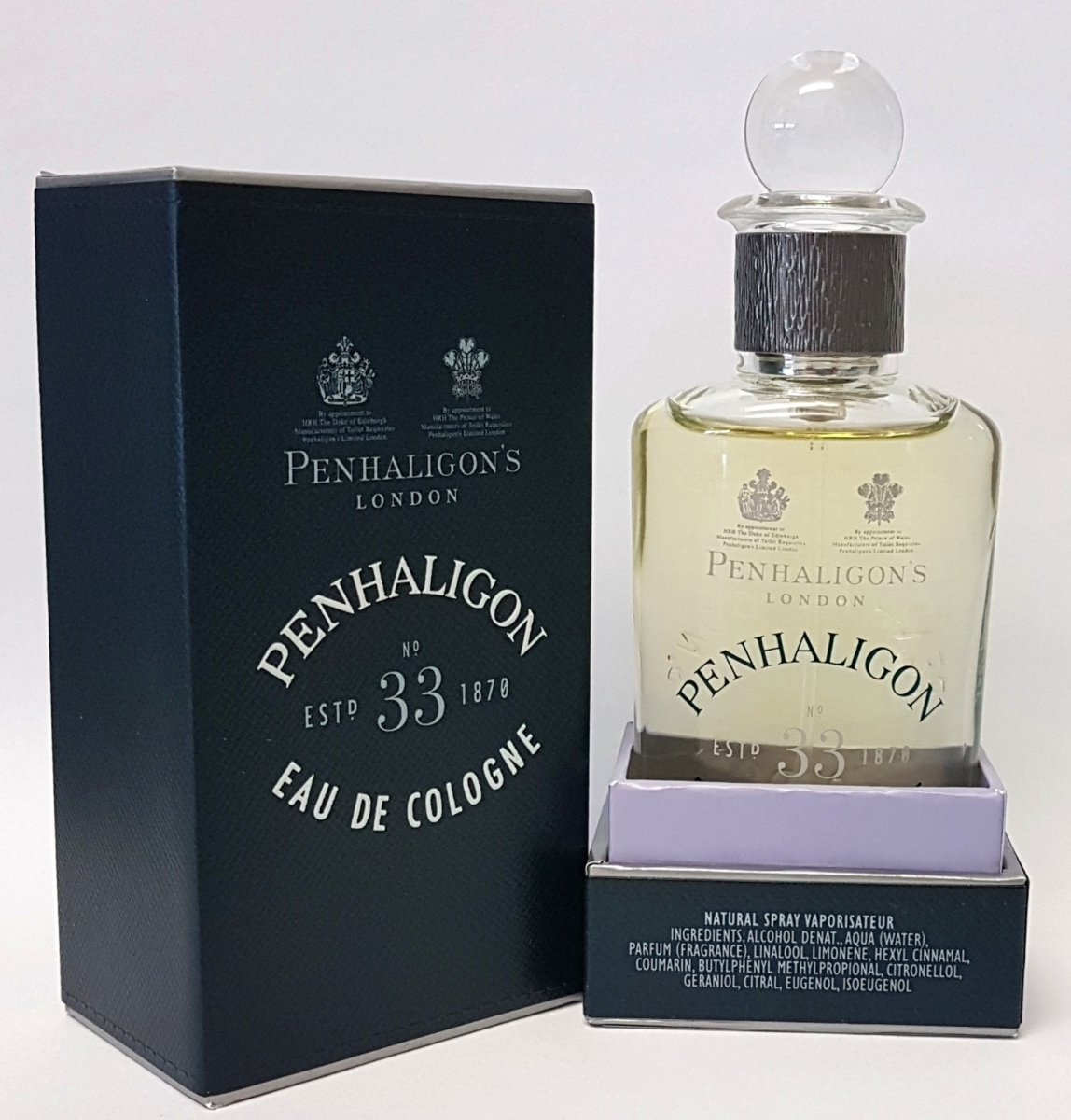
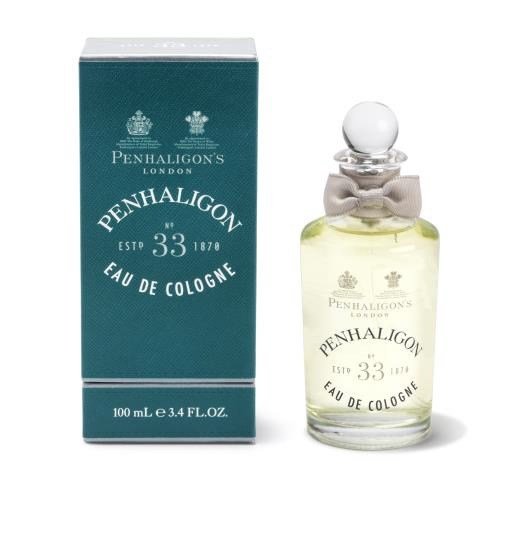
The sillage is just as restrained as the longevity, but anyone buying an Eau de Cologne expects nothing else. After a maximum of 3-4 hours, it's all over. The bottle, yes, I find it beautiful. With a pretty ribbon, as is fitting for the English P. I definitely want to have one like that on my shelf. But...
...then it probably won't be No. 33. That has subjective reasons as well. I consider the Cologne as a whole to be a fine, delicate, almost (!) harmonious scent. Of the many listed ingredients, most are probably only added in homeopathic doses, leading to a fresh, lightly spicy-sweet, very finely woven but also somewhat distant olfactory impression. But why is it actually so artificially blue? That's what I don't like. Okay, let's stay objective; I'll try to touch on the topic of tradition vs. modernity. Here I find, purely objectively, that Penhaligon's has achieved its goal. English fragrance tradition, I don't know it too well yet, but I perceive the fine nuances, the distance, and distinction of the fragrance as very well fitting. And modernity is indeed geared towards synthetic freshness, towards "shower gel notes." Whether one finds that good or bad, the fragrance has it too. In this respect, the concept is already coherent.
If they had toned down the blue soapiness a bit, I would have reached my 70%. More than that, I wouldn't have given it subjectively, as I prefer strong, sillage-heavy fragrances. But I don't like the shower gel base. I don't want to wear that. Nevertheless, purely from a craftsmanship perspective, I find the fine composition to be rather above average.



 Top Notes
  Grapefruit
 Clary sage
 Bergamot
 Coriander
 Cypress
 Mugwort
 Orange
 Heart Notes
  Cardamom
 Ginger
 Lavender
 Violet
 Black pepper
 Saffron
 Geranium
 Jasmine
 Lily of the valley
 Rose
Rose Geometric Blister
 Base Notes
  Musk
Musk Tobacco
 Cedarwood
 Moss
Moss Vetiver
 Amber
Amber Tonka bean
 Vanilla








 Floyd
Floyd NikEy
NikEy Libre
Libre Jennytammy
 BlackbirdHH
 Rivegauche
 pudelbonzo
 EdithLyri
 Pollita
 Prokion