Neukölln 6: The British-Portuguese Friendship Perfume
Douro is not named after Duro (by Nasomatto), the scent for tough men, which is derived from the Italian and Spanish word for "hard," but after a river in the north of the Iberian Peninsula. In Spanish, it is called Duero and in Portuguese Douro, and it forms the border between the two countries along part of its course. In the Middle Ages, it marked the boundary for centuries (along almost its entire length) between the Islamic Al-Andalus in the south and the Christian kingdoms, especially Asturias, in the north.
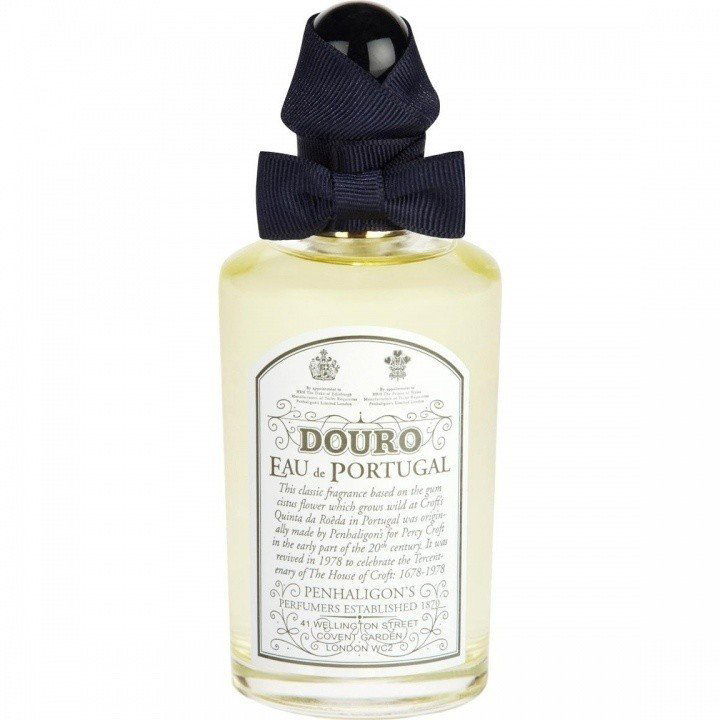
Douro is an Eau de Portugal (as it says on the label), and this is, as a fellow Parfumo explained to me, a special form of Eau de Cologne with a strong proportion of oranges (or mandarins). Portugal by 4711 is also one of these, and many English fragrance companies offer or have offered such Eaux. The fact that Penhaligons decided to rename "Lords" to "Douro" during the rebranding is very fitting and subtle in this respect.
Traditionally, much connects England and Portugal, such as English military aid to Portugal against Napoleon and Portuguese military aid to England against Kaiser Wilhelm. But probably nothing connects the two nations as much as Port wine, a kind of national drink of the English, which is cellared in Portugal and whose grapes may only be grown in the upper Douro Valley, the wine region Alto Douro (reportedly the oldest concretely defined and named wine region in the world). Allegedly, English Port wine traditions date back to the 14th century, when the name Port wine and the wine region did not even exist yet.
In another sense, the name (and the designation as Eau de Portugal) may not be entirely appropriate. For this very beautiful scent has relatively little to do with an orange-heavy cologne, that is, a classic "EdPo." Thus, it stands a bit on the fringes of this series, but it certainly has its place within it.
Douro starts - in this respect quite typical of colognes - with a fine citrus blend, in which the mandarin is not so dominant. That it is listed here equally alongside lime, lemon, and bergamot is plausible; we have a nice general citrus in the best sense of the word, a blend, so to speak. However, much more dominant, in my view, especially at the beginning, is the lavender, so to speak the Great Bear in the starry sky over the Douro.
As this lavender-citrus blend is also nicely spiced with a few spicy notes, it creates the image of a light gray, finely fresh, somewhat understated finesse that feels much more British than Iberian. This is more of a gentleman on southern travels than a native Lusitanian.
With the continued presence of lavender, the scent then becomes soft, almost meltingly soft, blooming-floral. This is not dandyish or effeminate, but it has something flattering and delicate, as if the gentleman forgets his stiff upper lip for a while and discovers his soft spot in the beauty of southern lands. During this phase, the scent also becomes a bit more orangey, so I find lily of the valley and neroli absolutely plausible for this phase (we are here around minute 30 to 60).
After that, a very close, lingering, beautiful, noble, finely fresh finish begins, which lasts for several hours and which I no longer perceive as citrusy. In it, a decent dose of oak moss (or oak moss absolute or whatever is used today) mixes with wood (I would have suspected cedar rather than sandalwood) and the lavender that seeps from the top note into the base.
Douro is generous in its dosage, like a cologne, and can also be splashed on. If applied too subtly, it dissipates too quickly and does not unfold its effect.
All in all: This is complexity and refinement that only seems simple and plain, which is why this little water clearly surpasses the boundaries of a classic cologne. To honor this, I was inclined to give 9 points (which would be anything but absurd!), but since the scent, despite all its beauty, does not evoke the feelings of infatuation associated with a 9 for me, it remains somewhere at 8.74.
Very inspired and also seductive contribution, finely spiced with poetic touches. Portuguese perfumes are definitely a worthwhile topic. **Lavendelei** trophy with oranges for you!
... I’d like to add to my response to your comment about the fragrance "Tulip": ... And I really enjoy it when your enthusiasm for a scent comes through in your words and resonates with me.
Meltingly soft and so wonderfully described, that's how I like scents and love comments. And with Portugal, you always win me over (I got such wanderlust while reading). LBV trophy.
Unfortunately, I don't know this Eau yet. It has lily of the valley in it, so it must be wonderful.
I love comments like yours about fragrances; you always manage to describe the scent with such a light touch, while also giving an enjoyable excursion into the places related to the composition.
Cheers... a glass to you, filled with a fine port.
8.74 is definitely a score that can be considered very good on a scale of 0 to 10. The scent sounds really nice and I’m sure I would like it. The background information is once again very valuable, and the comment is great too.
A super beautiful England-Portuguese! I also tested it for the first time in the last few days, and I have similar praise as you. Very well-founded and interesting comment with historical background. As always!
Well described, with everything included! By the way, I have both (Douro and Lords) and I think that Lords is stronger, which justifies a separate entry here. But it could also be because my Lords is older. One more thing: be careful with this stuff! I was only told once in my life as a light sprayer that I overdid it: with three sprays of Lords! Douro can be tricky too.
Thank you for this informative and wonderfully written comment about the fragrance and its cultural history! It's always a pleasure to read your comments.
Interesting! I've been testing Douro for about half a year now, and I've only started to like it a bit more in the last few weeks. At first, it left a similar impression on me as "Eau de Rochas pour homme" did for you: well-groomed boredom. But now I'm starting to understand it better - and with your fabulous comment in mind, it might just become really likable for me! Border river trophy!
I've absorbed a lot of cultural history again. That's why I enjoy reading your comments so much. So, these colognes are called Eau de Portugal. I wasn't aware of that either. I really love those nostalgic bottles from Penhaligon's. So beautiful! Trophy with a ribbon!
I don't know if it's because of the age of my bottle, but I find Lords and Douro only similar up to the base, where the predecessor still feels much more potent. And Lords has a nearly resinous-animalic quality in the base. Still, or maybe because of that - and since my bottle is now on the verge of running out - I might welcome the new one into my collection soon.


... And I really enjoy it when your enthusiasm for a scent comes through in your words and resonates with me.
I love comments like yours about fragrances; you always manage to describe the scent with such a light touch, while also giving an enjoyable excursion into the places related to the composition.
Cheers... a glass to you, filled with a fine port.
Still, or maybe because of that - and since my bottle is now on the verge of running out - I might welcome the new one into my collection soon.