
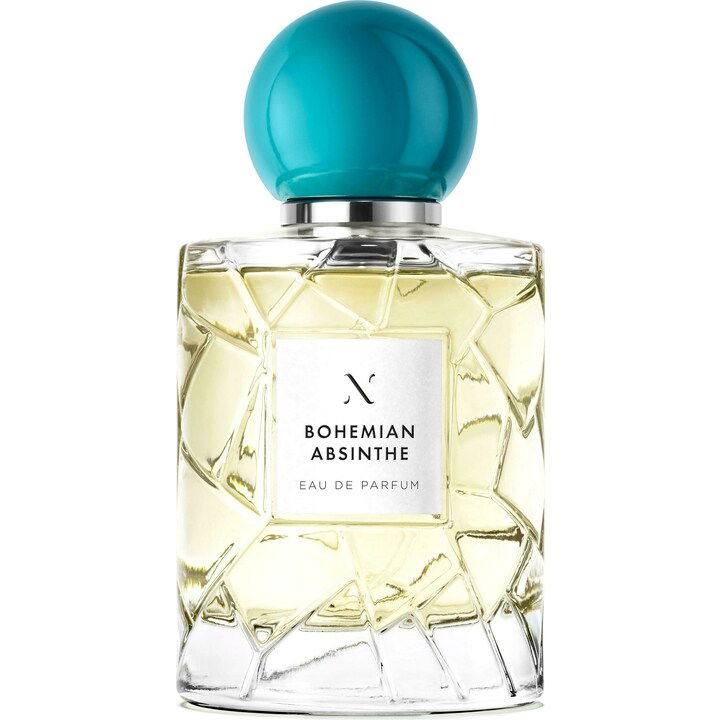
Bohemian Absinthe Les Sœurs de Noé 2019

13
Very helpful Review
Bohemian Villages
Kumquat travels, with the eucalyptus,
In a beautiful Bohemian bus.
The notes remain incomprehensible to us,
No matter how deeply we probe them.
Even Eucalyptus (who only sniffed for the scent's sake)
is at a loss for advice.
Yet just this makes us pale like mud.
No blow to the neck will help.
And he writes in his weekly chronicle:
Another experience, without electronics!
(Very loosely based on "The Bohemian Village" by Christian Morgenstern.)
Even though a certain online sales portal always translates "bohemian" as "böhmisch," this translation is at best outdated. In the 19th century, the French thought that the French Roma had come from Bohemia in the 15th century. Their lifestyle was romanticized as unconventional and free. Therefore, bohemian is indeed böhmisch, but the people of Bohemia would surely be surprised if they were seen as unconventional, freedom-loving, French Roma.
At this point, family tester M pointed out to me that there is indeed Bohemian absinthe. So absinthe from Bohemia. Damn, and I was just getting into the swing of things. I have never drunk Bohemian absinthe and therefore cannot say whether it smells like Bohemian Absinthe. Bohemian absinthe differs from traditional absinthe in that it contains no anise. Bohemian absinthe does not turn cloudy when water is added, so diluting it is not really worth it, and according to Wikipedia, many Czechs do not dilute their Bohemian absinthe at all. This explains why Bohemian Absinthe smells so strong that it fills the whole room with its aroma... uh, scent. I definitely do not want to drink Bohemian absinthe, as I already get a headache from the smell of Bohemian Absinthe.
I thought to myself that the website of the sisters of Noé might enlighten me regarding the meaning of this scent, and lo and behold: it represents the ecstasy of the French in the 19th century over La Bohème ('Bohemia'). So forget what I said about Bohemian absinthe and remember the romantic, unconventional, freedom-loving, French Roma of the 15th century. That’s how it smells.
I would not want to wear Bohemian Absinthe in any season. The sillage is very unconventional and freedom-loving. One can wear this if one has traveled back in time to the 15th century and does not want to stand out among Bohemians or French Roma. Or if one wants to remain abstinent at a feast with Bohemian absinthe. One then smells as if one has heavily indulged in the drink. Apparently, you can't see that in the glass. So cheers.
In a beautiful Bohemian bus.
The notes remain incomprehensible to us,
No matter how deeply we probe them.
Even Eucalyptus (who only sniffed for the scent's sake)
is at a loss for advice.
Yet just this makes us pale like mud.
No blow to the neck will help.
And he writes in his weekly chronicle:
Another experience, without electronics!
(Very loosely based on "The Bohemian Village" by Christian Morgenstern.)
Even though a certain online sales portal always translates "bohemian" as "böhmisch," this translation is at best outdated. In the 19th century, the French thought that the French Roma had come from Bohemia in the 15th century. Their lifestyle was romanticized as unconventional and free. Therefore, bohemian is indeed böhmisch, but the people of Bohemia would surely be surprised if they were seen as unconventional, freedom-loving, French Roma.
At this point, family tester M pointed out to me that there is indeed Bohemian absinthe. So absinthe from Bohemia. Damn, and I was just getting into the swing of things. I have never drunk Bohemian absinthe and therefore cannot say whether it smells like Bohemian Absinthe. Bohemian absinthe differs from traditional absinthe in that it contains no anise. Bohemian absinthe does not turn cloudy when water is added, so diluting it is not really worth it, and according to Wikipedia, many Czechs do not dilute their Bohemian absinthe at all. This explains why Bohemian Absinthe smells so strong that it fills the whole room with its aroma... uh, scent. I definitely do not want to drink Bohemian absinthe, as I already get a headache from the smell of Bohemian Absinthe.
I thought to myself that the website of the sisters of Noé might enlighten me regarding the meaning of this scent, and lo and behold: it represents the ecstasy of the French in the 19th century over La Bohème ('Bohemia'). So forget what I said about Bohemian absinthe and remember the romantic, unconventional, freedom-loving, French Roma of the 15th century. That’s how it smells.
I would not want to wear Bohemian Absinthe in any season. The sillage is very unconventional and freedom-loving. One can wear this if one has traveled back in time to the 15th century and does not want to stand out among Bohemians or French Roma. Or if one wants to remain abstinent at a feast with Bohemian absinthe. One then smells as if one has heavily indulged in the drink. Apparently, you can't see that in the glass. So cheers.
Translated · Show original
10 Comments
Oh no! I wouldn't want to wear that either. Thanks for the warning!