
Merteuil
Reviews
Filter & Sort
Detailed
Translated · Show original
sprezzatura rossa
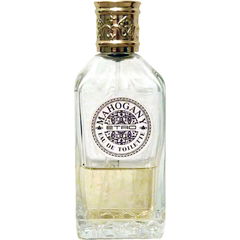
Etro has once again demonstrated a fine sense for true Italian nonchalance, as this perfume is, similar to Sandalo, a wonderful embodiment of Italian lifestyle and tradition. A beautiful symbiosis of patchouli and vetiver, which takes away the usual acidity from the latter and, although quickly decipherable in its fragrance notes, exhibits more than just the sum of its parts.
Citrusy fresh at the outset, one immediately perceives the aroma of the inherent piece of furniture, displayed in all its splendor and freshly polished, with Santalum spicata and Pogostemon cablin showcasing the woods, all in red/burgundy; Haitian vetiver takes on the polish of colonial baroque in its full lush green. An elegant companion that strikes a few of the same chords as Bel Ami Vetiver. Declared unisex, it seems, especially due to the repeatedly emerging almost cosmetic-lipstick-like creaminess, to be more designed for women.
It's a pity that it is no longer available.
Citrusy fresh at the outset, one immediately perceives the aroma of the inherent piece of furniture, displayed in all its splendor and freshly polished, with Santalum spicata and Pogostemon cablin showcasing the woods, all in red/burgundy; Haitian vetiver takes on the polish of colonial baroque in its full lush green. An elegant companion that strikes a few of the same chords as Bel Ami Vetiver. Declared unisex, it seems, especially due to the repeatedly emerging almost cosmetic-lipstick-like creaminess, to be more designed for women.
It's a pity that it is no longer available.
3 Comments
Translated · Show original
posh spice
I have actually been thrilled with all (old) Etros so far, as they combine everything in one:
naturalness and understatement without the usual thunderous noise in sillage and exaggerated longevity!
A wonderfully executed fragrance on the theme, a bit bitter and distant, very woody, with just the right splash of patchouli for the house's inherent bobo charm. Terpene-like and cool as it is, I can recognize similarities to Guerlain's Heritage, but it's prettier and chicer, as it appears a bit younger and at the same time "more authentic," less elitist yet more elegant than its French descendant.
P.S.
I tested the original EDC.
naturalness and understatement without the usual thunderous noise in sillage and exaggerated longevity!
A wonderfully executed fragrance on the theme, a bit bitter and distant, very woody, with just the right splash of patchouli for the house's inherent bobo charm. Terpene-like and cool as it is, I can recognize similarities to Guerlain's Heritage, but it's prettier and chicer, as it appears a bit younger and at the same time "more authentic," less elitist yet more elegant than its French descendant.
P.S.
I tested the original EDC.
1 Comment
Translated · Show original
wait until it gets dark
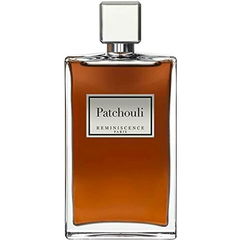
for me, one of the best patchoulis ever! it has nothing sweet or chocolatey like most of its cousins and does not evoke the usual 68er or gothic associations -
I smell damp November leaves, plum liqueur or sherry with a slightly aniseed note, pipe tobacco and peat, woods and chimney ash, all very dark, velvety, and potent (so be careful with the dosage) more an animalistic pheromone than a fragrance, more alchemy than perfumery.
I smell damp November leaves, plum liqueur or sherry with a slightly aniseed note, pipe tobacco and peat, woods and chimney ash, all very dark, velvety, and potent (so be careful with the dosage) more an animalistic pheromone than a fragrance, more alchemy than perfumery.
3 Comments
Translated · Show original
the tarts of the oligarchs
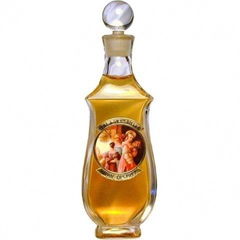
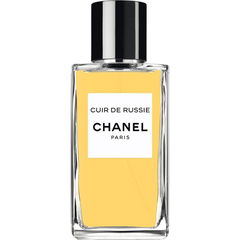
perhaps felix yusupov - a very aristocratic dandy, lover of a nephew of the tsar and historically significant poisoner - wore the original in his Parisian exile to cure himself of the revolutionary inconveniences (!) in his homeland, as well as to remember his lost tanned leather-stuffed stables and estates. however, with this reissue, I can’t smell anything of the namesake leather, rather the sugary silver balls on a glazed, pastel-decorated petit four -
now, it often happens with reprints and their first editions like a style piece to a Louis-Seize original :
FASHION CAN BE BOUGHT, STYLE IS OWNED.
the average rubljovka resident, now little aware of this, probably wonders why he should spend horrendous sums on a worm-eaten something when he can get the same thing new and clean and in tenfold for the same price (his luxury estate resembles more an East German plate with plenty of marzipan and nougat on top than the dilapidated Versailles), while he sits in his Learjet on approach to St. Moritz and his fur-clad, ubiquitously bleached wife next to him is just shooting a freshly made super sweet selfie into the virtual ether to her fellow players.
it seems Mr. Polge understood this as he tossed this piece of airy-transparent, just a little (!) over-sweetened French haute patisserie art onto the new post-socialist Russian "court"/ market.
now, it often happens with reprints and their first editions like a style piece to a Louis-Seize original :
FASHION CAN BE BOUGHT, STYLE IS OWNED.
the average rubljovka resident, now little aware of this, probably wonders why he should spend horrendous sums on a worm-eaten something when he can get the same thing new and clean and in tenfold for the same price (his luxury estate resembles more an East German plate with plenty of marzipan and nougat on top than the dilapidated Versailles), while he sits in his Learjet on approach to St. Moritz and his fur-clad, ubiquitously bleached wife next to him is just shooting a freshly made super sweet selfie into the virtual ether to her fellow players.
it seems Mr. Polge understood this as he tossed this piece of airy-transparent, just a little (!) over-sweetened French haute patisserie art onto the new post-socialist Russian "court"/ market.
4 Comments
Translated · Show original
creme brulee a la milanesa
I am a bit confused about this fragrance:
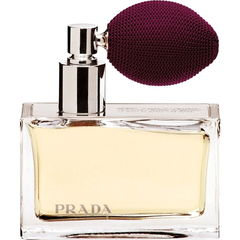
the house of Prada is a global giant when it comes to its scents and fashion, and alongside its extremely well-researched references in every nook and cranny of 20th-century fragrance and costume history, which is the reason I have always been a big fan of this brand and Madame Prada's very keen sense of what is currently in vogue, and with a wink at 'vintage' gives a whole new dimension, as well as 'ugly' lending the discreet charm of the (actually no longer existing) bourgeoisie, it continues to surprise me time and again.
The often-quoted similarity to Angel, I have never recognized, simply because I thought it was still too early for such a reference about ten years after its release (Angel)... but I recently read in an interview that this is actually more of a Proustian madeleine, a memory of her own youth, a fragrance for which she crossed the Atlantic several times in the sixties just to smell it again. And here lies my problem:
I cannot place the fragrance temporally. For me, it is neither sixties nor seventies, nor eighties or Mugleresque early nineties. It is not a hippie-patchouli scent, even though many claim that, and as a gourmand, I can only classify it to a limited extent, and with all the 'infusions' that followed and their super posh dry-cleaning attitude, which would even make Jackie O. look disheveled, it has nothing to do with that.
What I perceive is a very, very complex fragrance that, like hardly any other, seems elusive, a gender-bender, more masculine, almost dirty-rough and yet close to capricious, yes, almost clean-polished.
Depending on the season and weather conditions, however, it takes good nerves not to feel overwhelmed by this fragrance, not to get a sore throat from an overdose of honey milk, or a headache from a truckload of mimosas soaked in dried red wine, but:
the drydown, the resins and woods (which unfortunately take a looooooong time to arrive) are
so magnificent that the wait is worth it, and I continually wonder if there
is not somewhere a perfume that smells like this and beyond any sweetness
just like that!
the house of Prada is a global giant when it comes to its scents and fashion, and alongside its extremely well-researched references in every nook and cranny of 20th-century fragrance and costume history, which is the reason I have always been a big fan of this brand and Madame Prada's very keen sense of what is currently in vogue, and with a wink at 'vintage' gives a whole new dimension, as well as 'ugly' lending the discreet charm of the (actually no longer existing) bourgeoisie, it continues to surprise me time and again.
The often-quoted similarity to Angel, I have never recognized, simply because I thought it was still too early for such a reference about ten years after its release (Angel)... but I recently read in an interview that this is actually more of a Proustian madeleine, a memory of her own youth, a fragrance for which she crossed the Atlantic several times in the sixties just to smell it again. And here lies my problem:
I cannot place the fragrance temporally. For me, it is neither sixties nor seventies, nor eighties or Mugleresque early nineties. It is not a hippie-patchouli scent, even though many claim that, and as a gourmand, I can only classify it to a limited extent, and with all the 'infusions' that followed and their super posh dry-cleaning attitude, which would even make Jackie O. look disheveled, it has nothing to do with that.
What I perceive is a very, very complex fragrance that, like hardly any other, seems elusive, a gender-bender, more masculine, almost dirty-rough and yet close to capricious, yes, almost clean-polished.
Depending on the season and weather conditions, however, it takes good nerves not to feel overwhelmed by this fragrance, not to get a sore throat from an overdose of honey milk, or a headache from a truckload of mimosas soaked in dried red wine, but:
the drydown, the resins and woods (which unfortunately take a looooooong time to arrive) are
so magnificent that the wait is worth it, and I continually wonder if there
is not somewhere a perfume that smells like this and beyond any sweetness
just like that!
1 Comment