Log in

Profumo

Profumo

Reviews
56 - 60 by 289
Translated · Show originalShow translation
A sepia-tinted look back
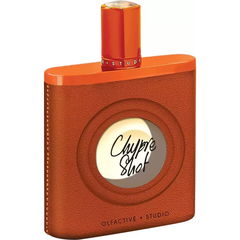
Chypre seems to be 'in' again: 'Mojito Chypre', 'Chypre 21', 'Chypre Siam', or this one: 'Chypre Shot'.
All modern creations, and there are many more.
Just a few years ago, the death knell was ringing loudly: Chypre was dead, slaughtered by the treacherous IFRA, it echoed everywhere! But, as we know, the dead live longer, and not only does the good old 'Mitsouko' smell as chypre as ever.

'Chypre Shot' is now a typical Duchaufour: saffron and cardamom, ingredients he likes, are included, as well as coffee and tea notes that he also enjoys showcasing. The spice seems to borrow a bit from his 'Traversée du Bosphore', and like that one, some fruity notes resonate as well, while his 'Noir Exquis' likely inspired the gourmand coffee aspect.
That Monsieur Duchaufour can also do Chypre has been proven, and here inevitably 'Chypre Palatin' comes into play.
The three mentioned Duchaufour fragrances share something that one might call the typical Duchaufour sound: a texture as if everything were equally bathed in milk or covered with milky veils.
Milky desserts keep coming to my mind: rice pudding with fruits, panna cotta, yogurt mousse, or even milky-spicy drinks like chai latte or the good old Yogi tea.
This sound permeates 'Chypre Shot' as well, and one must like this sound to appreciate 'Chypre Shot' at all.

For my part, I like it, but not all the time.
'Chypre Shot' is not a scent I could wear constantly. Sometimes, yes, because it is once again a good Duchaufour, a very good one, I think, but I also belong to the Chypre lovers.
And Duchaufour, as mentioned, can do Chypre. Whether he will one day be counted among the great Chypre creators like Roudnitska or Chant remains to be seen, the future will tell, but his efforts for a modern interpretation of this rather old and somewhat overused fragrance category are certainly recognizable.
He has shown how one can - see his sensational 'Timbuktu' - realize the Chypre idea entirely without oakmoss. But he has also demonstrated how with a modern, quasi-castrated, i.e., largely freed from the allergen Atranol, IFRA-compliant 'low atranol oakmoss', in conjunction with oakmoss substitutes like Veramoss or Evernyl, one can indeed conjure up a rich Chypre: et voilà - 'Chypre Palatin'.

And now he has proven it again: Chypre is still going strong.
Apart from fruity Chypres like 'Mitsouko', the citrus-fresh ones like 'Diorella', or the green ones like 'Aliage', Duchaufour locates his Chypre creations more in the oriental realm ('Chypre Palatin') or in the area of gourmand fragrances ('Chypre Shot'), with an oriental twist. Comparisons with the aforementioned historical Chypre masterpieces do not really push themselves too much.
And fundamentally, it is also unfair to measure all Chypre fragrances against 'Mitsouko' or Chanel's 'Pour Monsieur': it is as if one were to compare every soprano in the realm of Belcanto and Verismo with Maria Callas.
One does so, but it is unjust.

So, better not to sing the Norma at all - to forge one's own paths.
That, in turn, is what Duchaufour does, regardless of what one may think about it.
I, for one, like 'Chypre Shot'. I also like the other two from the Sepia series, but this one especially.
I do not find the scent to be cacophonous at all, as some might think. Of course, a Duchaufour-typical multitude of contributors populates the olfactory stage - the composer has been fond of going all out for a few years now. It wasn't always like that, see his beginnings at Comme des Garçons, but now he loves the big ensembles.
However, 'Chypre Shot' is not a grand Amouage-like fragrance opera, no, the massive orchestra in permanent fortissimo is not his thing. Nevertheless, quite a few voices swirl together. Well-tuned, of course, and veiled with the Duchaufour-typical milky soft focus, but still setting many accents: floral, fruity, gourmand, resinous, bitter, woody, sweet - everything is there.
Not loud, but very persistent and incredibly long-lasting. No wonder, the fragrance is, according to the manufacturer, an Extrait de Parfum, and it behaves accordingly: discreet but enduring, while radiating moderately. Even the next morning, I can easily perceive it on my skin, now as a soft, vanilla-toned oriental, underlaid with only the faintest Chypre bitterness.

The term 'Chypre' is rightly carried in the name of the fragrance: 'Chypre Shot' is consistently an original Chypre scent, from the spicy-floral opening to the oriental finish.
'Shot' here does not mean a 'shot' in the sense of a vodka shot or the like, no, the 'shot' refers to taking a photograph, to 'shoot' an image. And 'Sepia', in turn, the name of the trio, is meant to evoke in us a nostalgically tinged, possibly historical photo in sepia tones.
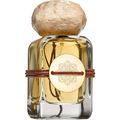
The entire series is, in a way, a reminiscence of a 'past', and even the leather-clad bottle, with its hole in the middle, has something of an old pinhole camera. Presumably, one wants to direct our gaze, or rather our nose, towards a sepia-tinted past, as we are supposed to peer through 'Vanilla Shot' towards 'Shalimar', through 'Leather Shot' towards 'Knize Ten', and through 'Chypre Shot' of course towards 'Mitsouko'.

Does that work?

Well, a little bit, at least for me, after I have been dealing with this fragrance for a while. At first glance, I did not see these connections - but must one always immediately and literally be hit on the nose by something?
No, sometimes it is also fun to go on a journey of discovery - quite possible that one sniffs out something interesting.

As in this case.

9 Comments
Translated · Show originalShow translation
'Coromandel' in Leather Outfit

Patchouli lovers, pay attention - this is a special kind of patchouli scent!

The so-called half-shrub belonging to the mint family plays a not insignificant role in many perfumes, or rather, in quite a few. Patchouli is often found in the base notes, usually in combination with resinous and bitter-mossy notes, and is therefore an integral part of almost every Chypre fragrance, at least of the classic kind.

Sometimes, however, it also pushes to the forefront, especially since the hippie movement in the second half of the 60s discovered raw patchouli oils for itself.
The big perfume houses reacted quite quickly, and the patchouli that had long been used but always remained in the background suddenly became the protagonist in fragrances like 'Gentleman' by Givenchy or 'Aromatics Elixir' by Clinique.

A few years later, this characteristically dry-aromatic-woody smelling leaf was also allowed to shine in oriental contexts: Etro's 'Patchouly' or Mazzolari's eponymous fragrance are representative of the many patchouli soliflores that have adorned almost every extensive fragrance line from various manufacturers since the 70s/80s. Even the big houses eventually joined in and recently came out with two supposed high-end patchoulis: Chanel's 'Coromandel' and Dior's 'Patchouli Imperial'.

The complex scent of this half-shrub native to Asia seems to remain a seemingly permanent source of inspiration even after so many years, despite all the oud hype, continually producing innovative creations.
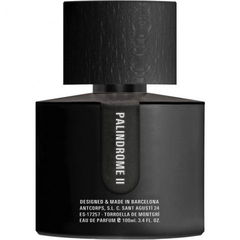
Santi Burgas' 'Palindrom II' is once again such a patchouli-centered work that I find somewhat novel, even though it nearly explores all the known facets of patchouli: the woody, aromatic, dry-dusty, almost creaky nuances as well as the soft and powdery - it’s all there.
But indeed, it is much more.
As if a (nose) film is playing in my head: from afar, I see/smell the crypt-like earthy patchouli oils of long-gone childhood days (along with the corresponding images), and the closer I get to my arm scented with 'Palindrom II', the more clearly the dark, musty undertone transforms into Chanel's silky-chocolate patchouli confection of today. When I pull my nose away from my arm, I sense the creaky, unrefined notes again, which many find so terribly off-putting. Right on my arm, however, the patchouli smells exceedingly delicate and civilized - very 'Coromandel'-like, accentuated by fine spiciness and subtle sweetness.

But, Rodrigo Flores-Roux would not be himself if he hadn’t added something to this, his work, that he evidently values highly - a distinct, yet for my taste quite subtle animalic note, and above all: leather.
Rodrigo Flores-Roux loves leather. Not just the scent of leather in all its shades, he also enjoys wearing it.
He has laid a softly animalic leather accord beneath this patchouli scent, which does not develop dominance - the patchouli remains the center of the fragrance - but gives it an exceedingly erotic kick.
Perhaps one needs a certain leather fetish (I have one ;-) ...) to enjoy this combination - multifaceted patchouli, leather, and animalic notes are truly not to everyone's taste.
However, there are certainly heftier variants, at least in terms of leather and animalic notes, that even I, as a hardened leather lover, find too much: Montale's 'Oud Cuir d’Arabie' would be one such example.

No, fortunately, 'Palindrom II' is far removed from such coarse goat-like scents: no offensive animalic notes, but rather a sensually erotic aura, at least for me. Sensitive noses might not quite follow me here, but - as I said - I also love leather, with (almost) all its animalistic exhalations.
This sensual twist makes 'Palindrom II' a very special patchouli scent for me - one with such erotic vibes I have never encountered before. And if I wanted to find a comparably erotic-sensual scent, 'Musc Ravageur' would come to mind first - although it does not smell similar in any way, I find it similarly addictively erotic in the base.

What remains to be reported: 'Palindrom II' has good longevity and after an initially loud opening, a rather moderate projection. The development of the fragrance progresses from sharp/bright-spicy to dark-spicy to woody-leathery, without dramatic turns and perfectly blended.
The deep black, round bottle with the large dark wooden cap (from sustainable European forestry, as can be read on the packaging - hear, hear, sustainability is also making its way in here!) fits wonderfully with the content, which I could only label as 'Black' if I had to choose a suitable color to describe the scent.

Oh yes, the leather-wearing, mustachioed Mexican perfumer is said to wear this scent himself:
“Rodrigo Flores-Roux was the most animated and excited when speaking to me about Santi Burgas Palindrome II, the scent he wears most often himself,” Michelyn Camen from 'ÇaFleurBon' reports.

I think that fits.
6 Comments
Translated · Show originalShow translation
In one word: classic!
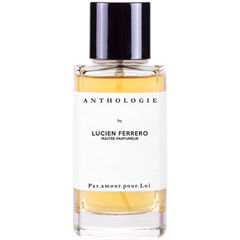
Anyone interested in 'Par Amour pour Lui' should be particularly receptive to three fragrance notes: robust leather, aromatic tobacco, and straw-like hay.
These three main players dominate the scent throughout its entire course. However, not all of them enter the olfactory stage at once, but rather gradually. Initially, the fragrance opens with a very pronounced, spicy leather accord, without any citrus freshness, only underpinned by a hint of bitter bergamot: greetings from 'Tabac Blond', 'Knize Ten', and 'Cabochard'!

I haven't smelled such a distinctly dark-leather opening in a long time - fantastic! One should have a penchant for those old leather classics, as this leather is truly hearty, accentuated with plenty of styrax and aromatic spice (tarragon!). No fine suede leather, no beige-colored nubuck, and certainly no synthetic faux leather, no, thick, tanned cowhide, and quite rich.

Behind this furious leather opening, the other two dominant notes soon come to the fore. Together, they intone a rich and long-lasting triad that is wonderfully harmonious yet does not dissolve into an indefinable sound mush. Aromatic tobacco, with slight honey accents, remains just as recognizable as the brittle dryness of the hay, which shifts between grassy and woody nuances, along with the leathery, creaky spice of the opening.
The latter does lose a bit of its breath after a good while, allowing the tobacco/hay heart to settle on a milder, semi-oriental base of fine sandalwood, resinous labdanum, and subtly creamy tonka sweetness.
A hint of castoreum extends the leathery echo until the fragrance's conclusion, imparting a subtle erotic-animalistic aura. But fear not, this quiet animalism requires a certain intimacy with the wearer of the fragrance and unfolds its eroticism only in very close proximity.

When I first sprayed 'Par Amour pour Lui', I was instantly thrilled: the famous wow effect. At the same time, I thought to myself: I know this! And after some sniffing back and forth, it came to me: 'Or Black' by Pascal Morabito, specifically the old version. 'Par Amour pour Lui' is, in a way, a tribute to this masterpiece by Jean-Louis Szieuzac, which has a great reputation but unfortunately little dissemination. However, the homage is limited to a rather similar opening, the spicy leather accord, while the fragrances develop quite differently thereafter - 'Or Black' leans more towards an aromatic fougère, while 'Par Amour pour Lui' heads towards an oriental leather fragrance, following in the footsteps of the aforementioned 'Knize Ten' and 'Cabochard'.

These references to the great leather classics make Lucien Ferrero's fragrance more of a neo-classical work, similar to the creations of Vero Kern, or more recently those of Antonio Gardoni, like 'Maai' or 'Mem'. They all draw from the arsenal of the classic fragrance spectrum, avoiding all fashionable trends - no trace of Calone, Cashmeran, Ambroxan, and the like.
A fragrance like Quentin Bisch's 'B683' for Marc-Antoine Barrois, on the other hand, feels very modern, very contemporary, while 'Par Amour pour Lui' seems almost dated in comparison. Both are strikingly spicy leather fragrances, one launched in 2016, the other in 2019, yet they seem to be decades apart. Here: youthful casualness, quite fashion-conscious charm, with a slight hipster tendency, there: classic elegance and distinction.
I find this old-school touch, or rather: retro charm, fantastic, but I can imagine that it might disappoint some.
I can already see the objections: old-fashioned, 80s vibe, for the established gentleman over 50, and similar remarks.
Yes, all true, and yet not quite.
'Par Amour pour Lui' is a stylishly elegant men's fragrance that I would place alongside Patricia Nicolaï's 'New York' in terms of appearance and demeanor. Both share a great refinement in composition (you can practically smell the care with which the individual notes were calibrated!) and a rather formal chic, while intimate details only reveal themselves when cradled in the arms of the wearer.
And yes, 'Par Amour pour Lui' is truly an adult fragrance. Whether the adult man is 30, 40, 50, or older makes no difference; I just can't imagine it on youthful men, let alone boys. However, it does underscore a certain maturity and elegance beautifully!

By the way, Lucien Ferrero has previously created a fragrance with comparable characteristics: 'Itasca' for Lubin. A scent of similar format, but entirely different, leaning more towards a green-woody theme, while 'Par Amour pour Lui' distinctly has a brownish tone due to leather, tobacco, and hay.

The so-called sillage also corresponds more to that of a classic gentleman's fragrance: strong at the outset, but only temporarily filling the room, then remaining within arm's length for a very long time, ending the evening in a distinctly sensual skin scent.
Thus, the fragrance develops a persistent, close presence to the wearer, but avoids the typical ego-shooter penetrance found in many modern fragrances due to a lack of sweetness and stylish synthetics.

Can it also be worn by women? Yes, certainly, provided the potential wearer has a penchant for dry, spicy-woody leather fragrances with a masculine DNA.
As mentioned, 'Cabochard' is not miles away.

The design of the bottle and the quite voluminous box is also beautiful: classically simple elegance. No trace of affected playfulness or even convoluted exuberance - entirely in line with the content.

If I were to characterize this fragrance with just one word, and I have already used it often enough, it could only be one: classic!

6 Comments
Translated · Show originalShow translation
Rosy Geranium, yes, but where is the leather?
Actually, the rose is quite well represented in the catalog of the Edition de Parfums: ‘Une Rose’, a full, juicy rose soliflore; ‘Portrait of a Lady’, a rose carried by patchouli and incense; and - although not a rose, the scent of geranium is closely related to it - ‘Geranium pour Monsieur’, the rosy-minty freshness for men.

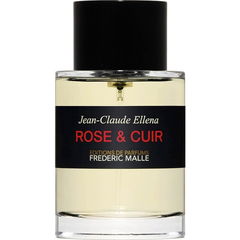
Now comes ‘Rose & Cuir’, a fragrance that marks the return of Jean-Claude Ellena to the circle of perfumers around Frédéric Malle. ‘Angélique sous la Pluie’, ‘L’Eau d’Hiver’, and the two Bigarade fragrances are credited to him, and ‘Rose & Cuir’ fits seamlessly into that lineup: a typical Ellena, through and through.
As with ‘Cologne Bigarde’ or ‘Bigarade Concentrée’, he manages to let his central note shine so brightly, only lightly accented by fresh, green, and subtle light-woody notes, that one doesn't want to stop sniffing at the scented skin area.
The rose here (actually not a rose, but again rose geranium, as in ‘Geranium pour Monsieur’) smells so natural - as if you were holding your head directly in a bouquet of blooming pelargoniums.
Wow, that’s great, I love the scent of geranium!

But, and this must unfortunately be said: the fragrance offers very little more. Those who think that the leather, the supposed second protagonist of this fragrance, has a significant role to play will unfortunately be disappointed. Leather nuances are present, yes, they become more pronounced as the fragrance develops, but ultimately they play hardly a larger role than the finely nuanced traces of vetiver and cedar.

Frédéric Malle writes: “...vetiver and cedar forms an earthy bed of dark, mysterious leather with IsoButyl Quinoline at the center - an intensely bitter molecule, largely forgotten since its use in the daring perfumery of the Jazz Age.”

With IsoButyl Quinoline, Germaine Cellier enriched her legendary ‘Bandit’, and in her fragrance, you can still experience it today in all its bitter-leathery facets - but in ‘Rose & Cuir’? Well, okay, it’s there, and towards the very end of the fragrance development, I can actually smell it quite clearly. But for the first three to four hours, I kept asking myself: where is the ‘Cuir’?

I think one must not make the mistake - and I probably made it - of assuming overtly pronounced, all-pervading leather notes like in ‘Knize Ten’ or its reinterpretation, Marc-Antoine Barrois’ ‘B683’. ‘Rose & Cuir’ simply does not present them, as it is too committed to the blooming freshness of the geranium.

Another fragrance that came to mind when I read that Malle was launching a scent with such a name was the good old ‘Van Cleef & Arpels pour Homme’. Here too, a strong rose surrounded by rich leather notes - but in what x-fold potency!
Well, I should have known: Jean-Claude Ellena is, and seems to remain, a master of sublimation. Under his hands, everything becomes much finer, airier, and more transparent, without losing presence.
So here too: the rose, or rather the geranium, is far from the rich heaviness of the rose in Fléchier’s ‘Une Rose’, just as the leather only hints at the intensity of the leathery base of Bandit/VC&ApH.

One probably has to go back to an old fragrance by Jean-Claude Ellena to find a comparably constructed and composed scent: ‘Rose Poivrée’ for The Different Company. Here too, a wonderfully naturally fresh rose accord, characterized by slightly peppery nuances, but above all by a few hefty drops of civet secret. Later, the civet components were significantly reduced, roughly to the extent that the leather occupies today in ‘Rose & Cuir’.

So far, so good. One should know that ‘Rose & Cuir’ is a typical Ellena fragrance. The last fragrance I acquired from the Editions de Parfums was ‘Music for a while’: also a scent that relies on two protagonists - lavender and pineapple - but staged so lush and rich that it leaves one breathless.

No, ‘Rose & Cuir’ is certainly not such a caliber. Instead, it is a wonderfully radiant, rosy geranium scent, with a finely sublimated leathery base, well suited for both men and women, and blessed with really good longevity and pleasant projection - that it is!

10 Comments
Translated · Show originalShow translation
A Praise for the Boutonnière Flower
With white flowers and me, it’s a bit of a thing: I love them, but wearing them, no.
I associate them so strongly with the feminine fragrance spectrum that it is impossible for me as a man to wear, for example, ‘Carnal Flower’ or ‘Eau de Magnolia’. Or let’s say, almost impossible, because sometimes, quite privately, I do spray a little on and enjoy the wonderful floral aromas.
If you look around in the relevant forums, there are always men who claim they wear these scents without any issue - however, I have yet to encounter one, and I am often among people.
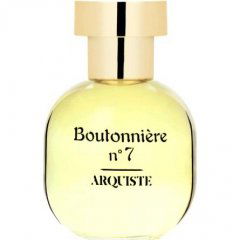
Well, that may still come. Here is, in any case, one that I could dare to try: Arquiste’s ‘Boutonnière No 7’.

The gardenia (also known as the boutonnière flower, fr. ‘Boutonnière’, which also includes other flowers such as the camellia or the carnation, hence presumably No 7) is somewhat like the little sister of the much louder, more indolic, and more narcotic tuberose.
Nevertheless, as I said, she is a sister - hence: no all-clear!

In the past, gentlemen would often wear such a flower in their buttonhole on special occasions, as a counterpart to the feminine brooch. Usually, they were made of silk, but presumably not everyone owned such a silk flower. And so, indeed, one or another gardenia must have adorned the lapel of a gentleman in fine attire.
Ah, those days. Today, that might seem a bit too dandyish.
I, for one, do not have a silk flower, but I do have ‘Boutonnière No 7’ now.

The fragrance has been on the market for several years, but apparently without leaving noticeable traces - the desire of the male world for a white flower scent does not seem to be very pronounced.
The reviews were not exactly numerous, but mostly positive, albeit not enthusiastic.
As I said, the world did not seem to be waiting for a masculine gardenia scent.

I was.

Why I didn’t get it back then - no idea. The scents from Arquiste are only sporadically available in this country, and my interest in the fragrance world is not always equally urgent. So sometimes it just takes a while, but now I’ve treated myself to it. And it was worth it: a truly wonderful scent!
However, and this is absolutely crucial: one must really like the narcotic scent of the gardenia, as this floral accord is absolutely at the center of the fragrance. All other notes at best accentuate it, but do not overly come to the fore. But how they accentuate it - magnificent!
A hint of hesperides upfront, followed by green-grassy violet leaf, transitioning to bright vetiver notes, finally fading on a subtly mossy base with faint castoreum undertones. This sequence dances around the central gardenia accord without ever pushing itself to the forefront. In doing so, it consistently emphasizes the unsweetened sides of the floral aroma by creating a sort of classic men’s fragrance framework. If one sets aside the gardenia and reads the sequence bergamot-violet leaf-vetiver-oakmoss-castoreum, one has roughly a basic structure for a rather modern, somewhat dandyish men’s fragrance (see ‘Portayal Man’ or ‘Hommage à l’Homme’).
If only the gardenia weren’t there!
Fortunately, it is present and makes this fragrance something truly special.

Years ago, Neil Morris achieved something similar with ‘Flowers for Men - Gardenia’, and I assume that Rodrigo Flores-Roux studied this scent very well. However, I wouldn’t go so far as to say he copied it. No, the differences (as far as my remaining sample of the Morris scent allows...) especially in the base, are indeed recognizable, but the basic idea and implementation are strikingly similar.
In terms of refinement and blending of the notes, however, Flores-Roux’s scent clearly has the upper hand - if anyone knows their craft, it’s him!

I also find it amusing whenever I see photos of Rodrigo Flores-Roux, in leather pants or even a leather shirt (he loves leather!), with a trimmed beard - a real macho Latino type - and then I think of his many successful floral scents (most recently his extremely floral ‘Latino Lover’ for Carner): what a contrast!
On such a handsome man, I can easily imagine a white flower scent like those he has created himself, but on a Central European summer sprout like me, hmm...

Well, I’ll give it a try.
Fortunately, the scent has above-average longevity, but in terms of projection, it remains within a range that is appealing to me. No scent cloud trailing me for meters, but rather for many hours a very pleasant, fresh, green, almost slightly salty vetiver-flower scent.
At the beginning, the gardenia certainly makes its presence known, and that’s nice, but due to the lack of sweetness, the scent doesn’t cling to the air as much, but rather remains light and floating, which is also contributed to by the green nuances of the violet leaf and vetiver.

Whether ‘Boutonnière No 7’ will perhaps find more male wearers in the future, I dare to doubt - the behavior of most men regarding fragrance is too lemming-like. In the chorus of the few floral scents explicitly dedicated to men, it will surely have a significant say.

The ladies wear it anyway.
9 Comments
56 - 60 by 289