Log in

Profumo

Profumo

Reviews
61 - 65 by 289
Translated · Show originalShow translation
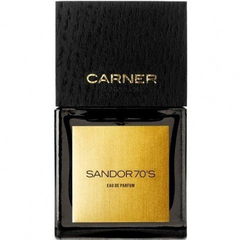
A lot of patchouli, almost obscene animalic notes, and everyone is smoking - the 70s indeed!
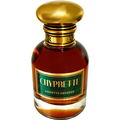
As I strolled past the shelves of my local scent dealer, I was drawn to ‘Sandor 70’s’ mainly because of its name: Sandor.

Many years ago, I had a boss of Hungarian descent with the same first name. He wore ‘Van Cleef & Arpels pour Homme’ extensively and had an incredible sexual presence that intimidated me but also fascinated me. Lust and Sandor have remained synonymous for me ever since, and so I automatically reached for the bottle.
Wow, that hit hard - the scent rightfully carries its name!
(I’ve never heard of the bar ‘Sandor’, but I’ve also never been to Barcelona, which I should probably rectify soon...)
Even the old ‘VC&A op.H.’ had a pretty animalistic-erotic aura, but this scent tops it. As soon as it’s sprayed, a dark, heavy patchouli-leather cloud unfolds with intense animalic undertones. What kind they are, I don’t know; I suspect all together: civet, musk, castoreum, costus & co., probably in the form of the perfume base ‘Animalis’.

In any case, this opening immediately reminded me of Mazzolari’s ‘Lui’, which a base note described with the following, in my opinion, completely accurate description: “pantaloon-bursting-potency.” Also with ‘Sandor 70’s’, the pants are almost bursting, but above all, the opening of both scents is astonishingly similar: earthy patchouli, dark leather, and aromatic spice, permeated by sultry animalism.

Phew, one wants to rush to the window...

But no, somehow this disturbing haze is also fascinating, and the window stays closed! Because while ‘Lui’ later drifts into a urinous territory, I am thankfully spared from incontinence with ‘Sandor 70’s’.
On the contrary, after just a few minutes, wonderful floral accords like bright flashes illuminate the wild, animalistically steamy patchouli opening and create astonishing contrasts: here leather, earth, animal, and there a lively blooming jasmine/osmanthus/rose trio.
At first, it seems like they don’t want to go together, but they do, because as so often, disharmonies create tensions that in this special case keep the consumer from a comatose sinking, in light of the animalic overpowering. The floral trio acts almost as a substitute for smelling salts.

Fortunately, more players enter the stage, or rather, fill the bar ‘Sandor’, and as it was in the 70s: everyone is smoking, really everyone.
Everywhere, aromatic tobacco is charred into sweetly biting smoke and lays almost like mildew over the olfactory scene, were it not for the flower bouquets arranged in vases, bravely fighting their way through the haze, and also the occasional lush oriental vanilla perfume of the present ladies, which stands up to the squawking. Thus, a rather heterogeneous mélange, or aroma diversity, characterizes this scent. And although I’m not really a fan of overloaded fragrances, I must admit: when the orchestration is right, I enjoy listening to the result.

And yes, Rodrigo Flores-Roux packed quite a lot into his scent, and yet I wouldn’t want to miss a single note.
Not only does the aforementioned vanilla have its place, but also the green nuances of vetiver and the earthy bitterness of oakmoss, which clearly shapes the base and makes it a veritable chypre of oriental character.
That despite all the polyphony, no cacophony breaks out is, of course, self-evident: after all, Flores-Roux is an experienced master perfumer - the individual notes, no matter how dissonant they may be, contrast well and the balance is right.

The longevity is also enormous, but the projection is rather moderate, aside from the loud opening. After about 4-5 hours, ‘Sandor 70’s’ develops into a well-perceptible skin scent that remains recognizable even the next day. On textiles, the scent clings for many days longer.
This rather restrained but persistent presence seems to be due to a quite high perfume oil content. I had already wondered why such a high price is charged for a mere 50ml.
Ultimately, I realized that two sprays are absolutely sufficient to create a - at least for me - pleasant scent aura.
More would be uncomfortable for me.

Thus, ‘Sandor 70’s’ greets its Milanese cousin ‘Lui’ from Barcelona and shows him that “pantaloon-bursting-potency” can also be more civilized: erotically vibrating, yes, but at some point, enough is enough with the obscene lustfulness.
‘Lui’ shows no mercy and has challenged me every time I wore it, not to say: overwhelmed. In contrast, ‘Sandor 70’s’ restrains itself as described and mutates into a soothing, smoky-bitter chypre scent, ultimately only slightly tinged with animalic emanations.

Yes, one must really like animalics; otherwise, this scent, which is truly not a crowd-pleaser, will not work, but it is a niche fragrance in the best sense. One that also demands a certain backbone from the wearer (of course, also from the wearer, although the scent leans quite masculine), as the looks or even comments could be mixed.

I like it very much.

10 Comments
Translated · Show originalShow translation
A Length of My Arm is Enough
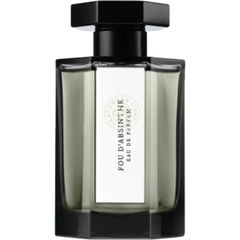
When 'Fou d’Absinthe' was launched in 2006, I was quite unimpressed by this fragrance.
I liked the name, and I enjoyed (and still enjoy) at least Pastis, which is not far from absinthe. But not only Pastis or Ouzo, also anise pastries and everything flavored with fennel seeds - I love this quirky and typical taste, or rather smell, and I know that many feel differently.

However, I found no anise or Pastis in 'Fou d’Absinthe', which - I still remember quite well - disappointed me significantly, because as I said: the name of the fragrance had captivated me. 'Fou d’Absinthe' - somehow picturesque, daring, and bizarre.
But that was not the scent.
Instead: well-groomed barbershop boredom.

That's what I thought in 2006, and at that time I had no contract with Fougère fragrances anyway, as I had finally outgrown the world of Fougères, into which one is almost born as a man, and had ascended to Chypre fragrances.
In the meantime, I have made quite a U-turn regarding my fragrance preferences and have become a big fan of the once scorned Fougères, at least the classic and aromatic variants, less so the fresh-aquatic ones and certainly not the Ambrox faction.

So I have now rediscovered 'Fou d’Absinthe': the manageable remainder in my old sample had surprisingly survived the years well, and the perfumery I trust even had a new bottle of the now quite rare fragrance.
And what can I say: I am quite happy with 'Fou d’Absinthe'!
A wonderfully darkly spiced Fougère scent (today I also perceive the anise/fennel notes!), which has fantastic longevity on my skin and textiles, with moderate projection. A typical gentleman's fragrance: moderate in volume, allowing the ladies, olfactorily, to take the lead.

From the comments on 'Fou d’Absinthe', it seems that this very subtlety is a major drawback for many: the scent is said to be too quiet, fades too quickly, is powerless, etc.
It is quiet, yes, but it has not faded away long at all, at least not on me.
I particularly enjoy the liqueur-like opening, which surprises me time and again, and which I experience differently each time. Sometimes it reminds me of the gingerbread bliss of a 'Jägermeister', sometimes the bitter sweetness of a 'Becherovka' comes through, and occasionally I actually think of a herb-aromatic Pastis. In any case, my associations with spirits regarding the opening are constantly changing. One thing is certain: very alcoholic. A shot to spray on, so to speak, but without intoxicating effects - thus avoiding a hangover.

Unfortunately, this boozy start does not last long, and the spice-laden heart increasingly dominates the proceedings. Dark and sharp accords give the fragrance both softness and bite, all resting on a balsamic, mossy-green base.
Some find this base reminiscent of old shaving soaps, which I can understand very well, as I myself use a soap from the brand 'Gold-Dachs', which indeed smells somewhat similar: powdery, woody, and fresh-balsamic at the same time.

The fragrance is often described as 'green', which I don't think quite captures it, as I associate the color green with the mossy aspects (and also with absinthe), but the woody nuances are at least as present as the powdery ones.
Thus, a description someone else found for this fragrance captures the character of 'Fou d’Absinthe' quite well: ...standing in a forest with a shaving brush. Additionally, I could imagine: ...having just sipped an absinthe/pastis and having a few licorice snails in my pocket.
The brown tones of the woods here fluctuate with the green of the leaves and moss, as well as the white of the foamed shaving brush.

None of this is particularly spectacular or new: aromatic Fougères were already enriched with anise notes in the 70s - the best example being 'Azzaro pour Homme'.
And yet (even if Luca Turin finds the fragrance boring...) I believe 'Fou d’Absinthe' has enough independent character and charm that it will hopefully remain with us for a long time.
A good sign is that 'Puig' - the owner of the brand 'L’Artisan Parfumeur' since 2016 - has thinned out the old portfolio, but has retained a large part of the fragrances that I consider truly important. Fortunately, 'Fou d’Absinthe' is among them, as are almost all fragrances by Olivia Giacobetti, but also those of her successor: Bertrand Duchaufour.
Unfortunately, the brand is not particularly present anymore amidst all the constantly popping up niche companies - a fate that this indie dino (founded in 1976!) shares with many other heroes from the early days of the alternative market.
But let’s hope for the best: 'Mûre et Musc', 'Timbuktu', 'Dzongkha', 'Tea for Two', 'Safran Troublant', and even 'Dzing!', which was rumored to have long been discontinued - all still there. And yes, also 'Fou d’Absinthe'.

By the way, the fragrance often reminds me of the much later created 'Invasion Barbare', also a darkly tinted, heavily aromatic Fougère, but in a significantly higher potency. 'Invasion Barbare' is so present that you feel almost buried under it: strong, loud, with incredible longevity and enormous sillage, just as (almost) everyone wishes for a fragrance.
I feel differently: I am quite happy when a fragrance is not already in the room before I enter it. A projection of more than an arm's length feels rather unpleasant to me and is a burden to those around me.
That's where 'Fou d’Absinthe' comes in just right: an arm's length, then it's over. And that already after a good hour. What remains is a wonderful skin scent that I encounter again and again throughout the day.

That's enough for me.
5 Comments
Translated · Show originalShow translation
I don't want to belong to these 'Upper Ten'...
Oh yes, who wouldn't want to belong to the 'upper ten thousand', to the 'high society', or as my grandmother used to say: to the 'hautevolee'?!
Honestly, I don't want to - or only very rarely.
But if I did, I certainly wouldn't choose to scent myself with 'Upper Ten'.

It's quite strange: Lubin launches a consistently successful line called 'Les Talismania', starting with 'Idole de Lubin', through 'Korrigan', 'Akkad' to 'Galaad' - all strong and unusual oriental fragrances - and then a few years later, they release a 'Sauvage'/'Bleu de Chanel' clone that neither fits the line nor comes close to the level of its predecessors.
Once again, it was the team of Thomas Fontaine/Gilles Thévenin that developed this fragrance, just like with the extremely successful 'Korrigan'.
And Thomas Fontaine has proven time and again that he can create great fragrances. Unfortunately, he has also created less impressive ones, like the new, decidedly timid 'Patou pour Homme'.

'Upper Ten' is also timid, and how.
No trace of innovation, no courage for the extraordinary, no drive for individuality.
Is it really those strong-willed pioneers who built America and were later called the 'Upper Ten', that these brave men and women served as the inspiration for this fragrance?
Lubin's own words: “Without fear of obstacles, they lived every moment of their lives as if it were their last.”
With 'Upper Ten'?
Hardly believable.

Lubin's scent transports me olfactorily much more to an ordinary men's shower in a fitness center, where it smells day in and day out of the same 'For Men' shower gel blend.
Not that this has to be bad. Some might like it. But it's not for me.
It's a bit like layering all the pictures of the most beautiful faces to find the most beautiful one, the distillation of all beauty, only to finally realize that the most boring result has come out of it.
That's how I feel about 'Upper Ten'.
Of course, the fragrance is well made! It smells nicely spicy-peppery, has a few fruity nuances to offer, along with a trendy Ambroxan finish, has endurance and well-balanced projection.
But so far, so yawn, so snore....

It's also strange that Luca Turin praises this fragrance so highly. I can't quite follow him on that. Similar to years ago with his hymn to 'Beyond Paradise for Men', I have the feeling that I'm sniffing a completely different fragrance than he is.

But well, tastes differ.
As Wowi would say: 'And that's a good thing!'
9 Comments
Translated · Show originalShow translation
Olivia Giacobetti's Iconic Fragrance
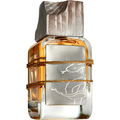
In the highly saturated perfume market, it is rare for a new launch to receive more than a month or two of attention. This is especially true when the fragrance does not come from one of the established houses, but is instead the first creation of a small niche company that has secured a once-great name: Lubin.

‘Idole de Lubin’ is such a fragrance.

Several factors helped ‘Idole de Lubin’ gain unusually large attention:

- a prominent, very successful perfumer, Olivia Giacobetti
- a magnificent bottle, Serge Mansau
- a very, very good fragrance, along with beautiful sources of inspiration
- a, albeit only nominal, connection to the old ‘Idole de Lubin’ from 1962 (which hardly anyone is likely to remember), serving as a bridge to the heritage of the house.

It was launched in 2005, labeled by the manufacturer and in relevant forums as a men's fragrance, which was somewhat nonsensical even then, as it can be worn by both women and men alike.
It was not truly innovative: fragrances featuring rum, spice and fruit notes, as well as exotic woods, had existed in abundance before. But it had something that very few fragrances possess: character, or more fashionably put: ‘personality’.

Since then, ‘Idole de Lubin’ has become a sort of iconic fragrance, one that many more people know than wear, and which serves almost as a founding myth for the revived house of Lubin. Today, Lubin cannot be imagined without ‘Idole’.
However, the first EdT version of the fragrance disappeared a few years after its launch, shortly after an EdP variant hit the market. The reasons for this were not entirely clear, but I suspect that one or another ingredient fell victim to the IFRA's regulations, and Lubin felt compelled to revise the fragrance according to the new guidelines. Fortunately, Olivia Giacobetti herself took on the task. The result was a slightly revised, yet overall quite identical version of her earlier fragrance.
Other much larger houses, such as Chanel, faced similar challenges during this time, leading many formerly developed Eau de Toilettes to mutate into Eau de Parfums without noticeably losing quality - at least in the case of Chanel, but also the fragrances from Patricia de Nicolaï, Etro, or indeed Lubin.

I still have a small sample of the original fragrance from 2005, but as is often the case with aged scent remnants: they only convey an unreliable impression of the once-experienced fragrance.
I do remember, however, that I wasn't particularly enthusiastic back then. Rum-spice fragrances, whether of Caribbean origin or located in the East Indian regions, did not appeal to me at all, and they still don't, although my preferences have become more diverse.
Recently, however, I came across the old ‘Idole’ sample again and sprayed a bit of the remaining residue on myself. It somewhat smelled like ‘Idole’, but it was changed enough that I realized: judging the fragrance based on this pitiful residue was impossible.
Shortly thereafter, I purchased the wonderful ‘Galaad’ and asked the saleswoman to fill me a little of ‘Idole’. Once home, I tested the filling and immediately thought: yes, this is ‘Idole’ as I knew it, as it has remained in my memory.

Differences from the old EdT may be noticed by those who still have a bottle with somewhat intact contents of the original. Unfortunately, I only have my sample remnants, which are simply unusable.
One thing is for sure about today’s EdP version: it is absolutely committed to the character of the old EdT and possesses the same aura. Some say the fragrance is now rounder, softer, while others lament exactly that and miss the edges and contours.
Similar comments are often made about ‘Sycomore’, but in the case of the Chanel fragrance, I can say that the new one is not worse than the old - a little changed, indeed softer and rounder, but that’s it.
If the new ‘Idole’ behaves qualitatively towards the old in the same way that the new ‘Sycomore’ EdP does towards the old EdT (which I suspect!), I can only say: Chapeau, the work was worth it! The EdP has good longevity, and the fruity-alcoholic, woody-smoky notes, as well as the bitter spiciness, are wonderfully intertwined.

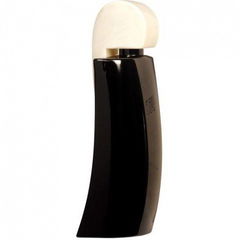
Unfortunately, ‘Idole’ is no longer in the great old bottle, inspired by African mask art, but in the almost equally beautiful new one, which the fragrance now shares with several others like ‘Korrigan’ or ‘Akkad’, and which always reminds me of a little man with braids, shouting forward.
Both bottles were designed by Serge Mansau, perhaps the greatest bottle designer the industry has ever seen.

However, one thing irritates me again: as much as the labeling of the old EdT as a men's fragrance was nonsense, the current designation of the EdP as a women's fragrance is equally incomprehensible. I can imagine, however, that ‘Idole’, in any version, is still worn more by men than by women, which does not mean that the fragrance tends to be more ‘masculine’. No, much like other unisex icons such as ‘Bandit’, ‘Eau Sauvage’ or the aforementioned ‘Sycomore’, ‘Idole’ defies any gender categorization. Only in terms of woods, bitter-aromatic spices (saffron, cumin & co.) and high-proof spirits, the gentlemen of creation are likely to be a bit quicker on the uptake.

Just a guess. The saleswoman in the perfumery referred to it, after she turned the bottle to decipher the key notes listed on a small handwritten label on the bottom, more as a men's fragrance. I disagreed and still had her wrap it up for me.

Today, I like ‘Idole de Lubin’ more than ever before, and a little bottle now adorns my already completely overcrowded shelf...

Have I mentioned that very few perfumes manage to become a scent icon?
I have.

5 Comments
Translated · Show originalShow translation
Modern Masterpiece
Quentin Bisch is one of the new shooting stars of the industry, and what you really have to give him credit for is that he is genuinely striving for his own, especially a modern signature. This is not always easy for someone like me, who has been shaped by the creations of the 70s and 80s when it comes to fragrances.
I can’t relate at all to heavily applauded scents like ‘Sauvage’ or ‘Aventus’, and when the word ‘Ambroxan’ appears in any fragrance pyramid, it’s already game over for me.

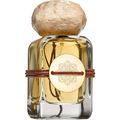
However, when I recently saw the first fragrance created by Bisch for Marc-Antoine Barrois called ‘B683’ in one of my favorite perfumeries, I had to test it - despite the dreaded word ‘Ambroxan’ in the description.
At first, I thought: Wow, a really great leather scent with a bearable modern touch, but then, after a good while, the disillusionment: Ambroxan! That cursed stuff that has ruined every fragrance for me and somehow makes everything smell like ‘Axe’... What a shame. (It’s not quite that bad, but more on that later.)

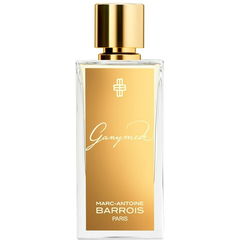
I picked up ‘Ganymede’ without much hope, sprayed a bit on a test strip, and thought: aha, this time it’s Calone.
Once home, I dug the strip out of my pocket again, smelled it once more, but the Calone had disappeared. Instead, suddenly: bitter-spicy saffron, a curry-like note, and light suede - I liked that!
The next day, I returned, sprayed some on my skin, and was instantly torn. Again, that Calone I’ve smelled a thousand times, which is described as either aquatic or ozonic and is supposed to evoke water, sea, spray, etc. - ‘Cool Water’ and its millions of descendants say hello!

Behind this watery-salty, airy aspect, fruity nuances soon emerge, underlined by an increasingly prominent light suede accord that somehow reminds me of my beloved suede Clarks from the late 70s...
Above all, however, the multifaceted, strict spiciness of the saffron dominates the center of the fragrance. In contrast to ‘B683’, this spicy-leathery accord does not tend towards a dark, earthy direction, but rather the smooth opposite. Here, everything is bright and well-ventilated.
After a while, a note of immortelle, which is no less complex in comparison to the saffron, slowly emerges from the shadows of the base, beautifully corresponding with its curry nuances to the slowly dissipating spice.
This straw flower accord has its own character, as it is crafted by Quentin Bisch without any sweetness (Annick Goutal’s ‘Sables’!) and exudes its gnarled, dust-dry, hay-like spice accord, along with the aforementioned curry references, for an infinitely long time.
Yes, the fragrance is indeed remarkably long-lasting, and I have already been approached multiple times about this immortelle note - mostly when I wasn’t even aware of it anymore.
At least from one person who approached me, I know he is a big fan of Corsica and loves the scent of the maquis.

Even the next morning, I can clearly detect the last traces of this straw-like dry flower, and unlike some other fragrances that are often allowed to fade much earlier because they have stressed me quite a bit, I am pleased in the case of ‘Ganymede’, as the fragrance does not strain me - at least not at any phase.

On the contrary. Quentin Bisch has created a wonderfully present yet not loud fragrance that takes on a beautiful three-act progression and is excellently calibrated. The ozonic beginning, the leathery-spicy middle, and the immortelle finish merge perfectly into a truly well and carefully composed fragrance.
Both ‘Ganymede’ and ‘B683’ are thoroughly modern works. ‘B683’ may still have certain references to the great leather heroes of the past, especially to ‘Knize Ten’ and ‘Cabochard’, but with ‘Ganymede’, I find these references no longer, or only to a very small extent. The already mentioned ‘Sables’ comes to mind, but only because of the prominent immortelle note; otherwise, the overlaps are rather limited. Or the also old ‘Eau de Monsieur’ from Annick Goutal from the 80s, which was much too classic ‘Eau’, yet still had a similarly dominant straw flower accord in the base.

No, ‘Ganymede’ is, in my opinion, a small modern masterpiece that perhaps excites me precisely because I had almost lost faith in the capabilities of modern perfumery.
But lo and behold, it is still possible!

I also like the name: ‘Ganymede’, the largest moon of Jupiter, under whose icy surface a huge saltwater ocean is said to be hidden. This saltwater aspect can also be found in the fragrance, as well as the maquis-scented coastal air of Crete, whose inhabitants are said to be linked to the legend of Ganymede and Zeus as a couple, which legitimized love between men in antiquity.
‘B683’, which borrowed its fantasy planet from ‘The Little Prince’ by Saint-Exupery, represents Jupiter/Zeus, and Ganymede is the moon of Jupiter, or the lover of Zeus...
Wonderfully intertwined sources of inspiration, right?!

A little addition: the spray mechanism is fantastic! In the 70s, instead of ‘vaporisers’, there were so-called ‘atomisers’ that finely misted the fragrance. The spray mechanism of Barrois’ fragrances reminds me of these ‘atomisers’. However, this time, the fragrance, atomized into the smallest particles, actually reaches the skin and doesn’t disperse in all directions.
7 Comments
61 - 65 by 289