Translated · Show originalShow translation
An olfactory chapter from the faded pages of a forgotten travel journal of time
Some fragrances tell their story not in individual notes, but in moods - like an old house, whose soul only slowly reveals itself when one lingers long enough in its quiet rooms.
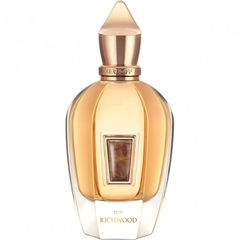
Such is the case with Richwood.
Even the first breath possesses that peculiar clarity of an early morning in a grand manor, somewhere between Italian hills and the last foothills of the Orient. The bergamot rises like cold sunlight on bright natural stone - fine, aristocratic, and of almost silver elegance. Next to it lies the delicate bitterness of grapefruit, which lends the opening a light and cultivated quality, like the fresh morning air gliding through half-open windows over dark parquet.
Yet hidden beneath this initial brightness already rests a deeper warmth.
The buds of blackcurrant carry something green, almost mysterious within them. Not a loud fruity note, but rather the memory of damp gardens after summer rain, of crushed leaves between the fingers of a traveler wandering through the quiet avenues of an old estate in the early morning. The mandarin peel, in turn, only glimmers briefly - like the golden light of a past afternoon, caught for a few moments on polished wood before the evening slowly lets everything sink into softer shadows.
And then the heart of Richwood begins to speak.
The Rose Absolute does not appear like a young bloom, but rather like the faded elegance of old roses in stately gardens, whose beauty is deeply touched precisely by its transience. It is not an opulent or sweet rose. Rather, it possesses that melancholic nobility of old letters and yellowed photographs - soft, dignified, and almost sorrowfully beautiful. The rose geranium leaf lends it a green, aristocratic freshness, reminiscent of the scent of heavy curtains that have carried the warm air of large rooms for decades.
But the true soul of Richwood reveals itself only in the slow transition to the base.
There, patchouli begins to unfold its complete beauty. Not dark or earthy in the usual sense, but soft like aged cashmere and deep like the wood of old libraries. It smells of leather cases, of travel journals, of quiet winter nights, where only the soft crackling of a fire and the warm scent of old books fill the room.
Labdanum rises beneath it like warm amber smoke. It brings forth that balsamic depth that gives Richwood its almost sacred atmosphere - as if in distant rooms, resins slowly melt on glowing coals, while outside rain beats against tall windows.
Musk finally lays itself like an invisible warmth over everything. Not animalistic, but soft like skin under fine fabric, like the calm of a man who has learned that true elegance need never be loud. Amber gifts the fragrance its amber light - warm, golden, and full of quiet memories - while coumarin and vanilla in the background create an almost melancholic sweetness. Not a modern gourmand sweetness, but the delicate warmth of old wooden cabinets, where spices, tobacco, and letters have been kept for decades.
And therein lies the greatness of Richwood.
The fragrance does not develop linearly. It lives rather like a long evening in an old manor. Initially cool and distant like the last remnants of daylight on stone. Then slowly warmer, softer, and more intimate, until finally only a deep veil of wood, amber, vanilla, and memory remains.
In the end, Richwood no longer smells like a perfume.
But like the soul of a cultivated life -
full of beauty, transience, and that quiet wisdom that only time itself can bestow.