Translated · Show originalShow translation
Celtic Warriors in Art Class (My Highlights 2017 2/3)
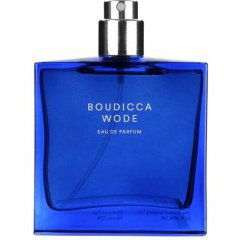
Looking back at the fragrances that impressed me the most in 2017, the least surprising among the three is probably "Wode": according to previous comments, an animalistic beast by Geza Schön. I can relate a lot to his typical style. The transparency. The confident, elegant brushstroke, without being heavy-handed. In contrast to the often somewhat overly Apollonian perfumes of Jean-Claude Ellena, this one is cool and casual. What I hadn't encountered from Geza before is a dense, animalistic creation. Now, I do have a weakness for animalistic perfumes. It may be desensitization, but I usually find perfumes that make many scream and run away at the mention of secretions, excretions, or excrement to be interesting rather than off-putting.
So how animalistic is "Wode"? Too animalistic? And does Geza Schön's transparent style work with a lot of animal notes? So I approached the scent from the base - and the comment is structured accordingly, from base to heart to top. Although - "Wode" does not show a clear progression and everything is always detectable. Only the proportions shift slightly.
So: too animalistic? Not at all. Resinous and dense, a lot of styrax and labdanum. Animalistic? For me, just a little. I would say: human. It is very deep, without really being in danger of sliding away. This effect of depth, which is simultaneously elevated (I can't describe it better), I often find in perfumes with a lot of castoreum. I perceive this as hardly animalistic, which probably explains the different perceptions of the extent of animal scents.
An important element of "Wode" is the tuberose, and not an overwhelmingly sweet, otherwise rather nice Gabrielasabatinigabriellechanelletuberose, but a TUBEROSE. For me, tuberose is the hardly controllable, almost grotesquely exaggerated white flower: sweeter and gum-like than orange blossom, indolic-animalistic than jasmine, with the thick, creamy quality of the white flower almost resembling raw meat. Additionally, it is green, woody, and reminiscent of car tire rubber. One can tone down tuberose, simply leaving the playing field ("Fracas") or set contrasts ("XPEC Original"). Or one can take all aspects of tuberose to represent something entirely different.
And so we come to the actual central scent impression of "Wode": color. At first, I thought of oil paint. Dispersion paint? No, not quite. But rather white paint: the tubes that were part of the watercolor sets from my school days. Although art class was truly not my favorite subject, I quite like the smell: pleasantly synthetic. Sweet and fresh at the same time. Looking at the pyramid, I suspect that the rubbery aspects of the tuberose (i.e., car tires and chewing gum) combined with medicinal angelica and a few other elements create this impression. The other aspects of the tuberose then overlap with the resinous-woody-animalistic base, without the pronounced floral and sweetness being noticeable at all. "Wode" is a perfume with a lot of tuberose. But it is not a tuberose scent, precisely because it is merely a means to an end here.
In summary, I smell color plus resinous base. And the impression hardly changes over hours. Is this color impression intentional, or am I just smelling this?
I think the former. Julius Caesar himself confirms my impression in his writings about the Britons in "De Bello Gallico": "(…) omnes vero se Britanni vitro inficiunt, quod caeruleum efficit colorem, (…)" ("(…) All Britons indeed dye themselves with woad, which gives them a blue-green color, making them look all the more fearsome in battle; (…)"). Vitrum, in German dye woad, Celtic Woad, anglicized Wode, was widely used from antiquity to the Middle Ages. A blue-violet dye was obtained from it through fermentation with the addition of urine (animal, castoreum, see above!). This was certainly the blue dye for linen, but it was also suitable as a wood preservative for interiors. The use for body painting is not secured, as there are hardly any sources other than Caesar. However, this did not stop either Antoine Fuqua in "King Arthur" or Mel Gibson in "Braveheart" from sending Celts - whether Britons in the 5th or Scots in the 13th century - into battle painted blue. If we believe Caesar, then the British army led by Boudicca or Boadicea, which dared to revolt against the Roman occupation in 60 and 61 AD, would also have gone into battle painted blue. And probably wouldn't have smelled like they had just showered.
When "Wode" was released in 2008, color and dyeing were the central themes of the presentation: a bottle in the shape of a spray can, the variant "Wode - Paint" infused with a blue dye that only faded on the skin after some time. And Geza Schön would not be Geza Schön if he had not translated this olfactorily into a scent that does not have to correspond to dye woad but is universally associated with the impression of "color." I think he succeeded very well in this.
Can one even wear such a perfume? Yes, absolutely. It is very unusual, but it is not exhausting, and Geza Schön seems to have a knack for making conceptual fragrances usable as normal perfumes ("Paper Passion," for example).
Just be brave. And open-minded.