Log in

Siebter

Siebter

Reviews
1 - 5 by 49
Siebter 9 years ago 37 12
Translated · Show originalShow translation
Moldy, but Friendly
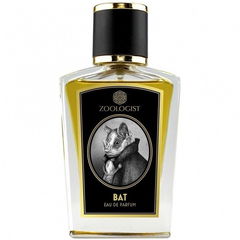
Although Zoologist has only been on the market for a few years and until recently, one could only access testing opportunities with moderate effort or the friendly support of the Parfumo community, this brand has become one of my favorites, especially since the second wave of releases. Bat plays a crucial role in this, because, let me clarify right from the start, this fragrance is truly avant-garde.

It is not unusual for scientists to find their way into perfumery through roundabout paths, but in the case of Ellen Covey, it should be mentioned that she is a renowned bat researcher who has written numerous articles on the subject (particularly about the complex echolocation system of bats) and has crawled around in bat caves in the jungles of Jamaica for her research. Additionally, she has already released several dozen fragrances with her brand Olympic Orchids. Regarding Bat, I find these are quite fortunate coincidences. Moreover, she also teaches psychology at the University of Washington and runs a professional orchid nursery.

From the very beginning, Bat eliminates any attempt to categorize it. Turbulent and very moist, heavy and dark earth rolls in, and within a few seconds, the humidity rises to one hundred percent. Following the bass-heavy opening is the tangible impression of a slowly settling mass of earth, very enveloping and dominant. However, a clear contrast is set with a rather bright and sweet banana, making it initially difficult to shift attention away from this alien and quite moldy earthiness. One should be prepared for that.

Bat is a room-filler, provocative, demanding, and dark. However, it is not gloomy or grim; quite the opposite. The banana soon transforms into a mango-like fruit mash, making the fragrance appear warm and friendly along with the consistently high humidity. Ellen Covey mentions in an interview that certain species of bats resemble hummingbirds in their behavior and diet, thus occupying the same niche at night as hummingbirds do during the day - in fact, I find that the fruity mash aspects of Bat have parallels to the nectar-like fruitiness of Hummingbird from the same brand. The interplay of tropical fruits and moist earth remains dominant for the next few hours; nevertheless, Bat is an extremely evolving fragrance: beetroot-like roots weave through the earth, the air becomes more mineral and cooler, and the fruit component fluctuates greatly. Over time, Bat becomes increasingly calm and rounded, the atmosphere shaped by contrasts such as moist and mineral, warm and cool, earthy and fruity. It seems to me like a love ode to bat life, an attempt to explain why it is cool to be a bat.

Bat is avant-garde for a very specific reason: it contains a very high dose of geosmin. Geosmin is rarely found in note pyramids; the Parfumo database knows only two fragrances with this substance, plus five more if you search for "petrichor," which refers to the aroma in the air after a rain shower; geosmin is a key component of this scent impression. I suspect that The Smell of Weather Turning by Lush (in small amounts) and Coven by Andrea Maack (in somewhat higher dosage) also contain geosmin. It is also found in earth and mold, the moldy-green aroma that rises from compost bins or heaps, that is geosmin. And Bat contains a lot of it.

I liked Bat from the very beginning, although the association with mold stands out very strongly for me. Even patchouli seems like a choirboy compared to this archaic and grumbling earthiness. My brother associated it with a paper test as moldy banana. Bat is not office-friendly: colleagues asked me if I had just been "somewhere" or if something "weird" was lying around - the hint that the fragrance causing the irritation is actually a perfume led to lasting head-shaking. However, one (moderately perfume-affine) colleague was so taken with Bat that I have to bring her a sample soon.

I find Bat wonderful on my girlfriend. This fragrance creates an authentic tropical atmosphere entirely without leafy or floral components, warm, exotic, and also sensual. Extremely present and thus an entertaining protagonist. It is fun to discuss it. It is nice to hug someone who wears Bat.

But as I said: one should be prepared for it. Geosmin has an extremely low perception threshold. The 25% perfume oil content that Bat actually indicates as an extrait impregnates clothing for days and weeks, causing the fragrance to unexpectedly reappear. To understand it or even be ready to approach it, knowledge of its context is necessary. This fact does not speak against this fragrance for me at all, because once its context is known, a comprehensive and consistently implemented palette of images and moods reveals itself. However, its presence forces the surroundings of the wearer to engage with it. In contrast, the hardly fulfillable task of explaining the concept of a Canadian indie house brand to every fellow passenger on the subway or the fact that it is actually a perfume. One should be able to accept irritation.

Irritation should not stand for disgust here; I was able to evoke a variety of reactions with Bat, but no one felt immediately repulsed, with wonder and interest always prevailing. Over time, Bat becomes quite wearable, softer, resinous, and increasingly rounded. The humid, sultry fruit mashiness feels warm, relaxing, and compact, the mineral earthiness unusually clean and airy, the beautiful contrasts make the fragrance dynamic and interesting. As difficult as this fragrance is to handle, I do not see it as mere play or conceptual art.
12 Comments
Siebter 9 years ago 50 5
Translated · Show originalShow translation
Retrospective Utopia (just an inspiring working title)
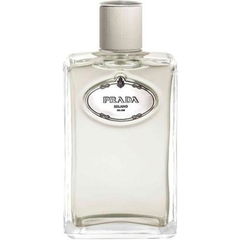
In my perfume development, Infusion d'Homme represents a milestone, that much is clear. I became aware of it through the YouTuber Kristo, who significantly shaped my perception long before Parfumo; Id'H was for a long time his favorite (designer) scent. I was impressed by how enthusiastically he described it, while at the same time conveying the impression that he would prefer to keep it to himself. Even more fascinating to me was the question of how something so seemingly simple and classic could score so highly with him, as Kristo's preferences were predominantly focused on darker, angular, and peculiar fragrances back then.

About a year ago, Kristo humorously yet solemnly buried his empty Id'H bottle in a blue plastic trash can, both as a sign of his gratitude and as a symbol of his olfactory evolution. Id'H still plays a significant role for me. The first cautious 50ml bottle was soon followed by a 400ml splash bottle along with aftershave balm, shower gel, two bars of soap, and a pretty funnel with the Prada logo, thanks to the blessings of the gray market at a price that was only slightly above that of the first bottle. The large supply invited lavish use. Not only do I wear this scent more often than any other, but I also regularly use it to scent my bed linens or to refresh musty jackets and scarves. For a while, I had the habit of spraying my window curtains completely with Id'H, as it smells in an abstract way as if the window were open and outside it were a rainy spring day. The two bars of soap scented my T-shirt drawer for about three years. I have never opened the surrounding noble paper with the pretty Prada ribbon; I would first need to procure a suitable dish.

Soap is an important fundamental theme in this fragrance, and if you have even the slightest vague idea of a classic piece of French soap, and this idea is refined by me to specify that it is an exceptionally expensive piece of soap, then you are probably very close. Added to this is the scent of a loved one's skin shortly after a thorough shower and drying, a fresh shirt just put on, and white bed linens that are still slightly damp, steaming in the sunlight. That's pretty much it. Id'H does have a somewhat distinct opening, a bit brighter and, with good will, perhaps a bit citrusy compared to the rest; otherwise, it oscillates around the mentioned reference points for many hours, emphasizing the soap at times, the fresh shirt at others, depending on the weather, wearing situation, and the day's olfactory perception.

For a long time, I found the pyramid of Id'H to be an inaccessible puzzle, initially simply due to a lack of experience with individual notes. To this day, however, no note appears to be unequivocally graspable at any time; if at all, I only recognize it very indirectly - yet its ingredients are all among those I particularly like; neroli, frankincense, benzoin, cedar, orris root, this is almost too obvious a recipe for a fragrance for me. Interesting learning effects arose for me through the use of the various supplementary products, which emphasize certain aspects of the scent more strongly. The aftershave balm shows what role benzoin plays in Id'H; it is sweet, almost gourmand. The shower gel primarily highlights the fresh and crisp qualities with vetiver, neroli, and iris. However, with the EdT, these specific associations are still overshadowed by the seamless blending of all elements. Id'H embodies for me the state of absolute perfection, whose harmony is only occasionally gently interrupted by a single protagonist glowing a bit brighter than the others.

"Perfection" is a big word, but even after using around half a liter of Id'H, this impression has not diminished. This fragrance tells of a perfect parallel universe. It is bright and radiant, yet absolutely serene, filled with its sublimity. Like a deep breath with closed eyes. Its fundamental approach is, however, decidedly universal; a floral soap scent for men may have once been an interesting concept within the perfume industry, but the fragrance itself never surprises at any point. It only alludes to things we know, and depending on one's expectations, one might even attribute a tendency towards arbitrariness to it. My girlfriend, for example, would probably point out that there are certainly at least more impressive fragrances in my collection.

For me, Id'H is a very classic fragrance, but it manages to not come across as traditional or even old-fashioned; its surreal yet subtle aura derives from a delicate balance of warmth and clarity, while its references create a sense of familiarity - surprising moments or even the intention to impress someone would destroy this atmosphere.

Id'H not only accepts not being perceived as a perfume, it almost intentionally eludes this categorization. Nevertheless, it strikes me as luxurious, sublime, and almost in a pleasantly utopian way.
5 Comments
Siebter 10 years ago 48 7
Translated · Show originalShow translation
For here.
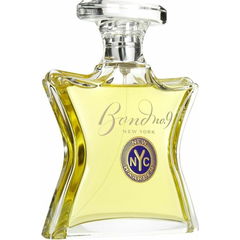
I believe I should clarify first that I got this perfume for almost nothing. When I tested New Haarlem in a perfumery nearly four years ago (for the umpteenth time), a salesperson pointed out to me that the scent was unfortunately out of stock and would also be discontinued by Bond No.9. Instead of starting a "That's not true!" discussion, I quickly switched gears and coldly pointed out that he could sell me the tester since it wouldn’t serve any meaningful purpose in the store anymore. He could. The funny thing is: I actually wanted to buy a bottle of NH at the regular price that day (a price I wouldn’t even be willing to pay close to today, for any perfume at all), instead, I put two or three small bills into a coffee fund for a well half-full bottle.

I share this because I believe it makes a difference. When the selling price pushes itself so prominently to the forefront as it does with Bond No.9, it also plays a role in using and experiencing a scent, and in my experience, never in a positive way. I, on the other hand, could splash NH as if it were Eau Dynamisante. Theoretically, at least. The spray head is stingy, yet the force and density increase exponentially with each spray.

Describing NH is actually not difficult, but the more one tries to explain these clear impressions, the more complicated it becomes. I’ll keep it simple at first - what you need to imagine are wooden benches, French toast with lots of maple syrup, and a very dense and dark coffee scent. Everyone knows a scent blend like this to some extent, but the exact formulation is widely varied, especially as it is subject to regional differences. The coffeehouse chain Starbucks has achieved international recognition in this regard; "starbucksy" is a handy adjective when you want to describe a certain type of dark, sweet, vanilla- or amber-heavy perfumes. NH is quite American, but by no means starbucksy; for the most part, it is very warm, but just after spraying, a metallic, almost tinny note resonates in the background. The coffee is not just black, but bitter and spicy, and it takes a little while for this roughness to settle. Elsewhere, the note is described as burnt coffee grounds in a cold thermos, and I can relate to that quite well.

NH is a rather coffee-heavy scent, but this note is not particularly authentic. Taken on its own, it consists mainly of very spicy, bitter, black tendrils, like those rising from a hot espresso. But as I said, the somewhat harsh opening settles down. More prominent is the maple syrup, which soon envelops the bitter darkness of the coffee. I have never been able to detect vanilla in NH, but with the maple syrup, I smell the vibe of fresh waffles with powdered sugar, crêpes, and pancakes.

No question, NH is sweet. In contrast to most other gourmand fragrances, however, the sweet elements are extremely countered - once I wore NH and asked my girlfriend to guess what I was wearing. She guessed Annick Goutal's Sables, which we had tested on paper the day before and whose curry-colored spiciness we liked very much. I was initially quite surprised, as there seemed to be no parallels between these scents, but upon closer sniffing, it became clear to me that there must be a lot of immortelle in NH (the central note in Sables). The lavender note is controversially discussed; it is also a contrast to the heavy sweetness, although rather quiet and for me, depending on the dosage, sometimes not directly perceivable. It is often criticized that this lavender has a somewhat shower gel-like quality, and at least I can confirm that this is not a particularly enchanting and certainly not a natural lavender.

NH is a very scenically and authentically appearing scent, but not photorealistic. It is typical that I, for example, try to delve deeper into the coffee and end up with the immortelle. With the exception of the maple syrup, all essential elements are only cited in partial aspects. If these elements were fully played out, perhaps a more pleasing scent would emerge, but it would also be more Disney-like. Moreover, this would come at the expense of interesting contrasts. Although this scent is clearly dark, all elements are strongly separated from each other, which is why, for example, the coffee never seems sweet and the crêpes never seem bitter.

Briefly, I want to touch on Rochas Man, which is interesting for comparison because Maurice Roucel tackled the same theme with roughly the same ingredients four years before the release of NH. Rochas Man is significantly idealized and thus on one hand less harsh, but on the other hand also less authentic. However, it is also significantly more wearable, as it does not set the mood as sustainably as NH. At times, both are quite similar, but Rochas Man is sweeter, the lavender is woven in much softer, the coffee is quiet and milky, the vanilla more pronounced with an overall subdued performance (and also a bit of raspberry). Which scent one prefers is a matter of taste, but the relatively rare comparison of two quite different variations of the same theme is very interesting.

Maurice Roucel is a very scenically, at times dramatically composing perfumer who creates fantastic things from good raw materials, but he is not concerned with the raw materials or their quality, but with images and scenes. NH is not an exclusively beautiful scent, but it is pictorial. With abstract hints, a mood is created here that seems very real to me; the scent of a real coffeehouse, of any kind, does not consist solely of freshly ground coffee, cake, and pancakes in their ideal forms, but also, for example, of the cigarette smoke from the smoking corner or the wet coat of the man at the next table. Just as an example. This does not mean it has to smell unpleasant. When you sit in a coffeehouse, you don’t wrinkle your nose every time a little whiff of perhaps rather cheap lavender shower gel wafts over from the server. It’s just part of it.

Despite its apparent disharmonies, NH is a scent with a distinctive feel-good atmosphere, warm, toasted, and amber-colored. Moreover, it is very loud; it is not possible to dose it in such a way that it does not color the mood around you and provoke reactions or at least a thorough acknowledgment. This makes it an interesting tool. Ultimately, every scent is a statement, but NH not only suggests a certain attitude or mood, it simultaneously embodies it. Everyone understands what kind of mood the wearer means: laid back, relaxed, surrendering to sensuality with open senses. Anyone wearing NH to a job interview shouldn't be surprised (though, of course, it depends on the job). However, NH is by no means a soothing or romantic scent; it carries a lot of urban hustle and neon light within it, the hustle of a pedestrian zone in pouring rain, whose bustle and blinking you observe through the glass window of your favorite café.

7 Comments
Siebter 10 years ago 23 7
Translated · Show originalShow translation
Something Completely Different
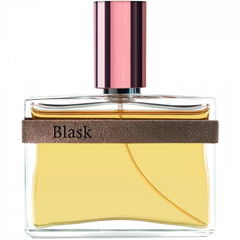
Since Blask is not an easy scent to describe, I want to briefly illuminate the processes at H&G: Sebastian Fischenich and Tobias Mueksch (whose grandmothers were named Humiecki and Graef, hence the brand name) are not perfumers themselves. Initially, there are images that are meant to evoke certain feelings - in the case of Blask, the feeling of trust through the images of red wine, laurel, and gray hair, as I gleaned with a slight shudder from an interview with Fischenich and Mueksch. However, these initial images should not be understood as immediate notes, even though at least laurel and red wine could probably be represented quite accurately. With the perfumers Christophe Laudamiel and Christophe Hornetz, as further explained in the interview, there is initially no exchange about specific notes; instead, they intuitively approach these emotional images together. This means that in the end, it does not matter how exactly the individual images are translated into notes. What matters is how well the feeling is captured.

The note pyramid of Blask reads as fundamentally comprehensible, and I find it very accurate. Nevertheless, I recommend not taking it too seriously; what is meant by walnut or laurel can be easily recognized, but neither is directly perceivable. You can also immediately see which components are meant to convey the idea of red wine, but there is by no means a natural red wine note to be detected. These are images.

The scent begins with a not easily graspable fruity sound: every time I initially think of a fermented red-green apple that has retained its freshness and brightness despite its advanced age. Wrinkled, yet crisp and juicy. This sound soon becomes deeper and darker, resembling apricot brandy or plum must. Through this dark plum must, dark red walnut shell dust shimmers, dry and spicy. There is a dominant nutty element in Blask, which I do not recognize as walnut, but rather as chestnut. The interesting thing about this chestnut is that it emits a strange light that illuminates all the other players of Blask - a mossy green, soft light, quite foreign in appearance.

Aside from this strange light, all elements seem familiar to me. Blask has a slightly gourmand quality; fruit, chestnut, walnut shell, a delicate booziness, and a hint of clove are also present. Above all, Blask is a woody and dry perfume; the walnut shell may even be the actual main player, although it is not found too far in the foreground, as there is a lot happening around it. What makes this scent so complex is the following: a concrete note impression, for example walnut, arises from walnut shell and chestnut. Once the abstract walnut has manifested, it begins to interact with the other notes, for example with the floral aspects of Blask - primarily, it seems to me to be violet, which in turn, together with the walnut, becomes an abstract apricot. This then tints the chestnut into a pleasantly bitter leather note.

This merging of notes occurs softly but continuously. The scent, despite its woody calmness, therefore feels very playful and dynamic, never sluggish or settled. Moreover, Blask is not a quiet scent; it engages with your environment through its strong presence and longevity. It is very original, undoubtedly easy to pick out from hundreds of others, even by untrained noses. Despite its distinctly pronounced character, I do not find Blask demanding, as its dark, slightly dusty timbre feels immediately soothing to me.

My girlfriend seems to quite like Blask, although she also finds it "exhausting." This is very far from my perception (see above), but I can understand it, as well as impressions of "slight discomfort" and "strangeness" (Taurus' or Sisyphos' comment). Blask attempts to represent the feeling of trust, so it is a bit tragic that the necessary new concepts evoke alienation. Perhaps it is coincidental whether this scent feels familiar or foreign. Without being able to conjure anecdotes from it, I can say that walnut, red wine, leather, and green horse chestnuts played a certain role in my childhood.

Blask also strikes me as quirky, yet calm and self-assured. For several months now, it has been slipping onto my wish list from time to time, as I actually wish for a bottle of it after having nearly emptied a decant in quite a short time. Its contrast of resinous spice and playful fruit touches me pleasantly and personally. It is an unusually intimate perfume. But this contrast between my perception and the perception of others poses problems for me, especially since I truly understand them. If one is not immediately captivated by the impressions, there likely remains little more than a rigid conceptual framework.
7 Comments
Siebter 10 years ago 10 5
Translated · Show originalShow translation
The Rose in the Ashtray
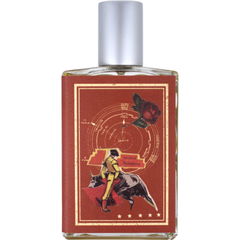
Blood is discussed quite controversially here and in other areas of the perfume online community, even evoking disgust and the question of whether this perfume is meant to be taken seriously at all. To make matters worse, the somewhat sensitive topic of bullfighting comes into play, which naturally makes any person with honor stomp their foot in anger - to top it off, the note list actually includes bull's blood as a rather untrustworthy ingredient.

I am a long-time vegetarian with a deep-seated aversion to anything bloody; just the thought of it makes me feel queasy, so it is perhaps remarkable that I actually find Blood really great. Undoubtedly, this scent plays with notes that are nowadays or generally rather avoided, such as animalistic, ashy, or medicinal accords, whose interpretation indeed leans more towards authenticity and is hardly softened.

However, I perceive blood only as an abstract idea, stemming from the very central rose in this fragrance. It is already very present at the start, dark red, earthy, and dusty, definitely musty - a noble rose that has carelessly dried up in the arena dust sprinkled with a bit of bull urine. It is a bit bloody because it has a strong metallic, more precisely: coppery aura, but it is also dry, dense, and aromatic like red wine. The context is, as people with a narrow cultural horizon like to say, "a matter of taste," but the rose itself is beautiful and sublime.

I was previously unfamiliar with costus root, although it is quite common in perfumes, such as in Serge Lutens' Muscs Koublaï Khän and surprisingly in Vierges et Toreros by Etat Libre d'Orange, also a scent with a bullfighting theme. Interestingly, costus root is used as a pain reliever. It gives Blood a medicinal dustiness with an iris root-like texture as it transitions into the heart phase, and over time, it vividly evokes the smell of dry earth and shimmering dust in sunlight. Admittedly: that is special. But also beautiful, especially since this shimmering dust creates an exceptionally good backdrop for the rose, which becomes denser, deeper, and more tangible.

After about half an hour, the rose is surrounded by a very ashy tobacco note, and I don’t mean romantic campfire ash, but cold ashtray ash, albeit paired with a delicate honey sweetness - a certain nonchalance emerges; Blood is never a tense scent, as the theme might suggest. Despite all its angularity, it feels like someone who just wants to do their own thing. However, this coolness never comes across as static or withdrawn.

This is mainly because Blood continuously transforms throughout its course, thus remaining interesting. Only after about three to four hours does dark, moist patchouli laced with silvery threads emerge. The animalistic component of the rose has unexpectedly disappeared, but its dusty and red wine-like vibe remains dominant. At this stage, the contrasts that define this fragrance seem most pronounced: Blood is both dense and light, moist and dusty - ugly and beautiful.

Blood slowly fades from the sixth hour onwards, comparatively harmless, one might say. A bit of rose patchouli with gentle yet physical musk, along with some dry earth and sand, all very close to the skin. All in all, Blood has absolutely convinced me. The perfumes from Imaginary Authors are particularly characterized by a masterfully staged narrative progression, which, although strongly enhanced by the refined and allusive presentation, primarily derives from the fragrances themselves. For me, it works really well. Above all, however, Bull's Blood shows me one of the most beautiful roses I have ever experienced. So beautiful that neither bull urine, burning sun, nor cigarette ash can harm it.
5 Comments
1 - 5 by 49