

 Top Notes
  Rose
Rose Bergamot
 Lemon
Lemon Orange
 Heart Notes
  Chocolate
 Strawberry
 Heliotrope
 Patchouli
 Quantified Thumbprint
 Base Notes
  Oud
Oud Vanilla
 Labdanum
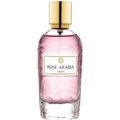
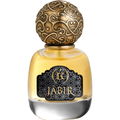
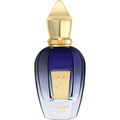

Parfümlein
124 Reviews
Translated · Show original

Parfümlein
Top Review
30
Byzantine Paradise
Among the very few, chosen fragrances that I would never willingly give up is “Aurum.” Frau Holle has already written here: “Aurum” provides a glimpse into paradise. I don’t know if Frau Holle realized how right she was with her enthusiastic statement - but since we are already in the realm of fairy tale figures, let a nearly fairy-tale, certainly legendary episode from history take over the proof:
When Emperor Leo III, born around 680, was about 45 years old, he experienced without any warning a natural disaster of apocalyptic proportions in the year 726 or a little later: Santorini erupted, causing the sea to tremble in a terrible way and enveloping the Aegean in darkness for several days. This traumatic event left open questions in the Byzantine emperor: “Why is it suddenly so dark?”, “What have we done to anger God?”, and presumably, in a medieval manner, he concluded according to the principle of ‘reflective punishment’, illustrated in many fine shades by Dante as “Contrappasso” in his “Inferno,” that “not being able to see” must necessarily be the consequence of “having seen too much.” But what had he seen too much of?
His answer was as simple as it was terrifying: God.
His consequence was terrifyingly simple: He had the great Christ icon removed from a gate of his palace in Constantinople to appease God and henceforth content himself with the mere idea of the Pantocrator.
His idea that a non-orthodox practice of religion could be responsible for the unleashed natural force triggered a phase of war and persecution that would go down in history as the “Byzantine Iconoclasm.” It took several councils and over a hundred years of persecution of the weaker side to finally end the violent disputes between iconodules (the lovers of images of God) and iconoclasts (those who denied any representation of the Most High as sin).
What exactly happened during these years between 726 and 843 (the year of the decree for the restoration of images issued by Theodora, the ruling widow of Emperor Theophilos) falls, like so much that occurred in the dark centuries, into the realm of imagination and legend, just as the trigger of the dispute is primarily legendary. However, what remains from this dispute is known to anyone who has ever seen a Byzantine or Byzantine-style painted icon: the radiant gold background that allows no earthly representation of the environment surrounding the icon (the “image” of the divine). This radiant gold background, which, through the application of gold leaf, breaks the light at hundreds of small points due to the resulting unevenness and thus shimmers - a principle that has been utilized in the always plastically designed, halo-like forms that detach from the background image - this gold background symbolizes the afterlife, the incomprehensible and unimaginable paradise that only opens to earthly wanderers when they pass through the gate to the afterlife forever. The shimmering gold also symbolizes the divine light, the eternal radiance that embodies and glorifies the majesty of the Pantocrator and illuminated the darkness of the world.
Gold - the color of the divine, the color of paradise. Golden paradise. Aurum. This perfect balance of the individual notes: This is how paradise must smell.
“Aurum” begins for me, unlike for most others, with the rose. This may be because my bottle is already about two years old and the “storm” that actually unfolds in this small, fantastic, heavy “water glass” has since calmed down a bit. The rose has, as its lightness demands, made its way to the surface and unfolds with the finest misty spray from a perfect spray head, which I only know from Penhaligon’s, a deep, multifaceted hint of a fully blooming rose garden.
The fine powderiness that surrounds the petals soaked with intense essential oil resembles the many layers of gold leaf on an icon or the many layers of puff pastry, separated by the butter that evaporates under heat - so layered and complex are the powder and rose nuances interwoven. Into this weave, from the very first moment, a gentle, completely non-animalistic oud note mixes, transforming the garden rose into a dark, velvety oriental rose, adding sweetness and a golden, Byzantine-like shimmer. Perhaps the fragrance is indeed called “Aurum” because it repeatedly evokes images of the Orient, Byzantine decorative elements, highly complex gold embroideries on purple velvet, finely chiseled golden earrings with tiny pearls, golden thrones, and golden icons. Worthy of a Theophanu or a Theodora.
Like the many fine layers of gold leaf on an icon, the oud rose unfolds between the finest, only gently perceptible fruity notes: sweet oranges, zesty lemons, and full-bodied strawberries. None of these fruits takes the lead at any phase of the fragrance. They are merely fruity splashes that reveal themselves for seconds between rose and oud, thus bringing the fragrance to sparkle: While rose and oud signify the image, the mimesis of the divine and at the same time their inaccessibility through complete immobility, the fruity tones in “Aurum” embody the golden background of the image, mobile, shimmering, describing paradise. Speaking of “paradise”: chocolate. Heavy dark cocoa sweetness, yet so fine, so delicately applied that the heaviness is only hinted at. It only reveals itself in a later phase of the fragrance when the rose gradually becomes fainter and makes way for a completely soft sweetness. Only then do the finest vanilla wafts float through the air, never solitary, always interwoven with oud, fruit, and cocoa. And because the rose is weaker here, but the fragrance should not lose itself in childish sweetness - anyway, Aurum is never, truly never TOO sweet - labdanum sets in here, replacing the pure rose at the end with delicate honey notes in an earthy resinousness.
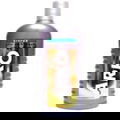
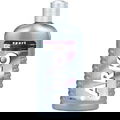
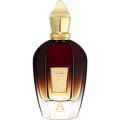
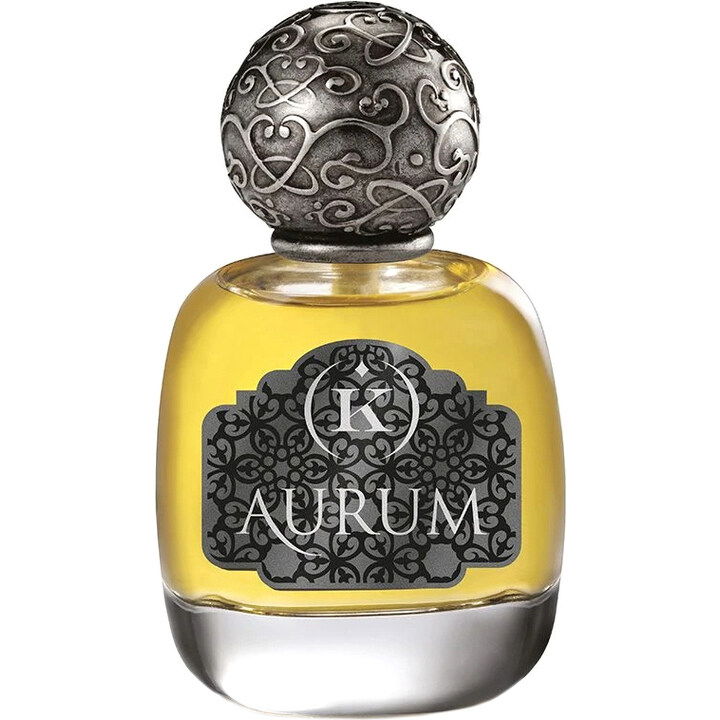
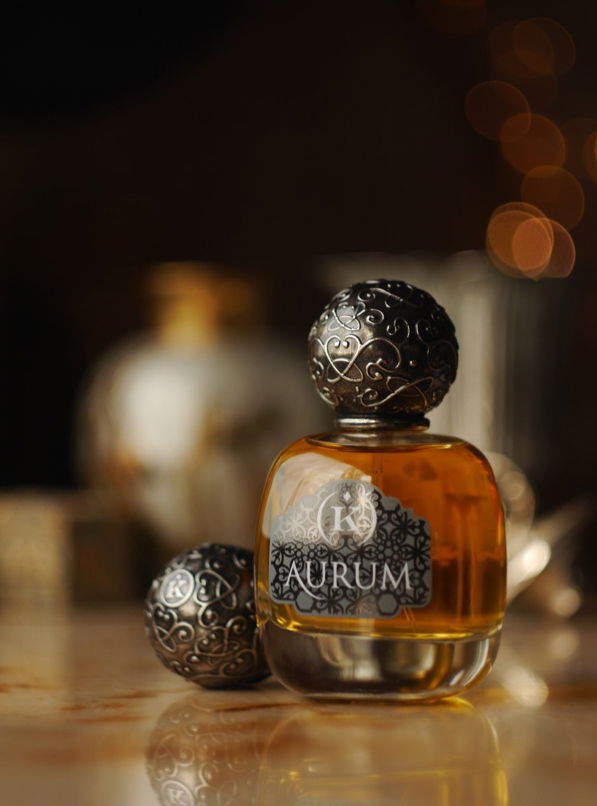
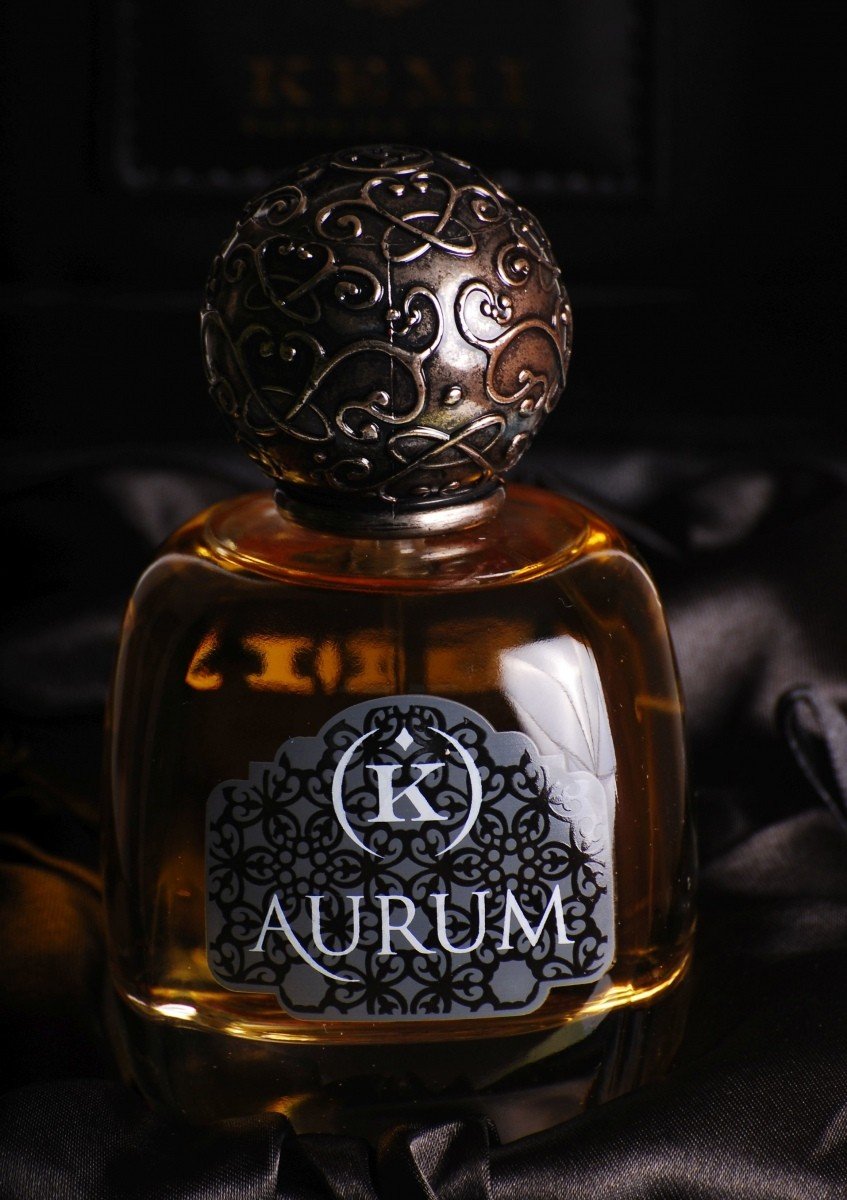
“Aurum” is a dream fragrance, a paradisiacal fragrance, whose preciousness is reflected in the heavy bottle and the no less heavy metallic sphere with fine engravings. “Aurum” is worth its weight in gold, and anyone who does not know it should urgently try it - to catch a glimpse of paradise.
When Emperor Leo III, born around 680, was about 45 years old, he experienced without any warning a natural disaster of apocalyptic proportions in the year 726 or a little later: Santorini erupted, causing the sea to tremble in a terrible way and enveloping the Aegean in darkness for several days. This traumatic event left open questions in the Byzantine emperor: “Why is it suddenly so dark?”, “What have we done to anger God?”, and presumably, in a medieval manner, he concluded according to the principle of ‘reflective punishment’, illustrated in many fine shades by Dante as “Contrappasso” in his “Inferno,” that “not being able to see” must necessarily be the consequence of “having seen too much.” But what had he seen too much of?
His answer was as simple as it was terrifying: God.
His consequence was terrifyingly simple: He had the great Christ icon removed from a gate of his palace in Constantinople to appease God and henceforth content himself with the mere idea of the Pantocrator.
His idea that a non-orthodox practice of religion could be responsible for the unleashed natural force triggered a phase of war and persecution that would go down in history as the “Byzantine Iconoclasm.” It took several councils and over a hundred years of persecution of the weaker side to finally end the violent disputes between iconodules (the lovers of images of God) and iconoclasts (those who denied any representation of the Most High as sin).
What exactly happened during these years between 726 and 843 (the year of the decree for the restoration of images issued by Theodora, the ruling widow of Emperor Theophilos) falls, like so much that occurred in the dark centuries, into the realm of imagination and legend, just as the trigger of the dispute is primarily legendary. However, what remains from this dispute is known to anyone who has ever seen a Byzantine or Byzantine-style painted icon: the radiant gold background that allows no earthly representation of the environment surrounding the icon (the “image” of the divine). This radiant gold background, which, through the application of gold leaf, breaks the light at hundreds of small points due to the resulting unevenness and thus shimmers - a principle that has been utilized in the always plastically designed, halo-like forms that detach from the background image - this gold background symbolizes the afterlife, the incomprehensible and unimaginable paradise that only opens to earthly wanderers when they pass through the gate to the afterlife forever. The shimmering gold also symbolizes the divine light, the eternal radiance that embodies and glorifies the majesty of the Pantocrator and illuminated the darkness of the world.
Gold - the color of the divine, the color of paradise. Golden paradise. Aurum. This perfect balance of the individual notes: This is how paradise must smell.
“Aurum” begins for me, unlike for most others, with the rose. This may be because my bottle is already about two years old and the “storm” that actually unfolds in this small, fantastic, heavy “water glass” has since calmed down a bit. The rose has, as its lightness demands, made its way to the surface and unfolds with the finest misty spray from a perfect spray head, which I only know from Penhaligon’s, a deep, multifaceted hint of a fully blooming rose garden.
The fine powderiness that surrounds the petals soaked with intense essential oil resembles the many layers of gold leaf on an icon or the many layers of puff pastry, separated by the butter that evaporates under heat - so layered and complex are the powder and rose nuances interwoven. Into this weave, from the very first moment, a gentle, completely non-animalistic oud note mixes, transforming the garden rose into a dark, velvety oriental rose, adding sweetness and a golden, Byzantine-like shimmer. Perhaps the fragrance is indeed called “Aurum” because it repeatedly evokes images of the Orient, Byzantine decorative elements, highly complex gold embroideries on purple velvet, finely chiseled golden earrings with tiny pearls, golden thrones, and golden icons. Worthy of a Theophanu or a Theodora.
Like the many fine layers of gold leaf on an icon, the oud rose unfolds between the finest, only gently perceptible fruity notes: sweet oranges, zesty lemons, and full-bodied strawberries. None of these fruits takes the lead at any phase of the fragrance. They are merely fruity splashes that reveal themselves for seconds between rose and oud, thus bringing the fragrance to sparkle: While rose and oud signify the image, the mimesis of the divine and at the same time their inaccessibility through complete immobility, the fruity tones in “Aurum” embody the golden background of the image, mobile, shimmering, describing paradise. Speaking of “paradise”: chocolate. Heavy dark cocoa sweetness, yet so fine, so delicately applied that the heaviness is only hinted at. It only reveals itself in a later phase of the fragrance when the rose gradually becomes fainter and makes way for a completely soft sweetness. Only then do the finest vanilla wafts float through the air, never solitary, always interwoven with oud, fruit, and cocoa. And because the rose is weaker here, but the fragrance should not lose itself in childish sweetness - anyway, Aurum is never, truly never TOO sweet - labdanum sets in here, replacing the pure rose at the end with delicate honey notes in an earthy resinousness.
“Aurum” is a dream fragrance, a paradisiacal fragrance, whose preciousness is reflected in the heavy bottle and the no less heavy metallic sphere with fine engravings. “Aurum” is worth its weight in gold, and anyone who does not know it should urgently try it - to catch a glimpse of paradise.
Updated on 12/20/2020
17 Comments






 ALCHABNO78
 Hermesh
 Eggi37
 Hallodri
 Sweetsmell75
 Fluxit
 Gschpusi
 Nelle
Nelle Hektor
 Schnüffel27