


 Top Notes
  Fougère notes
 Heart Notes
  Floral notes
 Fresh notes
 Base Notes
  Cedarwood
 Sandalwood
Yatagan
416 Reviews
Translated · Show original

Yatagan
Top Review
46
The Unfathomable Depths of Parfumo
For several years, I have engaged with what can only be described as almost idiotic meticulousness in testing, evaluating, and documenting almost (and I really mean almost) all available classic men's fragrances (and many women's fragrances as well) from the beginning of the era until the early 90s. The 90s were, at that time, considered by me as the beginning of the synthetic fall from grace, a time when more and more fragrances took on a distinctly aroma-chemical character (since then, the use of fruit testers, fruit aldehydes, maltol/ethylmaltol, ambroxan and its derivatives, cashmeran, calone, dihydromyrcenol, etc. has dominated). For this reason, I apparently missed some classic fragrances from the 90s, especially from the middle of that decade, which I should have kept a better eye on; they could very well be considered classics of a better time from today's perspective, even though I couldn't and didn't want to appreciate them as much back then as I do now. This includes, above all, fougère fragrances from the late 80s, 90s, and early 2000s, such as "Jazz (1988) (Eau de Toilette) | Yves Saint Laurent," "Patrick | Fragrances of Ireland," and of course "Rive Gauche pour Homme (2003) (Eau de Toilette) | Yves Saint Laurent." As the progenitor of this modern fougère direction, Drakkar Noir Eau de Toilette might be considered, as it is likely one of the first very popular postmodern fougère fragrances. This list is by no means exhaustive. There were countless good and countless bad fougère fragrances during the mentioned time span, especially in the men's segment.
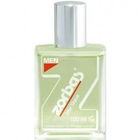
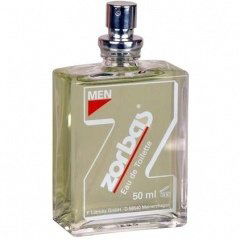
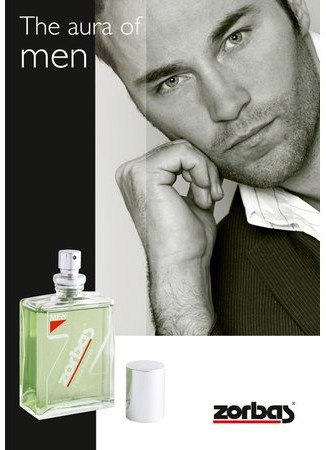
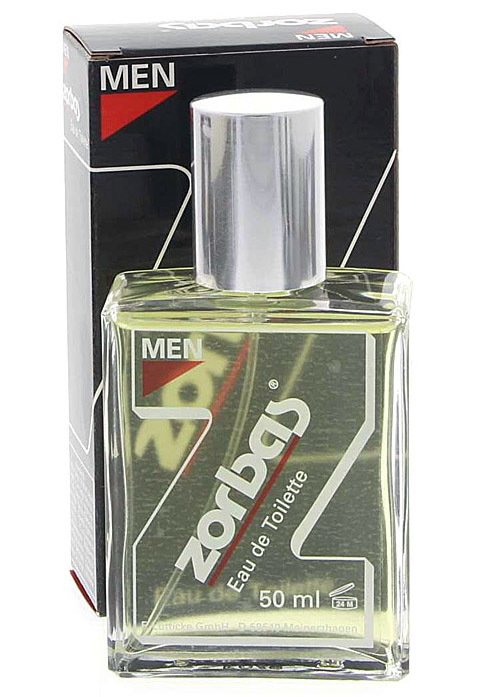
And now to Zorbas Eau de Toilette:
The year 1995 was marked for me by the beginning of our family phase, important professional orientations, and correspondingly little time remained for engaging with fragrance: Zorbas remained undiscovered at that time and even later.
When I think of "Zorbas" or Sorbas, I initially think of the 1946 novel of the same name by Nikos Kazantzakis or the Oscar-winning film adaptation from 1964 ("Zorba the Greek," German: "Alexis Sorbas") featuring the legendary Anthony Quinn and music by Mikis Theodorakis. The disturbingly harsh and archaic image of masculinity shaped by the film may have still had an impact in the 90s, at least it was vaguely known to the public.
Fitting to the rugged masculinity, the fragrance is characterized by the typical scent often referred to as barbershop, usually defined by fougère tones (the typical combination of bergamot, lavender, tonka/oakmoss, and the resulting coumarin notes).
Fougère fragrances can indeed vary greatly.
While the 90s were mostly characterized by bright fougères (often labeled "Sport"), the aforementioned more characterful representatives of this fragrance direction were darker, more pronounced, and more oriented towards old models - such as Geo F. Trumper's Wild Fern Cologne from 1877, Penhaligon's English Fern Eau de Toilette from 1910, or the original by Paul Paquet, the presumably first well-known fougère fragrance "Fougère Royale (1882) (Parfum) | Houbigant," which already contained fully synthetic coumarin (as is the norm today).
By the way, in the early days of this style type, it was not exclusively about men's fragrances, but also about perfumes worn by women in extrait strength. Penhaligon's promoted English Fern at times primarily for women, which is why the fragrance is consistently characterized as unisex here on Parfumo. From this shifting categorization between the genders, interesting conclusions can be drawn: While today many fragrance buyers reflexively think of so-called "barbershop" when it comes to fougère notes and thus automatically assign the fragrance to the male sphere, it was apparently much less clear in the past, thereby questioning certainties about supposedly clear gender-specific references.
If one considers the aforementioned patterns of more traditional, darker fougère fragrances vs. bright, "sport aesthetic" oriented fougère fragrances of the 90s, Zorbas Eau de Toilette confidently navigates between the boundaries: In the opening, the fragrance appears rather bright, fresh, and, as already aptly described in the helpful review below, alcoholic, but gains spicier accents with the heart note and, like most fougère fragrances, also shows floral notes (traditionally often geranium, rose, or garden carnation). Here, the geranium, with its rather harsh characteristic (sometimes referred to as the men's flower), takes on the spicy bitter properties of coumarin, while the rose, as a particularly sweet flower, sets a beautiful contrasting accent.
In "Zorbas (Eau de Toilette) | Franz Lütticke GmbH," it seems to me that geranium or carnation plays the main role; it could also be floral aldehydes (as in N°5 Parfum or Arpège (1927) Extrait), which would explain the nonspecific indication of "floral notes." Soft and warm accents are completely absent. The fragrance Zorbas aims to address men and tolerates no experiments. Over the course of its development towards the drydown, Zorbas becomes increasingly sweeter, yet never truly "sweet"; the woody base note is clearly recognizable. Sandalwood and cedarwood are the traditional ingredients in men's fragrances from past decades: here too, there are no experiments for Zorbas.
Anyone who now suspects that the fragrance is one of those many lost classics from past decades is mistaken. It can still be ordered directly from the manufacturer, who takes good care of his small, almost unknown classic. It is also remarkably inexpensive: highly recommended if you appreciate classic, somewhat conservative fougère fragrances.
My thanks go to Hapax, to whom I owe the rediscovery of this beautiful fragrance from the unfathomable depths of Parfumo.
And now to Zorbas Eau de Toilette:
The year 1995 was marked for me by the beginning of our family phase, important professional orientations, and correspondingly little time remained for engaging with fragrance: Zorbas remained undiscovered at that time and even later.
When I think of "Zorbas" or Sorbas, I initially think of the 1946 novel of the same name by Nikos Kazantzakis or the Oscar-winning film adaptation from 1964 ("Zorba the Greek," German: "Alexis Sorbas") featuring the legendary Anthony Quinn and music by Mikis Theodorakis. The disturbingly harsh and archaic image of masculinity shaped by the film may have still had an impact in the 90s, at least it was vaguely known to the public.
Fitting to the rugged masculinity, the fragrance is characterized by the typical scent often referred to as barbershop, usually defined by fougère tones (the typical combination of bergamot, lavender, tonka/oakmoss, and the resulting coumarin notes).
Fougère fragrances can indeed vary greatly.
While the 90s were mostly characterized by bright fougères (often labeled "Sport"), the aforementioned more characterful representatives of this fragrance direction were darker, more pronounced, and more oriented towards old models - such as Geo F. Trumper's Wild Fern Cologne from 1877, Penhaligon's English Fern Eau de Toilette from 1910, or the original by Paul Paquet, the presumably first well-known fougère fragrance "Fougère Royale (1882) (Parfum) | Houbigant," which already contained fully synthetic coumarin (as is the norm today).
By the way, in the early days of this style type, it was not exclusively about men's fragrances, but also about perfumes worn by women in extrait strength. Penhaligon's promoted English Fern at times primarily for women, which is why the fragrance is consistently characterized as unisex here on Parfumo. From this shifting categorization between the genders, interesting conclusions can be drawn: While today many fragrance buyers reflexively think of so-called "barbershop" when it comes to fougère notes and thus automatically assign the fragrance to the male sphere, it was apparently much less clear in the past, thereby questioning certainties about supposedly clear gender-specific references.
If one considers the aforementioned patterns of more traditional, darker fougère fragrances vs. bright, "sport aesthetic" oriented fougère fragrances of the 90s, Zorbas Eau de Toilette confidently navigates between the boundaries: In the opening, the fragrance appears rather bright, fresh, and, as already aptly described in the helpful review below, alcoholic, but gains spicier accents with the heart note and, like most fougère fragrances, also shows floral notes (traditionally often geranium, rose, or garden carnation). Here, the geranium, with its rather harsh characteristic (sometimes referred to as the men's flower), takes on the spicy bitter properties of coumarin, while the rose, as a particularly sweet flower, sets a beautiful contrasting accent.
In "Zorbas (Eau de Toilette) | Franz Lütticke GmbH," it seems to me that geranium or carnation plays the main role; it could also be floral aldehydes (as in N°5 Parfum or Arpège (1927) Extrait), which would explain the nonspecific indication of "floral notes." Soft and warm accents are completely absent. The fragrance Zorbas aims to address men and tolerates no experiments. Over the course of its development towards the drydown, Zorbas becomes increasingly sweeter, yet never truly "sweet"; the woody base note is clearly recognizable. Sandalwood and cedarwood are the traditional ingredients in men's fragrances from past decades: here too, there are no experiments for Zorbas.
Anyone who now suspects that the fragrance is one of those many lost classics from past decades is mistaken. It can still be ordered directly from the manufacturer, who takes good care of his small, almost unknown classic. It is also remarkably inexpensive: highly recommended if you appreciate classic, somewhat conservative fougère fragrances.
My thanks go to Hapax, to whom I owe the rediscovery of this beautiful fragrance from the unfathomable depths of Parfumo.
56 Comments


 Yatagan
 Aramis924