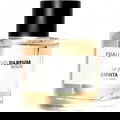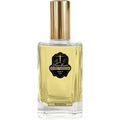
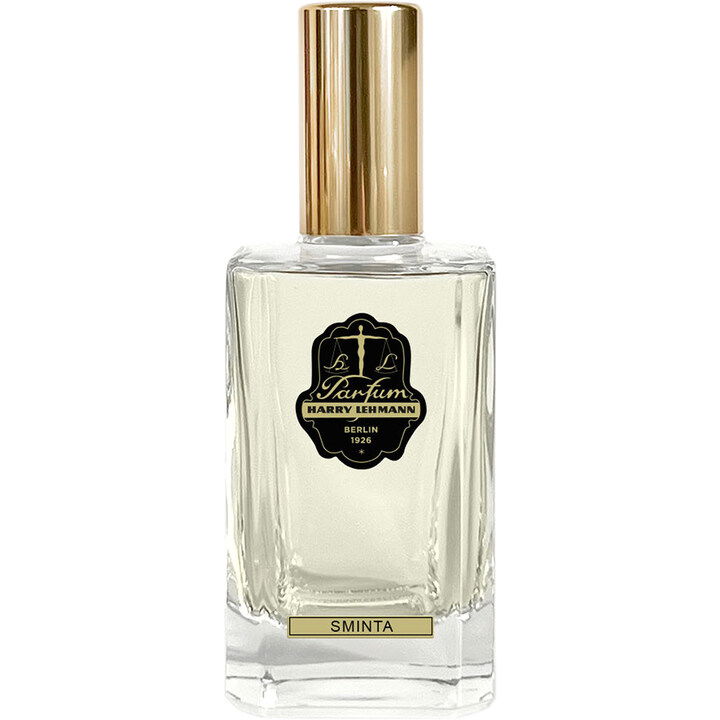


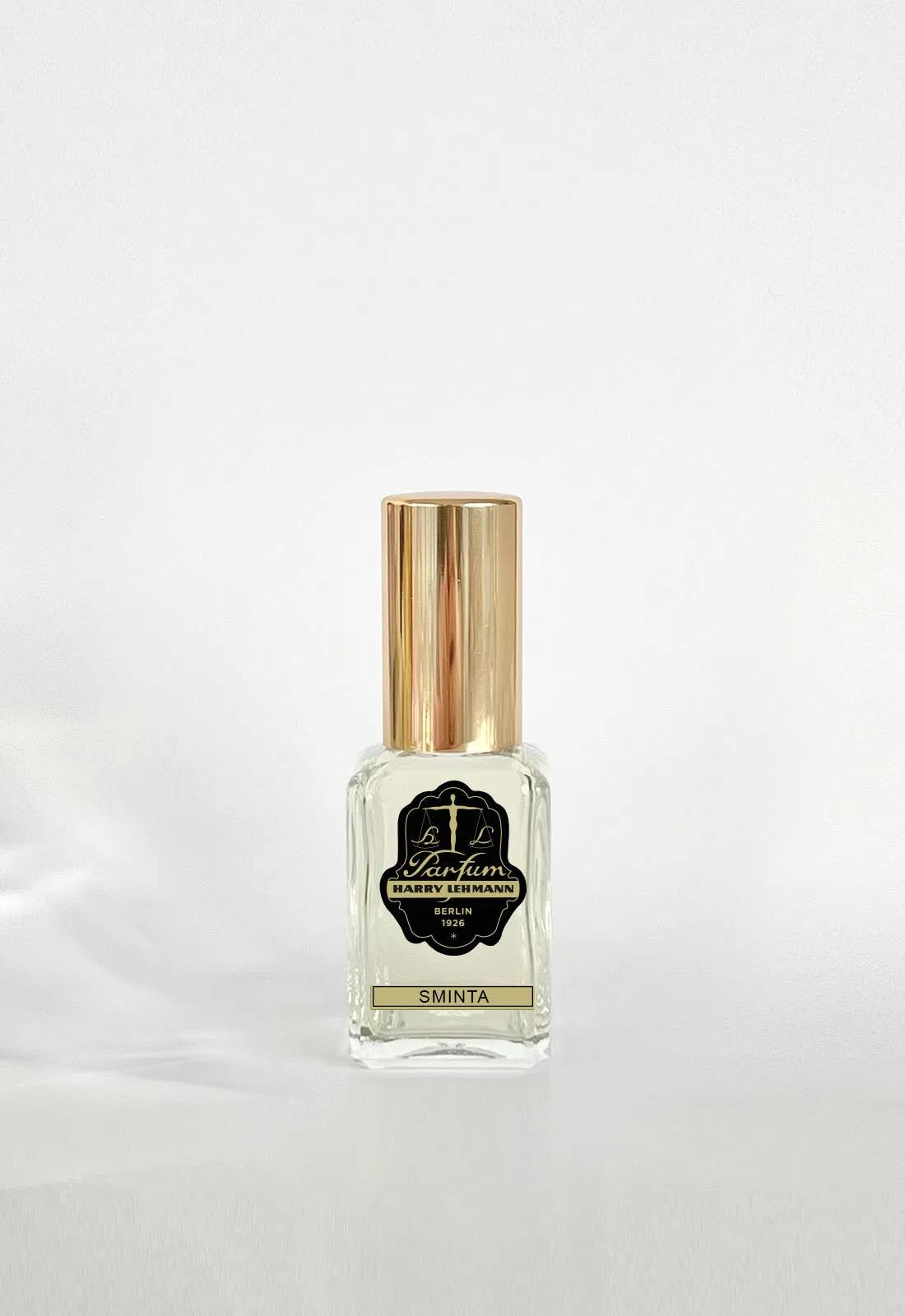
After a somewhat longer pause in comments, it was once again a fragrance by Harry Lehmann that inspired me so much that I took the time for a lengthy review. What actually prompted me to add "Sminta" to my testing list? Probably the name, which I find beautiful and mysterious. What could it be, Sminta, a woman's name? And from which language does it come? Norwegian? Hebrew? And what do I think of, "mint," or "Miss Smilla's Feeling for Snow"? And perhaps it played a role that this fragrance has been little tested here, rated very well on average, but also has some critics. That piques my curiosity.
Well then, today on Kantstraße: "And I would also like to try Sminta." The saleswoman's face lights up: Apparently one of her favorite fragrances. "On the skin too, like the previous one, or just like this for now?" A justified question, because although Lehmann does not distinguish his fragrances by gender, this is clearly a women's scent. "Well, then just like this for now." I smelled from the glass stopper of the stock bottle. Hmmmm: "Also on the skin, please." And since then I have been excited for hours!
The analytical aspect of fragrance is unfortunately not my strength, so I will only be very cautious: The basic structure of this scent is a floral blend, that much I am sure of. There could be tulips, lilies, and carnations present. Roses do not assert themselves to me here at all, unlike in other fragrances, and if they do, then in the direction of young, faintly fragrant petals, certainly not strong, sweet rose oil. The aldehydes highlighted by practically all reviewers do not strike me as dominant at all - it's almost embarrassing - at least not as disturbing or intrusive, but rather, on the contrary, as finely woven with the floral scent. Often, a very pleasant, simple, rich, milky, strong note of body lotion shifts into the fragrance experience, and sometimes I perceive something slightly soapy at the edges (I do not sense anything powdery), something spicy, and in the first hour something full-bodied yet light green-minty (but perhaps those are citrus notes, and I only imagine mint because of the name).
Sminta is a floral scent, but not "flowery." It is strong, but not heavy at all. Very feminine on one hand, but somehow the gender identity frays at the edges constantly. I also like it on myself. Sminta impresses me as an extremely characterful fragrance. It possesses a certain hardness and bitterness, then also plays into the longing and gentle, but remains firmly grounded. It has a hint of cheerfulness, it has a hint of luxury, but it is not sweet, vulgar, or insincere for even a second, not a millimeter. It says: "Life is beautiful, very beautiful, if you know how to take it right; but it is above all serious."
Now, I am by no means encyclopedic in my knowledge of women's fragrances, but it seems to me that this is a very unique, unusual perfume that also tempts me, like Tfortwo, to speculate about the time of its creation. I would swear, this cannot be a fragrance from a restoration period like the 50s, when girls had to be sweet and ladies neat and nice, and it certainly is not a baroque-opulent scent from the 80s.
If this fragrance conveys an image of women, then it is that of the hard-fighting emancipated woman of the 1920s, the scent of Marthe Müller from Jason Lutes' wonderful (unfortunately currently stalled at Volume II) comic trilogy "Berlin Stone City" / "Berlin Lead City." I think of the first (perhaps also active in the youth organizations of the SPD or KPD) medical and art students who fought for their places in the male world of the Berlin University (before they were pushed back to the kitchen by the Nazis), of the dancers from the state ballet and the revues who, despite all the glamour on stage, had to do their toilet at home at the poorly ventilated coal stove and, due to lack of running water, at the washbasin, and of the somewhat older, bourgeois lady from Charlottenburg, constantly threatened by social decline since the inflation, whose husband returned from the Western Front amputated or with war neurosis (today we would say "post-traumatic stress disorder") and who wants to preserve her little piece of beauty.
And indeed, the usually taciturn lady from Harry Lehmann says at the end, unsolicited: "This is a very, very classic fragrance, an old, very old one." "Older than me?" Mild laughter: "Oh yes!"
For me, this makes it an extremely modern, almost tear-jerkingly beautiful fragrance (and touching that it has survived for so long). If I ever wanted to give a true lady, whether she is 25 or 75 years old, a really huge compliment for her beauty, including that of her soul, then it could be Sminta. Now, Mrs. von Spee might not be too amused if I gave perfume to another lady. But it doesn't have to be another lady.