

 Top Notes
  Absinth
 Blackcurrant bud
 Paint
Paint Cardamom
 Saffron
 Heart Notes
  Cedar leaf
 Cypriol
 Chinese cedar
 Frankincense
 Myrrh
Myrrh Base Notes
  Woody notes
 Birch
Birch Civet absolute
 Leather
 Labdanum
 Amber
Amber

Floyd
604 Reviews
Translated · Show original
Floyd
Top Review
38
Imagination and Reality - Maryon Park, 1966
A PHOTOGRAPHY OF MARYON PARK
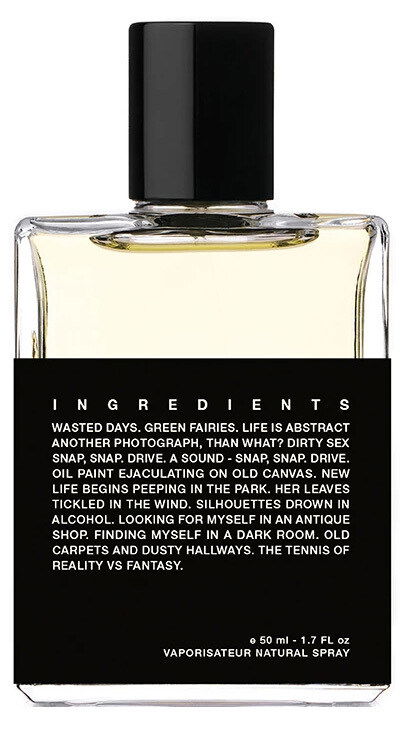
From the bright smoke of grass flowers. The scent of complementary colors. Through branches with currant buds. Under silver-green cardamom clouds. A photograph of lovers under the trees on summer meadows. The wind whispers softly through dry herbs.
FIRST BLOW-UP
Enlarge the section. The blurry leaves in the bushes. Nut-brown roots crawling over clay soils. A smoking weapon in the bushes? A body blurred by tree shadows?
YARDBIRDS
Birch rustling from an amplifier. Jeff Beck's guitar neck smashed. Abducted into the night from labdanum resin. Nothing but splinters of some wood. Useless.
SECOND BLOW-UP
Dark licorice traces of stray cats. Brown-green earth and roots shimmer, wooden shavings in leather pixels. The view of reality lost. A fluttering cloth of imagination.
**
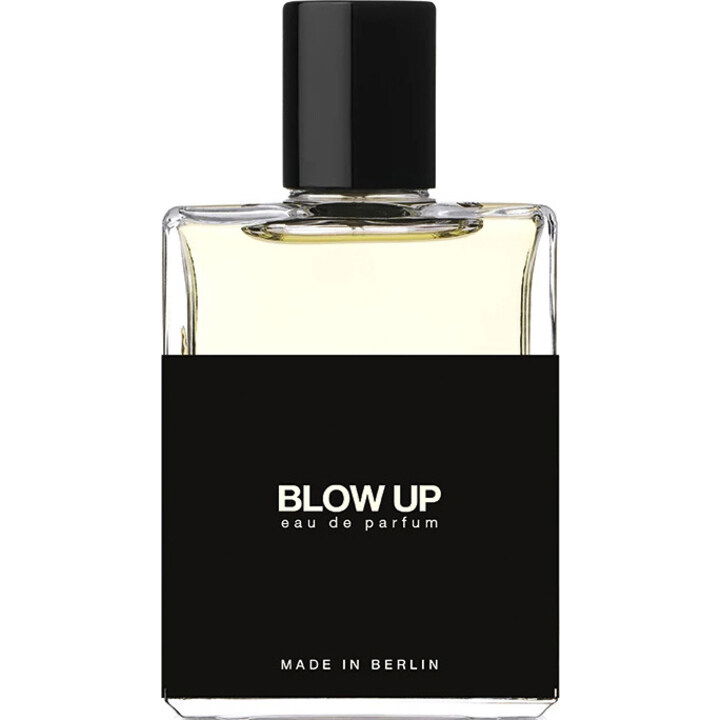
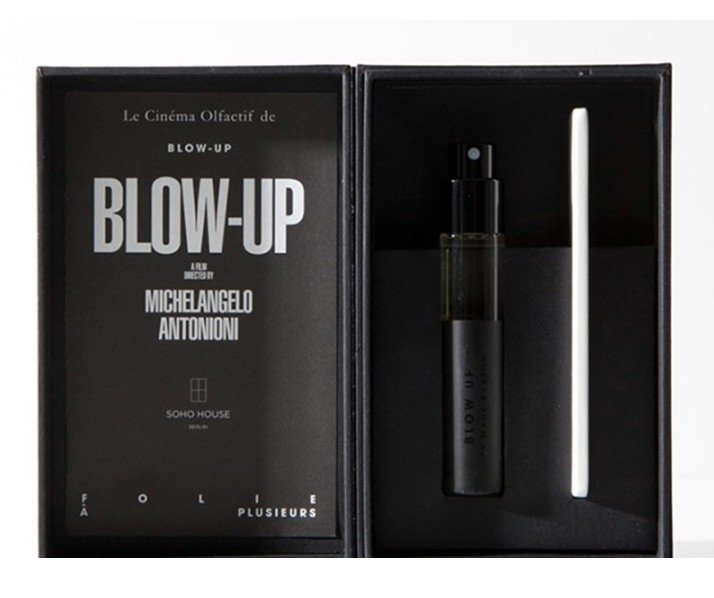
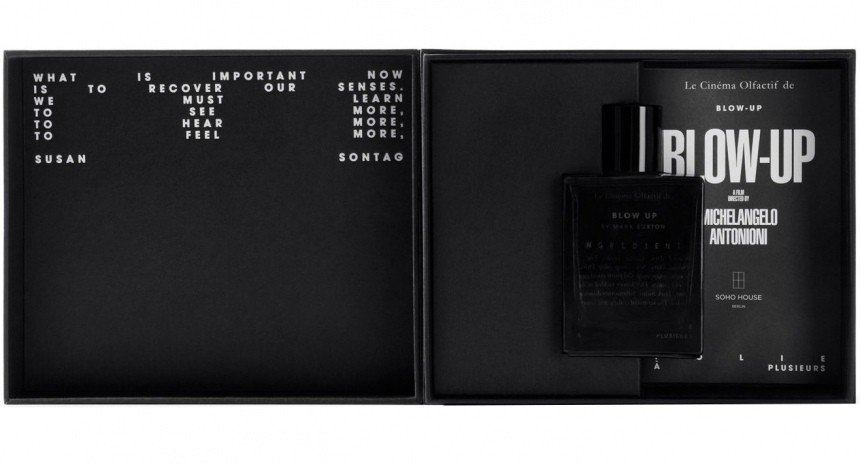
Who, if not Mark Buxton, a master of transparent suggestion, of blurring the lines between synthetic and natural, would have been more suitable to take on the fabric of "Blow Up," as Michelangelo Antonioni's eponymous film from 1966 also plays with a mixture of reality and unreality, with color symbolism, the contrasts between the colorful fashion world of the 60s and nature, as well as its perception by the protagonist, a fashion photographer whose subjective narrative perspective we adopt.
The protagonist has exhausted the artificial world of fashion photography and attempts to create a photo book about the social reality of London. While photographing in a park, intending to capture nature shots, he accidentally photographs a murder. At least he believes he does, because as he continues to enlarge the images in the lab to confirm his theory, the pixels in the pictures become coarser, the grain noise too rough to decipher details. The interpretation in either direction (murder or not) remains a projection.
This projection is also evident in a scene where the photographer attends a Yardbirds concert. When the guitarist, furious about noise interference from his amplifier, smashes his guitar and throws the neck into the audience, the protagonist catches the coveted relic and flees into the night with it, escaping the envious crowd. For a homeless person to whom he later hands the piece, the guitar neck is just a destroyed piece of wood. He simply does not share the same perspective. He lacks the entire picture.
The fragrance begins with the contrast between the smell of wall paint and green-spicy-herbaceous notes of cardamom, anise, fennel, and saffron, which combined with the incense from the heart, to me, smell like cannabis flowers. With a bit of imagination (!), the currant buds can also be sensed, as they are branches with berries that the photographer bends aside in the film while photographing a couple in the park. A shot in which only the rustling of leaves in the trees can be heard, the natural counterpart to the noise of the black-and-white image enlargements of the scene, on which in the end nothing will be clear anymore. This natural green noise is perceivable here, but distorted by the synthetic color.
In the heart, the natural details initially seem to become clearer in the form of earthy-rooty-nutty cypriol, bright birch notes rustle, conifers are perceptible as one olfactorily zooms into the flora of the park. One can even imagine the smoke of a possible shot (cypriol) before rather artificial wood notes (perhaps the destroyed guitar?) distort the scene, dark resins (labdanum, myrrh) overlay the image, the hard-to-define base of artificial and more natural (civet) leather notes, soft wood and earthy root aromas equally support and blur.
This remains characteristically transparent from beginning to end, moderately projecting over a good eight hours. Wearable in the lightness of its abstraction and yet full of space for imagination.
From the bright smoke of grass flowers. The scent of complementary colors. Through branches with currant buds. Under silver-green cardamom clouds. A photograph of lovers under the trees on summer meadows. The wind whispers softly through dry herbs.
FIRST BLOW-UP
Enlarge the section. The blurry leaves in the bushes. Nut-brown roots crawling over clay soils. A smoking weapon in the bushes? A body blurred by tree shadows?
YARDBIRDS
Birch rustling from an amplifier. Jeff Beck's guitar neck smashed. Abducted into the night from labdanum resin. Nothing but splinters of some wood. Useless.
SECOND BLOW-UP
Dark licorice traces of stray cats. Brown-green earth and roots shimmer, wooden shavings in leather pixels. The view of reality lost. A fluttering cloth of imagination.
**
Who, if not Mark Buxton, a master of transparent suggestion, of blurring the lines between synthetic and natural, would have been more suitable to take on the fabric of "Blow Up," as Michelangelo Antonioni's eponymous film from 1966 also plays with a mixture of reality and unreality, with color symbolism, the contrasts between the colorful fashion world of the 60s and nature, as well as its perception by the protagonist, a fashion photographer whose subjective narrative perspective we adopt.
The protagonist has exhausted the artificial world of fashion photography and attempts to create a photo book about the social reality of London. While photographing in a park, intending to capture nature shots, he accidentally photographs a murder. At least he believes he does, because as he continues to enlarge the images in the lab to confirm his theory, the pixels in the pictures become coarser, the grain noise too rough to decipher details. The interpretation in either direction (murder or not) remains a projection.
This projection is also evident in a scene where the photographer attends a Yardbirds concert. When the guitarist, furious about noise interference from his amplifier, smashes his guitar and throws the neck into the audience, the protagonist catches the coveted relic and flees into the night with it, escaping the envious crowd. For a homeless person to whom he later hands the piece, the guitar neck is just a destroyed piece of wood. He simply does not share the same perspective. He lacks the entire picture.
The fragrance begins with the contrast between the smell of wall paint and green-spicy-herbaceous notes of cardamom, anise, fennel, and saffron, which combined with the incense from the heart, to me, smell like cannabis flowers. With a bit of imagination (!), the currant buds can also be sensed, as they are branches with berries that the photographer bends aside in the film while photographing a couple in the park. A shot in which only the rustling of leaves in the trees can be heard, the natural counterpart to the noise of the black-and-white image enlargements of the scene, on which in the end nothing will be clear anymore. This natural green noise is perceivable here, but distorted by the synthetic color.
In the heart, the natural details initially seem to become clearer in the form of earthy-rooty-nutty cypriol, bright birch notes rustle, conifers are perceptible as one olfactorily zooms into the flora of the park. One can even imagine the smoke of a possible shot (cypriol) before rather artificial wood notes (perhaps the destroyed guitar?) distort the scene, dark resins (labdanum, myrrh) overlay the image, the hard-to-define base of artificial and more natural (civet) leather notes, soft wood and earthy root aromas equally support and blur.
This remains characteristically transparent from beginning to end, moderately projecting over a good eight hours. Wearable in the lightness of its abstraction and yet full of space for imagination.
Updated on 07/18/2023
38 Comments

 Hermesh
 Licorice
 Gandix
 Ergoproxy
 Rieke2021
 Vrabec
 FrauHolle
 Misca
Misca Minigolf
 Terra
Terra