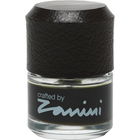
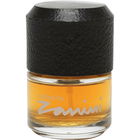
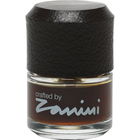
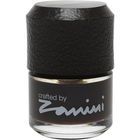
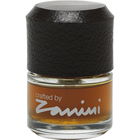
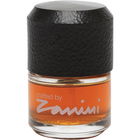
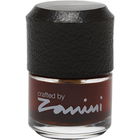
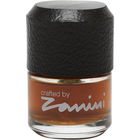
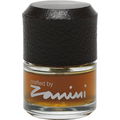
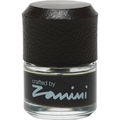
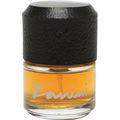
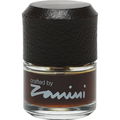
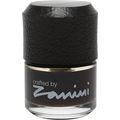
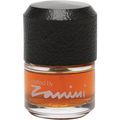
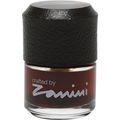
Cy Twombly must have something about him that greatly appeals to perfumers. Only recently, I came across a fragrance by Phronema Perfumes that refers to Twombly’s cycle of paintings “The Coronation of Sesostris”:
Coronation of Sesostris . Granted, Weston Adam’s fragrances are Artists‘ Scents anyway; as an artist working across disciplines, he often refers to specific works by other artists. But even apart from that, such a connection is by no means far-fetched: quite a few fragrance creations could certainly be described using the term abstract expressionism. And now “Cy” from Zanini. To me, this sounds very promising at first, since quite a few things have thrilled me here lately: From
Ora dopo Ora through
Daphne Meli to
Fermo Pesca .
As soon as I open the sample vial, I strongly perceive clove. That is not a bad thing in itself, since I do like the note quite a lot. What worries me somewhat is its strong presence, which raises the question of whether the other notes will be able to hold their own against it. And indeed, after applying it to the skin, it takes a little while before I slowly begin to perceive something bright, resinous and slightly ethereal alongside the dominant clove on my wrist. This is very beautiful.
Rather by chance, I now smell the sample tube once more and am astonished that suddenly the clove, which had just been so immediately present, is no longer at the forefront at all, but that there is actually also a bright, almost ethereal resin. In disbelief, I take the sample and apply the fragrance anew to my other (the right) wrist - no dominant clove, but a resinous fragrance from the very beginning! I am confused.
That does not detract from the enjoyment. Whether it is a phenomenon of perceptual psychology or whether this really is a chameleon fragrance - on both the right and left, the fragrance develops very beautifully. While the clove is still dominant on the left, though becoming softer, it now also makes itself noticeable on the right, although it is still in no way dominant. Instead, it appears beautifully embedded in balsamic notes. Soon afterwards, as if out of nowhere, a fresh cypress note appears, of almost hyper-realistic clarity. This emergence of individual notes that briefly present themselves as soloists from within the fragrance structure, that flare up like comets only to disappear again just as quickly - this is a special quality in fragrances for me, one I have experienced only very rarely and which enchants me every time. To me, it attests on the one hand to the perfumer’s craftsmanship, and on the other to the quality of the natural ingredients.
Once again, Zanini’s creative approach is fascinating: as in other fragrances, homemade accords are used here too, such as an alcoholic extract from the joint fermentation of sultanas and long pepper (Piper retrofractum), as well as an extract of various varieties of carnation blossoms, obtained through enfleurage in mango butter (the fact that mango butter is listed as a fragrance note in the Parfumo database - in contrast to the manufacturer’s website - is of course misleading and is roughly equivalent to listing lard as a fragrance note in tuberose or jasmine fragrances obtained through enfleurage).
The almost citric bright resinous quality is probably attributable to Atlas cedar, pine and cypress; the ethereal radiance, in turn, also to the cedar and perhaps to the gentian used as well. This ethereal quality of the opening soon recedes on the right too, however; it remains spicy and balsamic and also becomes increasingly softer here. In the base, woods and balsamic notes predominate and gently ground the fragrance. At some point, there is another hint of incense and myrrh resin. Over time, the right and left sides increasingly draw closer together and settle into this base, yet the mystery of the opening’s erratically different character remains unsolved. The fragrance remains Janus-faced, difficult to grasp.
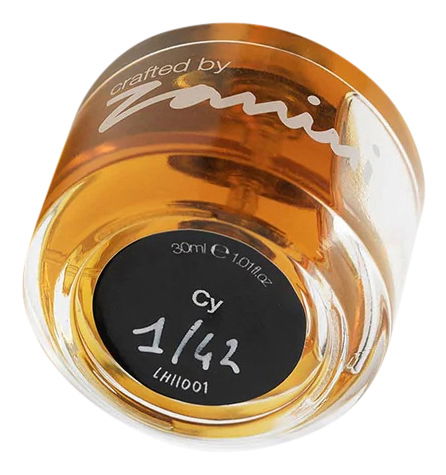
And this is where the connection to the name becomes interesting. For just as I experience “Cy”, Zanini seems to have experienced Twombly.
When looking at the artist’s works, Filippo Zanini says on the fragrance’s page, he often had the feeling that they were just as difficult to grasp as the artist himself in the depictions found in articles and interviews. When he then read that Twombly was interested in both African art and archaic ancient Italian art, this gave him a new approach to his works, Zanini says. Is knowing about the perfumer’s engagement with the artist after whom the fragrance is named helpful in understanding “Cy”?
In the online presentation of “Cy”, Zanini very deliberately places a Twombly painting from the cycle “Blooming: A Scattering of Blossoms and Other Things” alongside the fragrance. It shows peony blossoms - expressive in glowing red against a white background. The paintings in the cycle are not simply, as one might initially think, a homage to the beauty of flowers, but at the same time an engagement with Japanese poetry and history. “Ah! The peonies for which Kusunoki laid aside his armor!” - this is how a haiku by the Edo-period poet Takarai Kikaku might be translated, its text having been directly incised into the paint of one of the paintings by Twombly, alongside other Japanese poems. Kusunoki was a samurai of the early 14th century: warlike, feared, strong - the peonies alone made him weak.
There is no peony in the fragrance, but the blossoms of the carnation come close enough in appearance to the Twombly subject that one can let it pass. Or does the connection lie rather in the contrasts? Or in Twombly’s raw manner of applying paint, which may correspond to an unpolished and expressive approach to composition in Zanini’s fragrance creations? Ultimately, there are certainly several possible readings, several levels on which parallels can be found, if one wishes to do so. And that is enough: the name, the reference to the artist, invites engagement. To smell closely on the one hand and look closely on the other - to engage intensively with the fragrance, just as with the paintings. It is then that one reaches the level on which the correspondence perhaps becomes most plausible. For me, this is the level of hidden layers of meaning: the poems are indeed present in Twombly’s paintings, incised into the paint and physically there, yet they are not recognizable at first glance. Only through closer engagement does another layer of the work reveal itself. Likewise, the different facets of “Cy” do not reveal themselves immediately, but only gradually and only when smelled with close attention.
Just as Twombly engaged with the art of the Japanese haiku poets and they influenced his own works, so his engagement with Cy Twombly’s art influenced Filippo Zanini’s work: not in a blatant way, but in the sense of an inspiration that leads to an independent new work in another medium. To a fragrance for which many a samurai would surely lay aside his armor.
And it was not only Cy Twombly’s art that opened an avenue into “Cy” for me, but Zanini’s fragrance did so in reverse as well.

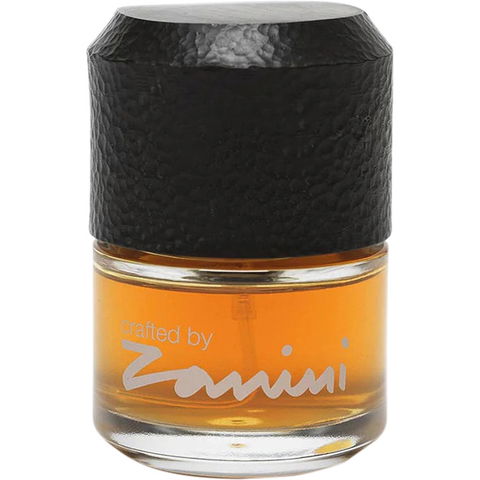


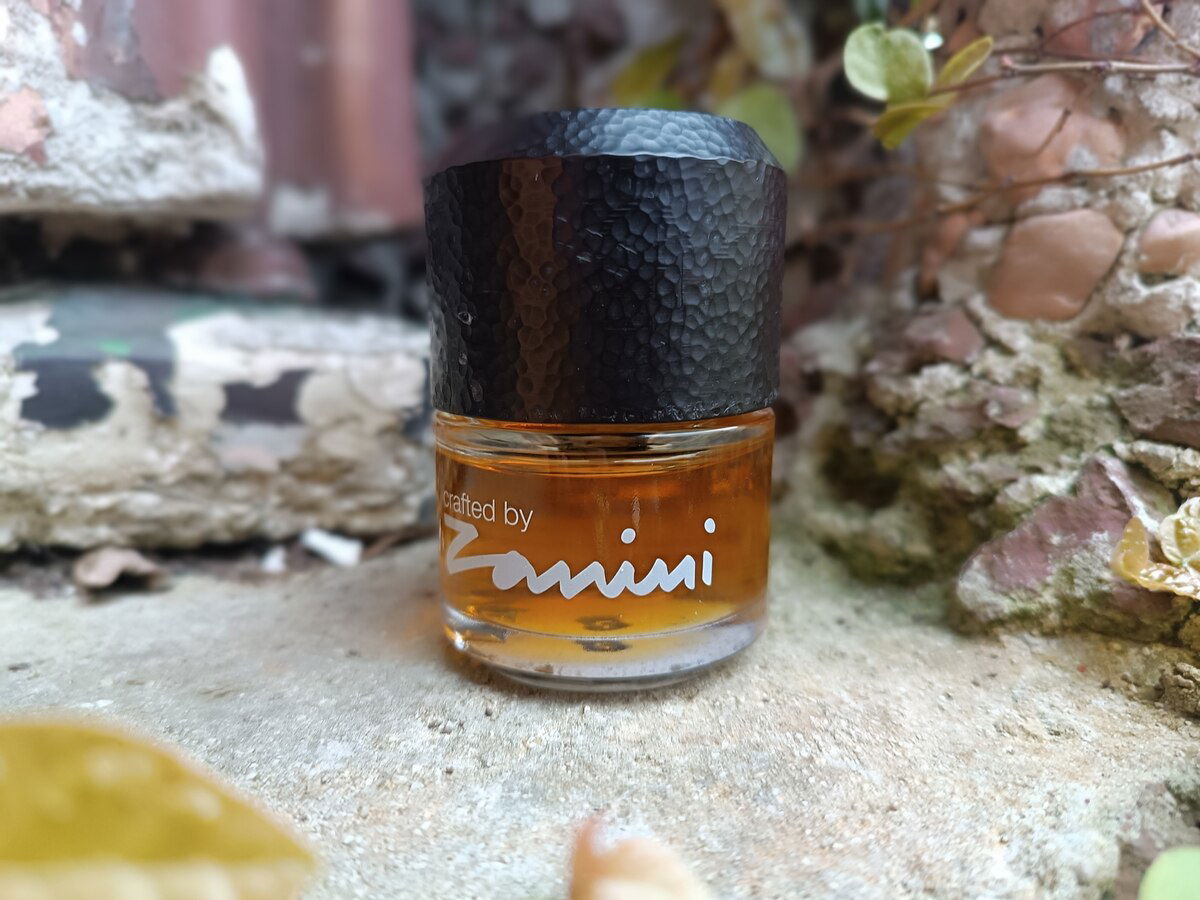
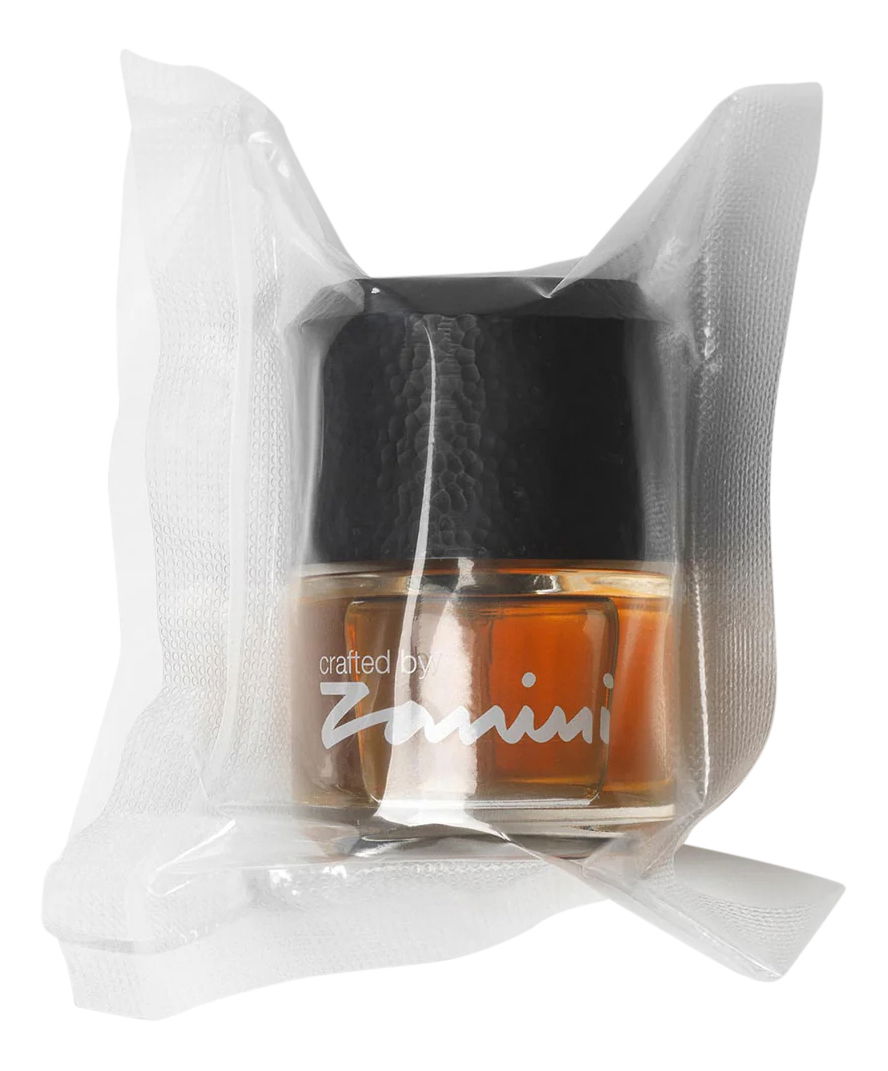
 Clove
 Atlas cedar
 Carnation
 Gentian
 Long pepper
 Scots pine
 Virginia cedar
 Ambrette seed
 Amyris
 Cabreuva
 Copaiba balsam
 Cork
 Frankincense
 Loam
 Mimosa
 Oak
 Raisin
 Somali myrrh
 Woodland®
 Cypress
 Mango butter







 valhelsingv
 Holscentbar
 Floyd
 Bloodxclat
 DanyD